
Office Pantry Guide: Buying Bikaneri Namkeen in Bulk for Teams
Published on • 6 views
If you are in charge of stocking an office pantry, here is the short answer: Bikaneri namkeen bought in bulk is one of the easiest wins you can get. A handful of 400–500g packs of bhujia, aalu bhujia, mixture, masala bundi, roasted kaju and mathri covers a team of 20–30 for weeks, costs less per head than most "healthy" snack boxes, and — unlike cookies and chips — people never get bored of it.
Most offices get pantry snacking wrong in one of two ways. Either they buy tiny retail packs that run out by Tuesday, or they order whatever is cheapest and end up with a storeroom of stale, palm-oil-fried snacks nobody touches. This guide fixes both: what to buy, how much, how to budget it, and where to order so it arrives fresh.
Why Bikaneri namkeen works so well in an office pantry
Three reasons, all practical. First, shelf life. Bikaneri namkeen — bhujia, mixture, bundi, mathri — stays crisp for weeks once opened (months if sealed), which means you can genuinely buy in bulk without watching expiry dates. Compare that to bakery items or fresh sweets, which turn within days.
Second, universal appeal. In a team of thirty, you will have people from every corner of India. Bikaneri bhujia is one of the few snacks that is genuinely pan-Indian — it has been since 1877, when the first batch was made in Bikaner during the reign of Maharaja Dungar Singh, and it earned a Geographical Indication tag in 2010. Nobody needs an introduction to it, and nobody argues about it.
Third, the math. Namkeen is filling. A small bowl of bhujia with evening chai does more for the 4 PM slump than two cookies, and a bulk pack costs a fraction of what individually wrapped "premium" snacks cost per serving. Admin teams that switch from assorted retail snacking to planned bulk namkeen usually cut their per-head snack spend by a third or more.
How much to order: the per-head math
Forget complicated formulas. For a regular office pantry (not a party, just daily tea-time), plan roughly 15–20 grams of namkeen per person per working day. That is a small katori each — enough for chai time without ruining anyone's dinner.
For a team of 25, that works out to about 400–500 grams a day, or roughly 8–10 kg a month. In practical terms: 15–20 packs of 500g namkeen per month, split across 4–6 varieties so there is rotation. Order monthly, not weekly — you save on shipping and you always have buffer stock for the week someone brings the whole extended team to the pantry.
Two practical tips:
- Order before the 1st of the month. Pantry stock should land when the month starts, not when the old stock runs out. Keep a one-week buffer always.
- Start with a trial month. Every office has its own taste. Buy a mixed first order, watch which packs empty fastest, then double down on the winners in month two.
The six pantry staples to stock
You do not need twenty varieties. Six well-chosen staples, rotated sensibly, keep a pantry interesting for months. All of these are available in 400–500g packs that suit bulk buying:
1. Bikaneri bhujia — the non-negotiable hero
Every pantry needs one hero snack, and for a Bikaneri pantry that is bhujia, full stop. Made from moth dal and besan, fried in groundnut oil by Bikaner's heritage halwais — Girdharilal has been at it since 1978. Stock at least a third of your total order as plain bikaneri bhujia; it is the pack that empties first, every single time.
Order Girdharilal Bikaneri bhujia in bulk packs on BiteBasket
2. Aalu bhujia — the crowd-pleaser
Softer, slightly tangier, and the one people reach for when they want something with a little more punch. Aalu bhujia pairs brilliantly with evening chai and disappears fast at team celebrations. Keep it as your second staple.
Order Girdharilal aalu bhujia on BiteBasket
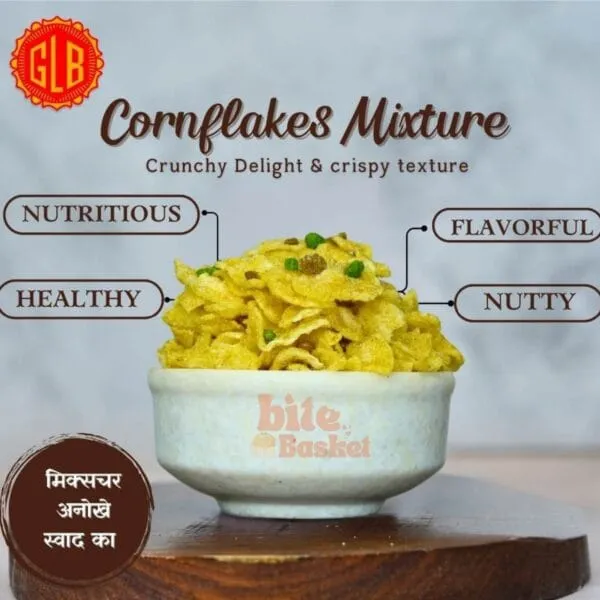
3. Cornflakes mixture — the light one
Every pantry needs a lighter option for the health-conscious half of the team. Cornflakes mixture gives the crunch without the heaviness, and it works as a mid-morning snack too, not just chai time.
Order cornflakes mixture (500g) on BiteBasket
4. Masala bundi — the chaat-adjacent one
Bundi is the versatile one: eat it straight, sprinkle it on raita at the office lunch, or mix it into poha. A 500g pack of masala bundi adds variety without adding complexity to your ordering.
Order Girdharilal masala bundi (500g) on BiteBasket
5. Roasted kaju — the premium touch
One premium item lifts the whole pantry. Roasted namkeen kaju is the one people notice — it signals that the company actually cares, and it is the pack that gets opened first when clients visit. You need less of it than the others, but do not skip it.
Order namkeen kaju (500g) on BiteBasket
6. Mathri — the chai-dunker
Mathri is the quiet workhorse: sturdy, satisfying, perfect with morning chai, and it keeps longer than almost anything else in the pantry. A healthier-style mathri also covers the team members who avoid deep-fried snacks.
Order healthy mathri on BiteBasket
Bulk packs vs combos vs corporate hampers
There are three ways to buy, and most offices should use all three at different times:
- Individual bulk packs (400–500g): your monthly baseline. Maximum control over the mix, best per-gram value. This is where 80% of your pantry budget should go.
- Combo packs: useful for the trial month or for small satellite offices where you want variety in one order. A bhujia-plus-mixture combo, for example, gives you two staples in a single purchase. See the Girdharilal bhujia + chabini mix combo.
- Corporate hampers: for festivals, client gifting, and team celebrations — not daily pantry use. If your pantry buying is going well, the same supplier relationship makes Diwali and New Year gifting much simpler. Browse corporate hamper options.
Keeping bulk stock fresh: storage that actually works
Bulk buying only saves money if the last pack is as crisp as the first. Bikaneri namkeen is fried fresh and packed without preservatives, so storage matters:
- Do not open everything at once. Open 2–3 packs at a time; keep the rest sealed in their original packing in a cool, dry storeroom — not next to the pantry kettle's steam.
- Decant into airtight jars. Once a pack is opened, move it to a steel or glass jar with a tight lid. The original pouch, once opened, is the fastest route to soft bhujia.
- First in, first out. Mark opening dates on jars with a marker. Sounds fussy; saves you from discovering a three-week-old open pack of bundi.
Sealed Bikaneri namkeen comfortably lasts months; opened packs stay crisp for 2–3 weeks in a good jar. For the full breakdown, see our guide on how to store bhujia and namkeen.
Ordering and delivery: what to expect
Order from a source that ships directly from Bikaner and dispatches fast — most BiteBasket orders are processed and shipped within 2 days. For a monthly pantry order, place it in the last week of the previous month so stock lands before the 1st. If you run multiple offices, ship to each location directly rather than redistributing from HQ; namkeen survives courier well, but every extra handling step is a chance for crushed packs.
One more thing worth checking on every order: the frying oil. Bikaner's heritage makers still fry in groundnut oil, not palm oil — it is a genuine quality marker, and your team can taste the difference. We wrote about why Bikaner's halwais skip palm oil if you want the full story.
Taste it for yourself
The fastest way to fix your pantry is a trial order: one pack each of bikaneri bhujia, aalu bhujia, cornflakes mixture and namkeen kaju. Put them out on a Monday, watch what is gone by Friday, and build your monthly order from there. Browse the full namkeen range to complete the list.
Frequently asked questions
How much namkeen should I order for an office of 30?
Plan roughly 15–20g per person per working day — about 10–12 kg a month for 30 people, split across 4–6 varieties. Start with a mixed trial order and adjust in month two based on what empties fastest.
Is buying namkeen in bulk actually cheaper?
Yes. Larger packs (400–500g) cost significantly less per gram than small retail packs, you save on repeated shipping, and sealed packs keep for months — so there is no wastage if you store them right.
Which namkeen varieties suit an office pantry best?
A mix of one hero (bikaneri bhujia), one tangy (aalu bhujia), one light (cornflakes mixture), one versatile (masala bundi), one premium (roasted kaju) and one sturdy (mathri) covers every taste and every time of day.
How do I keep bulk namkeen fresh after opening?
Open only 2–3 packs at a time, decant opened packs into airtight steel or glass jars, and follow first-in-first-out. Opened namkeen stays crisp 2–3 weeks in a good jar; sealed packs last months.
Can I get GST invoices for office pantry orders?
Order from an established seller and ask for a proper invoice at checkout — legitimate Bikaneri sellers issuing through a registered store provide GST-compliant billing suitable for office expense claims.
A well-stocked pantry is one of the cheapest morale investments an office can make. Start with the six staples, order monthly, store them right — and watch the 4 PM energy dip disappear.