
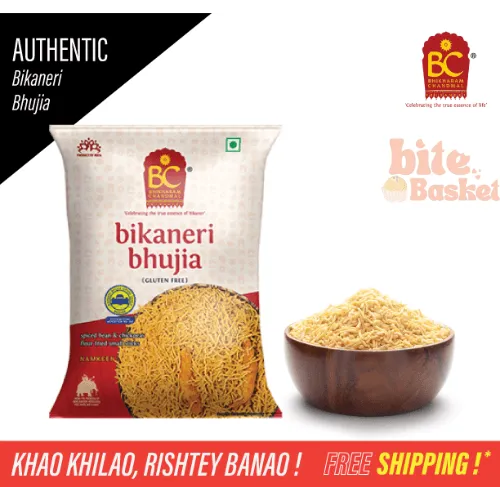
How to Store Bhujia & Namkeen: Keep It Crispy for Months
Published on • 7 views
Short answer first: bhujia goes soft because of moisture, not age. Keep it in an airtight container in a cool, dry place and it stays crisp for weeks; seal the pack properly after every serving and it can last months. Here's the full guide — what works, what doesn't, and how to rescue a pack that's already gone soft.
Every Indian home knows the tragedy: you open a big pack of bhujia, everyone eats a bowl, the pack sits on the counter "closed" with a rubber band — and three days later it's chewy. Not stale-tasting, just limp. That crunch is the whole point of bhujia, and once it's gone, nobody reaches for the pack again.
The good news: this is almost entirely preventable. Bhujia is a fried, low-moisture food. It doesn't spoil the way fresh food does — it just absorbs water from the air. Control the air, and you control the crunch.
Why bhujia goes soft (the one thing to understand)
Fried snacks are full of tiny air pockets. In humid air — and most of India is humid for most of the year — those pockets pull in moisture like a sponge. The pack doesn't need to be "open"; a loosely folded packet in a Mumbai or Chennai kitchen can go soft in 48 hours.
This also explains why bhujia bought loose from a halwai goes soft fastest (no barrier at all), while a factory-sealed pack stays crisp for months. Your job after opening is simple: recreate that seal as best you can, every single time.
The 4 rules of storing namkeen
1. Airtight beats everything
The container matters more than the location. A steel dabba with a tight lid, a glass jar with a rubber gasket, or even the original pack with the air squeezed out and a proper clip — all of these work. A rubber band around a folded packet does not; air still gets in.
If you buy the big family packs — like the 800g heritage bhujia — decant what you'll eat in a week into a smaller jar and keep the rest sealed. Every time you open the big pack, you let humid air in.
2. Cool, dark, and dry
A kitchen shelf away from the stove is ideal. Heat and light break down the frying oil faster, which is what eventually gives old namkeen that off, "purana tel" smell. The shelf above the gas stove — the most common namkeen spot in Indian homes — is actually the worst one: heat rises, steam rises, and your bhujia sits right in it.
3. Don't refrigerate opened packs
This surprises people, but the fridge is humid. Every time you take a cold pack out, condensation forms on the cold bhujia — the exact moisture you're trying to avoid. The one exception: an unopened sealed pack can go in the fridge or freezer for long-term storage (see below), because no moist air gets inside.
4. Use clean, dry hands or a spoon
Wet fingers in the bhujia jar are a classic crunch-killer. One damp handful introduces enough moisture to soften the whole jar over a day or two. Pour it into a bowl instead of reaching in.
How long does bhujia actually last?
Rough guide, assuming proper airtight storage:
- Unopened sealed pack: 3–6 months easily (check the best-before date on the pack; traditional makers like Bhikharam Chandmal print realistic dates because there's nothing artificial holding it together).
- Opened, stored airtight: 3–4 weeks of full crunch, longer if your kitchen is dry.
- Opened, folded packet with a clip: about a week in humid weather.
- Sweets (rasgulla, etc.): different rules — follow the pack; most need refrigeration after opening and last days, not weeks.
One honest caveat: namkeen made without preservatives — which is how Bikaner's traditional halwais make it — relies entirely on the seal and the fry for its shelf life. That's a feature, not a bug, but it means the storage rules above matter more, not less.
The freezer trick (for bulk buyers)
Bought for Diwali early, or stocked up on a family-size combo? Unopened sealed packs freeze beautifully. Put them in the freezer as-is; the low moisture content means no ice crystals worth worrying about. When you need a pack, move it to the shelf for a few hours and open only once it's at room temperature — opening a frozen pack straight away causes condensation on the cold pieces.
Don't freeze an already-opened pack unless you've resealed it properly in a zip-lock with the air squeezed out. And never refreeze.
How to rescue soft bhujia
It happens. The pack sat open during a party, or someone left the jar lid off overnight. Before you throw it out, try this — it works because the problem is surface moisture, and heat drives moisture out:
- Kadai method: dry-roast the bhujia in a hot kadai or pan for 2–3 minutes, tossing constantly. No oil needed — there's plenty in the bhujia already. Let it cool completely before tasting; it crisps as it cools.
- Oven/OTG method: spread on a tray at 150°C for 5–7 minutes, then cool.
- Microwave (last resort): 30-second bursts on a plate, checking between bursts. Easy to overshoot and burn.
This revives the crunch, not the freshness — if it smells off (rancid oil), no amount of heating fixes that. Trust your nose.
Storing different types of namkeen
Not all snacks behave the same:
- Bhujia and sev: the most moisture-sensitive because of the thin strands and huge surface area. Jar them immediately; these go soft first.
- Mixture and chivda: slightly hardier, but the peanuts and dal inside can turn rancid faster than the sev. Same airtight rules, and eat within 3 weeks of opening.
- Papad (uncooked): the diva of the shelf. Uncooked papad absorbs moisture aggressively and then refuses to puff when roasted. Keep the pack sealed until use, and if you live somewhere humid, store uncooked papad in an airtight container too — not just folded in its pack.
- Biscuits and mathri: sturdier than bhujia but they pick up odours. Don't store them next to masala dabbas or strong-smelling foods; the desi-ghee biscuits in particular deserve their own jar.
- Sweets: milk-based sweets are a different game entirely — refrigerate after opening and finish in 2–3 days. Dry sweets like soan papdi follow namkeen rules: airtight and dry.
Storing namkeen for gifting and travel
Two situations where storage really matters:
Diwali gifting: ordering early is smart — courier networks choke in the first week of November. Sealed packs ordered in October will be perfectly crisp for Diwali on 8 November if you keep them sealed and at room temperature. Don't open "just to check" — every opening costs you shelf life.
Sending to family abroad or outstation: sealed packs survive the journey fine. Tell the recipient the same rules: airtight jar after opening, away from the stove. The Aloo Bhujia and classic bhujia are the safest travellers — sturdy pieces that don't crumble.
What NOT to do
- Don't store namkeen above the stove or near the kettle.
- Don't leave the pack "just folded" — fold, clip, and ideally jar it.
- Don't mix fresh bhujia into a jar of older, softer bhujia. The moisture migrates.
- Don't trust the "sniff test" alone for very old packs — rancid oil isn't always obvious until you taste it. When in doubt, check the date.
FAQ: Storing Bhujia & Namkeen
How do I keep bhujia crispy after opening the packet?
Transfer it to an airtight steel or glass container immediately, keep it in a cool dry shelf away from the stove, and always reseal after serving. It stays crisp for 3–4 weeks this way.
Should I keep namkeen in the fridge?
No — not once opened. Fridge air is humid and condensation forms on cold bhujia. Unopened sealed packs are the exception; they can be refrigerated or frozen.
How long does an unopened bhujia pack last?
Typically 3–6 months at room temperature. Traditional preservative-free bhujia relies on the seal, so don't buy more than you'll eat before the best-before date.
Can I fix bhujia that has gone soft?
Yes — dry-roast it in a hot kadai for 2–3 minutes, tossing constantly, then let it cool completely. The crunch comes back as it cools. This doesn't work if the oil has turned rancid.
Does freezing namkeen work?
For unopened sealed packs, yes. Thaw to room temperature before opening to avoid condensation. Don't freeze opened packs unless resealed airtight in a zip-lock.
Taste it for yourself
Good storage starts with good bhujia. The BiteBasket shop packs every order fresh in Bikaner — try the heritage Bhikharam Chandmal Bikaneri Bhujia or the crowd-favourite The Lalji Aloo Bhujia — and this time, put it straight into an airtight jar. Your future self, reaching for a crunchy handful three weeks later, will thank you.