
Bikaneri Bhujia vs Aloo Bhujia vs Moong Dal: Which One for Which Craving?
Published on • 4 views
Three packets, three different snacks — and they all get called "bhujia" by someone in the family. Here is the quick version: Bikaneri bhujia is the original — fine, crisp strands of moth dal and besan with a peppery kick. Aloo bhujia is its softer, thicker cousin, made with potato in the dough. Moong dal is not a bhujia at all — it is whole fried lentils, salted or spiced, with a heavier crunch. Pick Bikaneri bhujia for the classic chai pairing, aloo bhujia when you want something milder and more filling, and moong dal when you want maximum crunch per handful.
What exactly is Bikaneri bhujia?
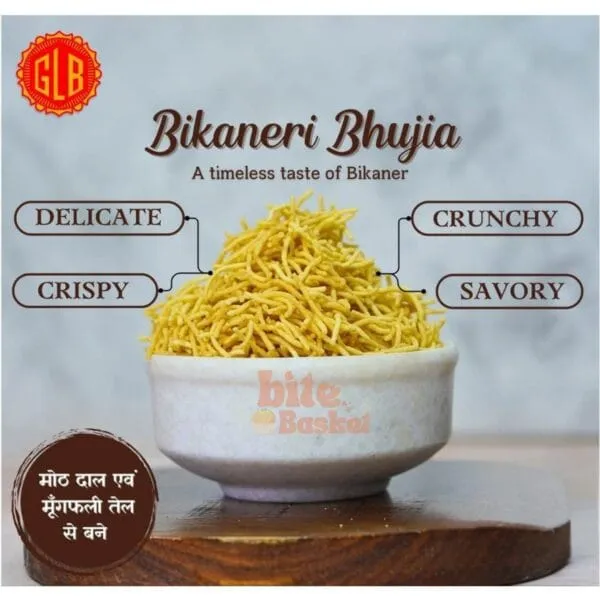
The original. A dough of moth dal flour and besan (gram flour), seasoned with black pepper and spices, pressed through a fine-holed saancha into hot oil, and fried until crisp. The strands are thin — thinner than most people expect — and the texture is light and shattery rather than heavy. The flavour is savoury with a distinct peppery warmth, not chilli-hot.
The moth dal is the key. It is a hardy desert lentil that gives Bikaneri bhujia its protein content and its characteristic bite — we wrote about it in detail in our moth dal guide if you want the full story. And the oil matters: Bikaner's traditional halwais fry in groundnut (peanut) oil, not palm oil, which is why the flavour stays clean instead of waxy. Girdharilal Bhujiawale — in business since 1978 — still makes it that way.
Try Girdharilal's Bikaneri bhujia on BiteBasket
And aloo bhujia?
Aloo bhujia takes the bhujia idea and adds boiled potato to the dough. That one change alters everything: the strands come out thicker, the texture is softer and more melt-in-the-mouth, and the flavour is milder and slightly starchy-sweet compared to the peppery punch of the original. It is also more filling — a small bowl of aloo bhujia genuinely takes the edge off hunger in a way that the lighter Bikaneri bhujia doesn't.
This is the bhujia for people who find the original too sharp, for kids, and for anyone who wants their evening snack to actually count as a snack rather than a garnish. Girdharilal's version keeps the same groundnut-oil, no-palm-oil standard as their classic bhujia.
Try Girdharilal's aloo bhujia on BiteBasket
What about moong dal?
Moong dal namkeen is a different species. No dough, no press — just whole moong dal (split, skinless lentils), soaked, dried, and fried until golden. Each piece is a tiny, dense, crunchy lentil. The crunch is heavier and more satisfying than bhujia's strands, and the flavour is simpler: salty, toasty, lentil-forward. It comes in two main styles — plain salted (mogar dal) and masala-coated for those who want heat.
Because it is pure lentil, moong dal is also the highest-protein option of the three — worth knowing if that matters to you. Chandra Vilas sells both the salted and the spicy masala versions; the masala one is the better pick for parties, the salted one for everyday munching.
Try Chandra Vilas masala moong dal on BiteBasket
Side-by-side: how the three compare
| Bikaneri Bhujia | Aloo Bhujia | Moong Dal | |
|---|---|---|---|
| Base | Moth dal + besan dough | Potato + besan dough | Whole moong dal lentils |
| Shape | Fine thin strands | Thicker strands | Individual fried lentils |
| Crunch | Light, shattery | Softer, melts faster | Heavy, dense crunch |
| Spice level | Peppery warmth | Mild | Salted or spicy (varies) |
| Filling power | Light | Most filling | Medium |
| Best for | Chai, gifting, the classic | Kids, mild palates, hunger | Parties, protein, heavy crunch |
Which one for which craving? A practical guide
Evening chai
Bikaneri bhujia, no contest. The fine strands and peppery flavour were practically engineered for cutting through milky chai. This is the pairing Bikaner runs on.
A proper spicy craving
Masala moong dal or a spicier bhujia variant. The masala coating on moong dal delivers heat directly; if you want the bhujia format with more fire, look at lehsun (garlic) bhujia or mota bhujia with longi mirch.
Something the kids will eat
Aloo bhujia. Milder, softer, no peppery bite to complain about. It is also the one least likely to end up scattered across the sofa — the thicker strands hold together better.
A party bowl that disappears
Moong dal, specifically the masala version. The dense crunch makes it dangerously easy to keep eating, and it holds its texture for hours in an open bowl — strands go soft faster once exposed to air. (Our storage guide explains why, if you're curious.)
Gifting or a Diwali hamper
Bikaneri bhujia — the original, in a good pack, from a heritage brand. It is the most recognisable of the three and carries the Bikaner name, which is half the point of gifting it. A combo pack with two or three bhujia varieties reads even better.
See the Bishanlal Babulal bhujia combo (3 No + Karorpati + Aloo) on BiteBasket
A light, everyday nibble
Salted moong dal (mogar). Simple, not greasy-feeling, and you can portion it easily. The plain version has the cleanest ingredient list of the three.
One thing to check on the label: the oil
Whichever of the three you pick, check what it was fried in. A lot of mass-market namkeen uses palm oil, which is cheaper but leaves a waxy mouthfeel and is the thing most label-conscious buyers want to avoid. Bikaner's traditional makers — Girdharilal, Bishanlal Babulal, Hadman Ji — fry in groundnut oil. We dug into why that tradition survived in our no-palm-oil bhujia post. If the pack doesn't say, assume the worst.
Taste it for yourself
The honest way to settle this debate is a side-by-side tasting: one pack each of Bikaneri bhujia, aloo bhujia, and masala moong dal, plus chai. Browse the Bikaneri namkeen collection on BiteBasket — all from Bikaner's heritage halwais, all fried without palm oil — and run your own comparison. Report back on which bowl empties first.
Frequently asked questions
Is aloo bhujia the same as Bikaneri bhujia?
No. Bikaneri bhujia is made from moth dal and besan with fine strands and a peppery flavour; aloo bhujia includes potato in the dough, giving thicker, softer, milder strands. They are related but distinct snacks.
Which is healthier: bhujia or moong dal?
Moong dal namkeen is the highest in protein since it is made from whole lentils. All three are fried snacks, so "healthy" is relative — but checking for palm oil on the label and watching portions matters more than which of the three you pick. Our bhujia nutrition guide breaks this down properly.
What is the difference between masala moong dal and salted moong dal?
Salted moong dal (mogar dal) is simply fried lentils with salt — clean, toasty flavour. Masala moong dal adds a spice coating (chilli, amchur, black salt typically) for a tangy-spicy kick. Same crunch, different mood.
Which bhujia is best for gifting?
Classic Bikaneri bhujia from a heritage brand — it is the most recognisable and carries the Bikaner name. Combo packs with multiple bhujia varieties (like a 3 No + aloo + karorpati set) make especially good gifts.
Do these snacks contain palm oil?
It depends on the maker. Bikaner's traditional halwais (Girdharilal, Bishanlal Babulal, Hadman Ji) fry in groundnut oil with no palm oil. Mass-market brands often use palm oil — always check the ingredient list on the pack.
Three snacks, three personalities, one correct answer for each craving. Stock all three, and the only remaining problem is hiding them from the rest of the family.