
Is Bikaneri Bhujia Healthy? Ingredients, Nutrition & Smart Snacking
Published on • 8 views
Is Bikaneri bhujia healthy? Let's give you the straight answer first: it is a deep-fried snack, so nobody is going to call it a health food. But the traditional Bikaneri version is a far cry from the average packet of chips. The real thing is made from moth dal, spices, and groundnut oil — no palm oil, no preservatives, no mystery ingredients. Eaten in sensible portions, it fits into a normal diet without any guilt.
Now let's unpack that, because "bhujia" on a supermarket shelf and "Bikaneri bhujia" from a Bikaner halwai are two very different things.
What is Bikaneri bhujia actually made of?
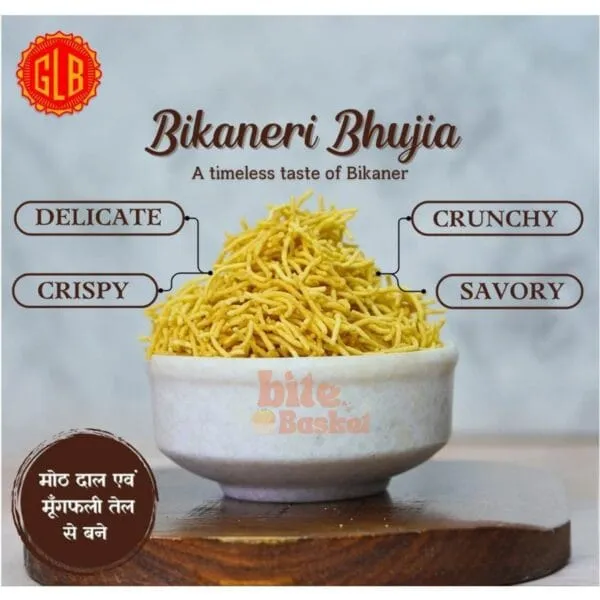
The recipe is older than most of us realise. Bikaneri bhujia — the kind with the GI tag, the one Bikaner is famous for — starts with moth dal (also called moth-mogar dal). The dal is ground into flour, mixed with a short list of spices like black pepper, and pressed through a bhujia maker straight into hot oil. That is it. No onion, no garlic, no flavour powders in the classic version.
The oil matters too. Bikaner's halwais have always fried in groundnut (peanut) oil. Look at the packs on BiteBasket and you will see it stated plainly: the Girdharilal Bikaneri Bhujia, made the same way since 1978, is fried in pure groundnut oil and is 100% palm oil free. The Hadman Ji Sky King bhujia carries the same mark of the old method — moth-mogar dal fried in groundnut oil, handmade.
Compare that with mass-market namkeen, where palm oil is the default because it is cheap, and you start to see why Bikaner folks are so protective of their bhujia.
Bikaneri bhujia nutrition: the honest picture
Let's be honest about the numbers side of things. Bhujia is fried, so it is calorie-dense — a small handful carries more energy than the same volume of roasted snacks. That is simply how frying works, and no heritage story changes it.
What works in its favour:
- Moth dal brings protein. Unlike potato chips, which are mostly starch, bhujia's base is a lentil. Lentils carry protein and fibre, which is why a small bowl of bhujia keeps you full longer than a packet of wafers.
- Groundnut oil, not palm oil. Palm oil is high in saturated fat and is the reason many packaged snacks feel heavy. Groundnut oil has a better fat profile, and Bikaner's halwais have stuck with it for generations.
- Short ingredient lists. Classic Bikaneri bhujia has five or six ingredients. Many packaged snacks have twenty, including preservatives and acidity regulators. The bhujia we list on BiteBasket is packed fresh by the halwais themselves, without preservatives — which is also why we tell you to finish the pack within the timeframe printed on it.
We are deliberately not printing a calorie table here. Recipes differ slightly from halwai to halwai, and the most accurate numbers are on the pack in your hand. Check the nutrition label on the product page or the packet — that is the honest source.
Why "no palm oil" actually matters
You will see "no palm oil" on a lot of our product pages, and it is worth knowing why we make a point of it. Palm oil became the packaged-food industry's favourite because it is cheap and shelf-stable. But it is heavy on saturated fat, and a lot of people now actively avoid it.
Bikaner's old halwai shops never switched. Groundnut oil costs more, but it fries cleaner, tastes lighter, and it is what the original recipes were built around. When you buy Bishanlal Babulal's hand-pressed Paraat Bhujia or Hadman Ji Sky King's 3 Number Bhujia, you are getting the pre-palm-oil recipe — the one from before cost-cutting entered the picture.
How to snack on bhujia the smart way
You do not need to give up bhujia to eat sensibly. You just need a little strategy:
- Portion it out. A small katori (roughly 30 grams) is plenty for an evening craving. Eating straight from a 400-gram pack is where things go wrong — with any snack, not just bhujia.
- Pair it with something fresh. Bhujia over dahi, a spoonful in chaas, or mixed into poha turns it from a mindless munch into an actual snack with protein and probiotics in the mix.
- Make it your 5 pm snack, not your midnight snack. Your body handles a fried snack far better in the evening than at 1 am. This is less about bhujia and more about basic common sense.
- Choose the plain classic over heavily flavoured variants. The original Bikaneri bhujia has the shortest ingredient list. Cheese-dusted or extra-masala versions are fun occasionally, but the classic is the everyday pick.
Who should go easy on it?
A quick word of balance. If you are managing blood pressure, cholesterol, or diabetes, fried snacks of any kind deserve caution — bhujia included. The salt and oil add up if portions are not watched. And if you have a peanut allergy, note that groundnut oil is the traditional frying medium, so check with the maker first.
None of this is medical advice. If you have a health condition, your doctor's word beats any blog post — including this one.
Taste it for yourself
The best way to judge Bikaneri bhujia is to taste the real thing, made the old way. Here are our most-loved picks, all fried in groundnut oil with no palm oil:
- Girdharilal Bikaneri Bhujia — the heritage original, unchanged since 1978
- Bishanlal Babulal Paraat Bhujia — hand-pressed, strand by strand, since 1956
- Hadman Ji Sky King 3 Number Bhujia — handmade with moth-mogar dal
- Bhikharam Chandmal Bikaneri Bhujia — the century-old Bikaner name
Order fresh from Bikaner on BiteBasket — packed by the halwais, shipped across India.
Frequently asked questions
Is Bikaneri bhujia good for weight loss?
Not specifically. It is a fried, calorie-dense snack, so it will not help you lose weight on its own. But in small portions (a katori a day), it does not have to derail a weight-loss diet either — the protein from moth dal keeps you fuller than chips would.
Does Bikaneri bhujia contain palm oil?
The traditional Bikaneri kind does not. Bikaner's halwais fry in groundnut (peanut) oil. Every bhujia we sell on BiteBasket is palm oil free — check the product description, where we state it clearly.
Is bhujia gluten-free?
Classic Bikaneri bhujia is made from moth dal (a lentil), not wheat, so it is naturally gluten-free in its ingredients. However, if you have coeliac disease, check the pack — shared frying equipment can mean traces of gluten.
How many calories are in Bikaneri bhujia?
It varies by halwai and recipe. Rather than quoting a generic number, we suggest checking the nutrition label on the specific pack — that is the accurate figure for what you are eating.
Is homemade-style bhujia healthier than branded packets?
Often, yes — not because of magic, but because halwai-style bhujia skips palm oil, preservatives, and the long ingredient lists of mass production. That is exactly the kind we curate on BiteBasket.
So — is Bikaneri bhujia healthy? It is not a salad. But it is a real food made from real ingredients by people who have been perfecting it for generations. Snack on it the smart way, and it earns its place in your kitchen.