
Moth Dal: The Protein-Rich Lentil Behind Real Bikaneri Bhujia
Published on • 2 views
Short answer: real Bikaneri bhujia is made from moth dal — a hardy desert legume grown in Rajasthan's arid belt — mixed with besan, spiced, and pressed through a bhujia-maker into hot oil. If the ingredient list on a "Bikaneri bhujia" pack doesn't mention moth, it's not the real thing; it's just flavoured sev.
Walk into any namkeen shop in India and you'll find a dozen packets that say "bhujia". Most of them are besan sev with different spice mixes. Real Bikaneri bhujia — the kind with the GI tag, the kind Bikaner's halwais have been making for generations — starts with one non-negotiable ingredient: moth dal.
Most people have never heard of moth. It's not in most Indian kitchens outside Rajasthan. But it's the entire reason Bikaneri bhujia tastes the way it does, and understanding it is the fastest way to tell the real thing from an imitation.
What exactly is moth dal?
Moth (Vigna aconitifolia), also called matki or Turkish gram, is a small, brown, drought-hardy legume. It grows where almost nothing else will — in the sandy soils of western Rajasthan, with minimal water, in the kind of heat that kills most crops. It's a desert survivor, and it has fed Rajasthan's farming families for centuries.
The moth bean is small — noticeably smaller than moong or masoor — with a dense, earthy flavour and a firm texture that holds up to frying. When ground into flour and mixed with besan (gram flour), it gives bhujia its characteristic bite: crisp but not brittle, with a deep, nutty savouriness that plain besan sev never achieves.
As a legume, moth is naturally protein-rich — it's part of the same family as the dals that form the protein backbone of Indian vegetarian diets. That doesn't make bhujia a health food (it's still a fried snack), but it does mean the real thing starts from a more substantial base than refined flour and starch.
Why moth dal makes Bikaneri bhujia different
The difference between real Bikaneri bhujia and ordinary bhujia-style sev comes down to the flour blend:
- Real Bikaneri bhujia: moth dal flour + besan, spiced with black pepper, cardamom, clove and other whole spices, pressed into fine strands and fried. The GI-tagged recipe centres on this blend.
- Generic "bhujia": mostly besan, sometimes with rice flour or starch for extra crispness, flavoured with spice mixes. Cheaper to make, one-dimensional in taste.
You can taste the difference blind. Real moth-based bhujia has a layered flavour — first the crunch, then a peppery warmth, then a lingering nuttiness. Besan-only sev tastes of exactly one thing: fried besan with masala dusted on top.
There's also a texture tell. Moth flour fries up slightly denser than pure besan, so genuine Bikaneri bhujia has a satisfying heft to each strand. The imitations tend to be either too airy (starch-heavy) or too hard (over-fried besan).
How to check: read the ingredient list
This is the single most useful thing in this post. Next time you pick up a packet labelled "Bikaneri bhujia", flip it over:
- Moth flour / moth dal listed first or second — you're holding the real thing.
- Only besan / gram flour, no moth anywhere — it's Bikaneri-style at best, regardless of what the front of the pack claims.
- "Edible vegetable oil" with no specifics — worth a second thought; traditional Bikaner makers typically fry in groundnut oil (we wrote about the no-palm-oil tradition here).
The heritage Bikaner makers BiteBasket works with — houses like Girdharilal and Bhikharam Chandmal — build their bhujia on the moth-besan blend. Some put it right in the product title: Hadman Ji's bhujia is sold as "100% peanut oil & moth mogar dal", no fine print needed. It's one of the reasons their bhujia tastes like Bikaner and not like a factory in another state.
From moth dal to bhujia: how it's actually made
The process hasn't changed much in generations:
- Grinding. Moth dal is ground into a fine flour and blended with besan in the maker's own ratio — this ratio is the closely guarded part of every halwai's recipe.
- Spicing. Whole spices — black pepper, cardamom, cloves — are ground fresh and kneaded into the dough with salt and water. No pre-mixed "bhujia masala" in the traditional method.
- Pressing. The dough goes into a bhujia press (a large brass or steel cylinder with a perforated base) and is extruded directly into hot oil in fine strands.
- Frying. The strands fry for a few minutes until golden and crisp, then drain. Traditional makers fry in groundnut oil, which adds its own subtle nuttiness.
- Cooling and packing. The bhujia cools completely before packing — packing warm bhujia traps steam and kills the crunch.
That's it. Five steps, no preservatives needed — the low moisture content of properly fried bhujia is what keeps it crisp for weeks (see our storage guide for keeping it that way at home).
Why moth dal stayed a Bikaner secret for so long
Moth grows best in exactly the conditions Bikaner has: sandy soil, scant rainfall, brutal summers. For most of history, it was a subsistence crop — farmers grew it because it would grow, and halwais used it because it was there. Nobody marketed it; it was just what bhujia was made of.
The rest of India's snack industry, centred in cities with no moth tradition, built its bhujia on besan because besan was available everywhere. By the time "Bikaneri bhujia" became a national brand name, the moth connection had been quietly dropped by most mass manufacturers. The name travelled; the ingredient didn't.
That's why buying from Bikaner still matters. The makers there never stopped using moth — it was never a marketing decision for them, just the recipe.
Taste the difference yourself
If you've only ever eaten mass-market "Bikaneri bhujia", a moth-based bhujia from an actual Bikaner halwai is a genuine surprise — denser, more savoury, more interesting. Start with the classics:
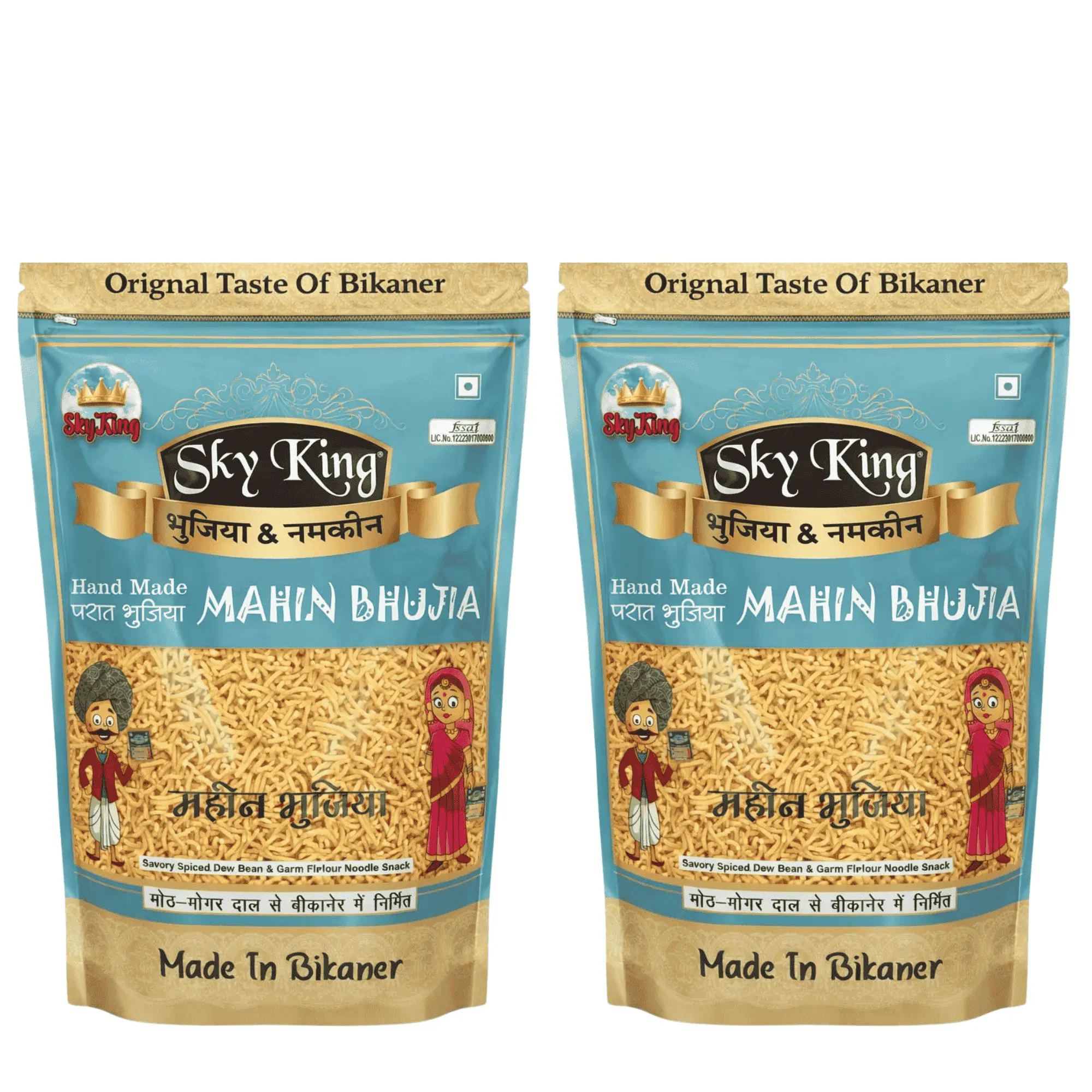
- Hadman Ji Sky King Bikaneri Mahin Bhujia (1kg) — ₹315. The product title says it outright: 100% peanut oil and moth mogar dal. Fine strands, classic Bikaner flavour.
- Girdharilal Bikaneri Bhujia (500g) — ₹159. A heritage-house bhujia at an everyday price — the easiest way to run the moth test yourself.
- Hadman Ji Bikaneri Mota Bhujia (1kg) — ₹315. Thicker strands, same moth-mogar-dal base — for those who like a heartier crunch.
Browse the full Bikaneri bhujia collection — and when your order arrives, do the ingredient-list test before you open it.
Frequently asked questions
What is moth dal?
Moth (also called matki) is a small, drought-hardy legume grown in Rajasthan's arid regions. Ground into flour and blended with besan, it's the defining ingredient of authentic Bikaneri bhujia.
Is Bikaneri bhujia made from moth dal or besan?
Real Bikaneri bhujia uses both — a blend of moth dal flour and besan (gram flour). Bhujia made from besan alone is sev, not authentic Bikaneri bhujia.
Why does real Bikaneri bhujia taste different?
The moth dal flour gives it a denser crunch and a deep, nutty savouriness that plain besan sev lacks, layered with whole spices like black pepper and cardamom.
How can I tell if bhujia is authentically Bikaneri?
Check the ingredient list: moth flour or moth dal should appear first or second. If only besan is listed, it's Bikaneri-style, not the real thing.
Is moth dal healthy?
Moth is a legume, and legumes are naturally protein-rich. That gives real bhujia a more substantial base than starch-based snacks — though it's still a fried snack, best enjoyed in sensible portions.
The next time someone hands you bhujia and calls it Bikaneri, you'll know the one question that settles it: where's the moth? If the answer is "in the flour blend", you're eating the real thing.