
Is Bikaneri Bhujia Gluten-Free? Ingredients Explained
Published on • 3 views
The short answer: traditionally yes, but not automatically
If you have ever stood in a snack aisle wondering whether that pack of Bikaneri bhujia is safe for a gluten-free diet, here is the honest answer: classic Bikaneri bhujia is made from moth bean flour, which is naturally gluten-free. There is no wheat in the traditional recipe. But "traditionally gluten-free" and "safe for someone with celiac disease" are two different things, and the gap between them comes down to one small ingredient and how the bhujia is made.
This guide explains what actually goes into Bikaneri bhujia, where gluten can sneak in, and how to check any pack before you buy it. It is general information, not medical advice — if you have celiac disease, rely on certified gluten-free labels and your doctor's guidance.
What goes into real Bikaneri bhujia
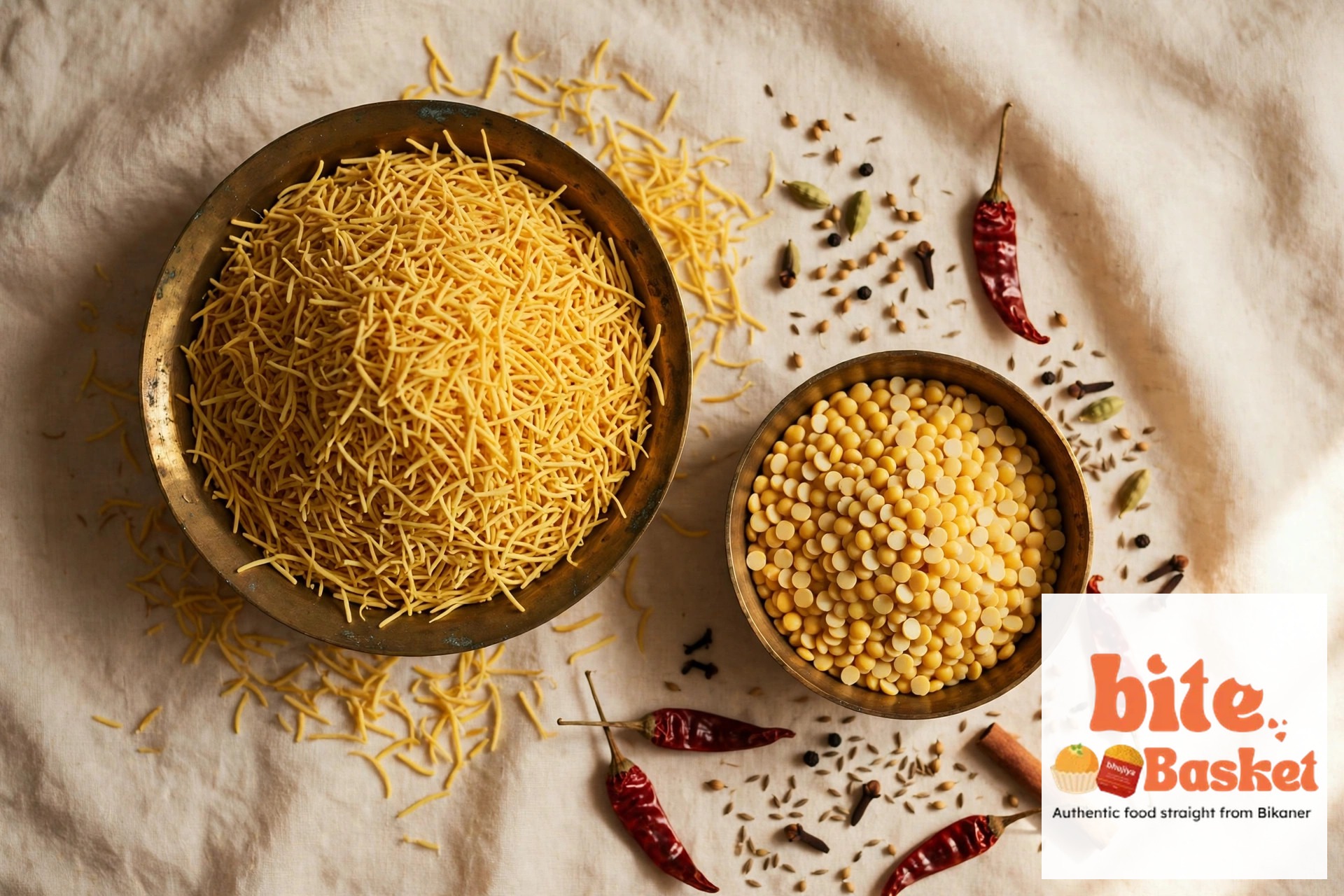
Authentic Bikaneri bhujia is a short-ingredient snack. The base is moth dal (matki) flour, a lentil flour that contains no gluten. To it, makers add ground spices — typically red chilli, black pepper, and other dry spices — a pinch of salt, and a little asafoetida (hing) for its distinctive aroma. The dough is pressed into fine strands and fried in oil, traditionally groundnut oil.
Notice what is missing from that list: wheat flour, maida, and any wheat-based binder. That is why plain, traditionally made bhujia is naturally gluten-free in a way that, say, a wheat cracker never can be. The GI tag for Bikaneri bhujia exists precisely because this recipe and method belong to Bikaner, and the classic version has stayed close to its roots.
That said, not every pack labelled "bhujia" follows the classic recipe. Flavoured variants, mixtures, and mass-market versions can add ingredients the original never had. So the right question is never just "is bhujia gluten-free?" — it is "is this bhujia gluten-free?"
The hing trap: the one ingredient to watch
The biggest hidden gluten risk in bhujia is hing. Pure asafoetida resin is naturally gluten-free. But the powdered hing sold in most Indian kitchens is compounded hing — the strong resin is diluted so it can be poured and measured, and the most common diluent is wheat flour. In many commercial hing powders, wheat flour makes up a large share of the packet, sometimes more than half.
This matters because hing is used in tiny quantities, so it is easy to dismiss. But for someone with celiac disease, even a small amount of wheat flour in the spice mix is enough to matter. And because hing appears in the ingredients list simply as "asafoetida" or "hing," the label alone does not always tell you which kind was used.
There are safer versions: hing compounded with rice flour instead of wheat flour, and pure resin hing with no grain carrier at all. Both exist, and rice-flour hing is usually marked gluten-free on the pack. So when a bhujia maker uses rice-flour hing or pure hing, the finished bhujia stays gluten-free. When the maker uses standard compounded hing, it may not be — even though every other ingredient is fine.
Practical takeaway: if a bhujia pack lists hing but does not say anything about gluten, and you need certainty, ask the maker which hing they use. It is a reasonable question, and a good maker will know the answer.
Other places gluten can hide
Hing is the main risk, but it is not the only one. Here are the others worth knowing about:
- Shared oil and fryers: if the same oil or fryer is used for wheat-based snacks (like wheat sev or mathri made with maida), traces of gluten can carry over into the bhujia. Small halwais often fry many snacks in the same setup.
- Spice blends with fillers: cheap pre-mixed spice blends sometimes use wheat flour as an anti-caking agent or filler. Whole spices are always gluten-free; blends deserve a label check.
- Flavoured variants and mixtures: a "bhujia mixture" or a flavoured pack may include other components — coated nuts, fried lentils, or added flavourings — and any one of them can introduce gluten. Plain bhujia is simpler to judge than a mixture.
- Cross-contact in packing: facilities that pack wheat snacks on shared lines can transfer traces. This is why certified gluten-free products also control the packing environment, not just the recipe.
None of this means bhujia is a risky food in general. It means the gluten-free status of a specific pack depends on the recipe and the kitchen behind it.
How to check any pack before you buy
Use this quick checklist on any bhujia pack, whether you are buying online or in a store:
- Read the full ingredients list. Look for wheat, maida, atta, or "wheat flour" anywhere — including inside spice mixes and hing.
- Look for an allergen statement. In India, packaged foods must declare common allergens. A line like "contains wheat" or "may contain wheat" is your clearest signal.
- Look for a gluten-free claim, and judge it. A certified gluten-free mark means the product was tested and made under controls. A casual "gluten-free" claim without certification is weaker, especially for celiac disease.
- Ask the maker about hing. Specifically: is the hing compounded with wheat flour or rice flour, or is it pure resin? This single answer settles most of the doubt.
- Ask about shared fryers. If you are highly sensitive, ask whether wheat snacks are fried in the same oil.
- When in doubt, choose plain over mixed. A plain classic bhujia with a short ingredients list is easier to verify than a multi-component mixture.
If you are buying from a heritage halwai brand, you have an advantage: these makers tend to keep recipes short and traditional. For example, Girdharilal Bikaneri Bhujia is the classic moth-dal bhujia style, and you can read more about the maker on the Girdharilal Bhujiawale page. Still, check the specific pack's label — recipes and suppliers can change, and the label is the final word.
Celiac disease vs gluten sensitivity: different caution levels
How careful you need to be depends on why you are avoiding gluten. If you have celiac disease, even small traces matter, and you should stick to products that are certified gluten-free or that you have verified with the maker — including the hing question and the shared-fryer question. A "naturally gluten-free ingredients" claim alone is not enough for celiac safety.
If you are avoiding gluten by preference or for mild sensitivity, a traditionally made plain bhujia with a clean ingredients list is usually a reasonable choice — but again, the label check takes a minute and is worth doing. And if you are unsure about a specific product, your doctor or dietitian can help you decide what level of caution fits your situation.
Enjoying bhujia on a gluten-free diet
The good news is that bhujia fits naturally into a gluten-free pantry. Pair a verified plain bhujia with naturally gluten-free partners — a cup of chai, a bowl of yoghurt dip, or as a crunchy topping on a rice-based chaat — and you are not missing out on anything. If you want the wider picture on bhujia's nutrition, our guide on whether Bikaneri bhujia is healthy covers ingredients, calories, and smart snacking in more detail.
It also helps to know how bhujia differs from lookalikes. Many snacks sold as "bhujia" outside Bikaner are actually wheat-based sev or generic mixtures. Our comparison of Bikaneri bhujia vs regular bhujia explains what sets the real thing apart — and the real thing, made the classic way, is the one most likely to be gluten-free.
And if you are stocking a gluten-free pantry more broadly, the namkeen category is a useful place to browse — just apply the same label checklist to each product, because gluten-free status is always decided pack by pack, never by category.
Frequently asked questions
Is Bikaneri bhujia gluten-free?
Traditionally, yes. Classic Bikaneri bhujia is made from moth dal flour, which is naturally gluten-free, with no wheat in the recipe. But a specific pack may not be gluten-free if its hing is compounded with wheat flour or if it is made in shared facilities with wheat snacks. Always check the label.
Does hing contain gluten?
Pure asafoetida resin does not. But most commercial hing powder is compounded with wheat flour as a carrier, so it does contain gluten. Rice-flour hing and pure resin hing are gluten-free options. If a bhujia label lists hing without details, ask the maker which kind they use.
Can people with celiac disease eat bhujia?
Only bhujia that is verified gluten-free — ideally certified — including confirmation about hing and shared fryers. Do not rely on "naturally gluten-free ingredients" alone. When in doubt, ask the maker or choose a certified product, and follow your doctor's advice.
Is all bhujia from Bikaner gluten-free?
No. "From Bikaner" is about origin and tradition, not a gluten-free guarantee. Each brand and each pack has its own recipe, hing source, and kitchen practices. Check the label on the exact pack you are buying.
The bottom line
Bikaneri bhujia starts gluten-free — moth dal, spices, and oil, no wheat in sight. Whether it stays gluten-free depends on the hing and the kitchen. Check the ingredients list, look for an allergen statement, ask about hing and shared fryers, and prefer certified products if you have celiac disease. Do that, and you can enjoy one of Bikaner's great snacks without guessing.