
Bikaneri Bhujia GI Tag Explained: Why Only Bikaner Can Call It That
Published on • 12 views
Pick up a packet labelled "Bikaneri bhujia" in a supermarket in Delhi, Mumbai or Dubai, and you are holding a promise: that this crunchy, peppery snack comes from Bikaner, in Rajasthan, and tastes the way Bikaneri bhujia is supposed to taste. That promise is not just marketing. It is backed by a legal protection called a Geographical Indication, or GI tag. Bikaneri bhujia is one of India's GI-tagged foods, and understanding that tag is the fastest way to tell the real thing from ordinary sev wearing a famous name.
This guide explains the GI tag in plain language: where the snack came from, how it earned its protection, what "authentic" requires, and how to use the tag to buy better bhujia.
What is a GI tag, anyway?
A Geographical Indication is a form of intellectual property protection. It says that a product's quality, reputation or character is essentially linked to the place it comes from, so only producers in that place — making it in the traditional way — may use the place name. Think of it as a nameplate that belongs to a region, not to any single company.
India's first GI tag went to Darjeeling tea in 2004: only tea grown and produced in Darjeeling can be sold as Darjeeling tea. The same logic covers Banarasi silk, Alphonso mangoes and Bikaneri bhujia. For shoppers, a GI tag is a shortcut for trust: the product claims a specific origin, and that claim is registered and enforceable.
Where Bikaneri bhujia began: Bikaner, 1877
The story starts in 1877, during the reign of Maharaja Dungar Singh of Bikaner, when the first batch of bhujia was made in the princely state — and the snack never really left. It became the city's calling card — fried in the narrow lanes of the old city, sold by family halwai shops, and carried home by visitors as the taste of Bikaner itself.
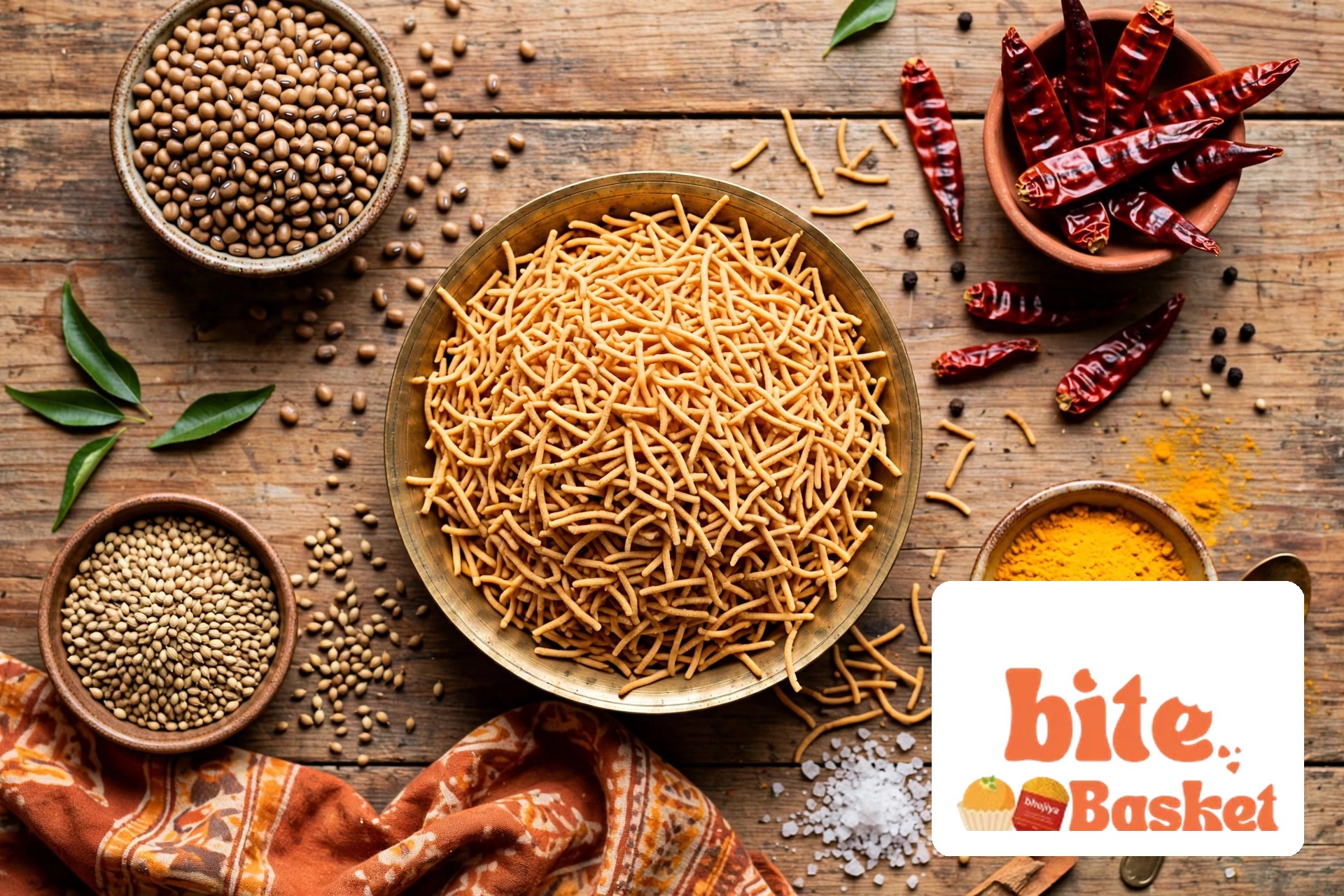
What made it different was the base ingredient. Real Bikaneri bhujia is built on moth dal (matki), a hardy desert legume grown around Bikaner, rather than on besan (gram flour) alone. Ground, spiced, pressed through a fine bhujia press into hot oil and fried until crisp, it comes out light yellow, fine-stranded and dry, with a nutty, peppery depth plain besan sev does not have. That combination — a local crop, a local method and a local palate — is exactly what a GI tag protects.
How Bikaneri bhujia earned its GI tag
By the early 2000s, "Bikaneri bhujia" had become a victim of its own fame. Large companies and factories far from Rajasthan were selling products under the Bikaneri name, and the small Bikaner halwais who invented the snack were losing the very name they had built. The city's producers fought back through the GI system.
Bikaneri bhujia was granted Geographical Indication protection in October 2008, and in September 2010 the Indian Patent Office confirmed the rights, issuing protection for the name to local manufacturers of Bikaner. From then on, only authorised producers within the defined Bikaner territory, making bhujia to the registered specification, could use the name as a protected product name. You will see both dates quoted — 2008 for the grant, 2010 for the confirmation, announced alongside Hyderabadi haleem — and the protection has now stood for well over a decade.
What the GI tag actually protects — and what it does not
The tag is often misunderstood, so here is what it does and does not do.
What it protects
- The name, tied to the place. The words "Bikaneri bhujia" as a protected product name belong to producers in the Bikaner territory. A factory elsewhere cannot simply borrow the city's reputation.
- The traditional character. The registered product is defined by its moth-dal base, its spice character and its pressed, fried form — not by any fried noodle that happens to be crunchy.
- The livelihood behind it. Bhujia-making is a cottage industry in and around Bikaner that supports a large number of families, especially women, in the region's villages. The GI tag helps that income stay where the skill lives.
What it does not do
- It does not guarantee every packet is delicious. A GI tag certifies origin and character, not that you personally will love one house's spice level over another's. Taste still varies between makers — and that is part of the fun.
- It does not stop all imitation. You will still see packets that say "Bikaneri style" or simply "bhujia". Wording matters: "style" is a signal that the maker is borrowing the idea without claiming the protected name, and a plain "bhujia" packet may be sev by another name.
- It does not replace reading the label. The tag is a starting point, not a substitute for checking ingredients, origin and the maker's name on the pack.
Why only Bikaner? The desert makes the difference
If you follow the same recipe in another city, why should the result not count? Because the recipe is only half the story. Moth dal is a desert crop suited to Bikaner's dry climate and sandy soils, and generations of Bikaner halwais have refined the pressing, frying and seasoning to suit it. The dry air and small-batch frying shape a snack that is drier, crisper and longer-keeping than a humid-climate copy — which is also why it travelled so well as a gift long before branded packets existed. As with Champagne from Champagne or Darjeeling tea from Darjeeling, the place is part of the product.
How to spot genuine GI-style Bikaneri bhujia when you shop
Use this five-point check before you buy:
1. Moth dal should lead the ingredients
Look for moth dal (matki) flour high on the ingredient list. If the packet is mainly besan with many additives, it is sev, not traditional Bikaneri bhujia.
2. Bikaner should be the place of manufacture
The pack should name Bikaner as where the bhujia was made, not merely where the brand is registered or marketed from.
3. The maker should be a Bikaner house
The most reliable packets name a Bikaner maker you can trace — a family halwai house, not a faceless "Bikaneri style" brand. On BiteBasket, Girdharilal Bhujiawale, Bishanlal Babulal and Bhikharam Chandmal are all long-standing Bikaner houses.
4. The spice list should be short and recognisable
Salt, chilli, black pepper and a few familiar spices are the traditional profile. A long tail of flavour enhancers and artificial colours signals cost-cutting, not tradition.
5. The oil matters too
Traditional Bikaner halwais fry in groundnut oil, and the houses stocked on BiteBasket make their bhujia without palm oil. Check the oil on any packet you buy.
Three Bikaner houses to start with
The best way to understand the GI story is to taste it — and to taste the differences between houses, since the tag protects a tradition, not a single flavour.
Girdharilal Bikaneri Bhujia is the classic everyday taste: peppery, clean and crisp, from a house making bhujia since 1978. Bhikharam Chandmal's Bikaneri Bhujia is fine-stranded and well-rounded, from a house over a century old. Sky King Hadman Ji's mahin (fine) bhujia shows how delicate the same tradition can be. Browse the full namkeen category to compare them.
Go further with Bikaneri bhujia vs regular bhujia, how Bikaneri bhujia is made and Bikaji vs local halwai bhujia.
Why the tag matters beyond the packet
A GI tag is sometimes dismissed as paperwork, but for Bikaner it has real economic meaning. When a name can be used by anyone, the price collapses toward the cheapest factory version, and the small makers who keep the tradition alive cannot compete. When the name is protected, the value of doing it properly — moth dal, small batches, Bikaner production — is preserved, and the money stays closer to the people with the skill.
So the next time you see "Bikaneri bhujia" on a packet, ask the GI question: was this made in Bikaner, from moth dal, by a maker who belongs to that tradition? If the answer is yes, you are not just buying a snack. You are buying the place itself, in a packet.
FAQ
When did Bikaneri bhujia get its GI tag?
Bikaneri bhujia was granted Geographical Indication protection in October 2008, and the rights were confirmed by the Indian Patent Office in September 2010. Both dates are quoted in sources; together they mark the point from which the name became legally protected for Bikaner producers.
Can bhujia made outside Bikaner be called Bikaneri bhujia?
Not as a protected product name. Only authorised producers within the defined Bikaner territory, making bhujia to the registered specification, may use "Bikaneri bhujia" in that protected sense. Products made elsewhere often use wording like "Bikaneri style" instead.
What makes Bikaneri bhujia different from ordinary sev?
The base ingredient and the method. Real Bikaneri bhujia is built on moth dal flour, pressed through a fine press and fried, giving it a nutty, peppery, dry crunch. Ordinary sev is usually thinner, made mainly from besan, and lighter in flavour.
Does the GI tag mean every Bikaneri bhujia tastes the same?
No. The tag protects origin and traditional character, not a single flavour. Different Bikaner houses season their bhujia differently, and that variety is part of the tradition.
Where can I buy genuine Bikaneri bhujia online?
BiteBasket stocks bhujia from Bikaner houses including Girdharilal, Bishanlal Babulal, Bhikharam Chandmal and Sky King Hadman Ji, with pan-India delivery. Check the manufacturer page for each brand, confirm Bikaner as the place of manufacture, and read the ingredient list before you order.