
Bikaneri Bhujia Price Guide: Why Some Packs Cost More Than Others
Published on • 3 views
Short answer: Bikaneri bhujia prices differ mainly because of what goes into the packet — the dal used, the oil it is fried in, whether it is made by hand in small batches or in a factory, and how far it has to travel to reach you. A cheap packet is not always bad, and an expensive one is not always better. But once you know what drives the price, you can tell a fair price from an inflated one in about a minute.
Anyone who has shopped for Bikaneri bhujia online has seen the same puzzle. Two packets, both labelled "Bikaneri bhujia," one noticeably cheaper than the other. Sometimes the cheaper one tastes just as good. Sometimes it tastes like any other sev. This guide explains where the money actually goes, so you can buy with confidence instead of guessing.
1. The Dal: Moth Dal Costs More Than Besan Alone
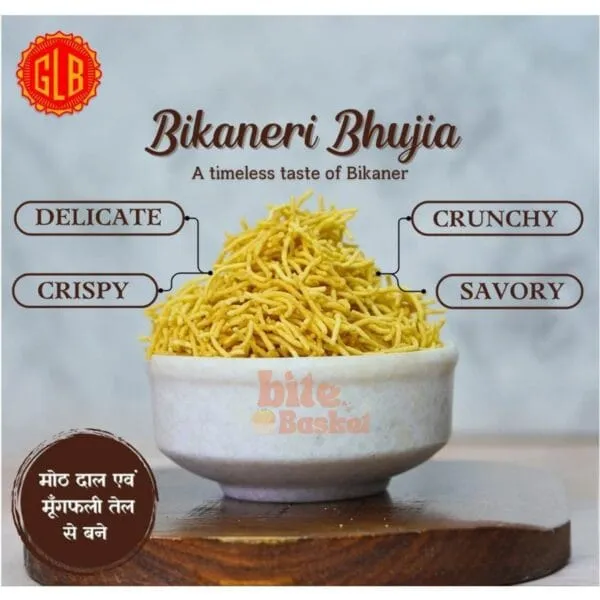
Real Bikaneri bhujia starts with moth dal flour. Moth is a hardy desert lentil grown in Rajasthan, and it is what gives genuine Bikaneri bhujia its thin strands, its nutty taste, and its crispness. It is also more expensive and harder to work with than plain besan (gram flour).
Cheaper bhujia often uses mostly besan, with little or no moth dal. It still looks like bhujia, but it tastes flatter, and the strands are usually thicker and softer. That is not a defect — besan sev is a perfectly good snack — but it is not the same product, and it should not be priced like one. When you compare two packets, read the ingredients. If moth dal or moth flour is near the top of the list, you are looking at the real thing, and a higher price is justified.
You can read more about why this lentil matters in our guide to moth dal, the lentil behind real Bikaneri bhujia.
2. The Oil: Groundnut Oil vs Palm Oil
Oil is the second big price driver, and it is the one most buyers miss. Many of Bikaner's traditional makers still fry in groundnut oil. It costs more than palm oil, but it gives a cleaner taste and a crisper strand, and it does not leave a waxy feeling in the mouth.
Palm oil is much cheaper, which is why factory-made bhujia often uses it. The packet will still be crispy on day one, but the flavour is duller, and the texture can turn heavy as the packet ages. If a packet does not say which oil it uses, that is worth noticing — makers who fry in groundnut oil usually say so proudly, because it costs them more.
We wrote a full guide to this difference in our post on why Bikaner's halwais still fry in groundnut oil. In short: oil is not a small detail. It is one of the main reasons two bhujias taste different at different prices.
3. The Maker: Small-Batch Handmade vs Factory Lines
Bikaneri bhujia was traditionally pressed by hand through a bhujia press, fried in small batches, and packed the same day. Small makers still work this way. It is slower, it needs skilled hands, and it produces a slightly uneven strand — which is actually a sign of the real thing.
Factory lines press, fry and pack at high speed, in huge volumes. That brings the price down a lot, and the product is consistent. But the strands are uniform, the seasoning is standardised, and the taste is flatter. Neither approach is wrong. Factory bhujia is fine for everyday snacking. Small-batch bhujia is what you buy when you want the taste people remember from Bikaner itself — and you pay more for the labour behind it.
Brand matters here too. Bhujia from a named Bikaner maker — a shop with a real address in the city, whose name you can trace — usually costs more than an unbranded bulk pack, because you are paying for that maker's recipe, quality control and reputation. An anonymous pack with no maker named is the biggest price risk of all.
4. Pack Size, Freshness and Shipping
Two more quiet factors affect the price you see online. The first is pack size. Small packs cost more per gram than large ones, because packaging and handling cost the same whether the pack holds 200g or 1kg. If you are comparing prices, always compare per 100g, not per packet.
The second is freshness and shipping. Bhujia that is packed fresh in Bikaner and shipped to you has real transport and packaging costs built in, especially for small orders. A packet that seems expensive may simply be a fresh, small-batch product that travelled a long way. A packet that seems suspiciously cheap may have been sitting in a warehouse for months, or shipped in bulk with no care for freshness. Check the packing date if it is printed, and buy from a seller who dispatches fresh stock rather than old inventory.
What a Fair Price Looks Like, in Practice
It is hard to give exact prices, because they move with dal and oil rates, and they vary by pack size. But the pattern is consistent. At the bottom end, you get factory sev made mostly from besan, fried in palm oil, in a plain pack. It is cheap, it is crunchy, and it is fine as an everyday snack.
In the middle, you get Bikaner-made bhujia from a named maker, with moth dal in the ingredients and a stated oil. This is the sweet spot for most buyers — noticeably better taste, still reasonable value, especially in a 400g or 1kg pack.
At the top end, you get small-batch, handmade bhujia from a well-known Bikaner halwai, fried in groundnut oil and packed fresh. You pay a premium, and for a gift or a special occasion, it is usually worth it. For daily chai-time snacking, the middle tier is the smarter buy.
Red Flags: When a Price Is Too Good (or Too High)
Be careful with a packet that is far cheaper than everything else and calls itself Bikaneri bhujia. Check the ingredients for moth dal, check the oil, and check whether a real Bikaner maker is named. If none of those are there, you are probably buying generic sev at a bhujia price — or generic sev at a low price, which is fair, but not what you wanted.
On the other side, be careful with a packet that is far more expensive than its peers without explaining why. A premium price should come with a reason you can read on the pack: moth dal, groundnut oil, a named Bikaner maker, small-batch production. If the only difference is fancy packaging, you are paying for the box.
Our guide to checking food quality when buying snacks online covers labels, packaging and freshness checks in more detail, and it is worth a read before a large order.
How to Buy Smart: A Simple Checklist
First, read the ingredients: moth dal near the top, and a named oil. Second, check the maker: a real Bikaner name beats an anonymous pack. Third, compare per 100g, not per packet, and remember that small packs always cost more per gram. Fourth, buy a small pack first when trying a new brand — taste beats every claim on the label. Fifth, for gifts, spend a little more on a named maker; for daily snacking, the middle tier is usually the best value.
One more tip: if you are buying for a family or an office, a larger pack or a combo usually works out cheaper per gram than several small packs, and it stays fresh if you transfer it to an airtight container as soon as it arrives. Our storage guide explains how to keep it crisp for months.
Taste It for Yourself
The best test is still your own mouth. Start with a pack of Bikaneri bhujia from a named Bikaner maker on BiteBasket, compare it with the wider Bikaneri namkeen range to see how the same makers handle other snacks, or try a combo pack if you want to taste several makers in one order. Buy small, taste honestly, and then buy big. Once you know what good bhujia tastes like, the price puzzle solves itself — you will know exactly what you are paying for.
Frequently Asked Questions
Why is some Bikaneri bhujia so cheap?
Usually because it is made in a factory, mostly from besan rather than moth dal, and fried in palm oil instead of groundnut oil. It can still be a decent snack, but it is not the same product as small-batch, moth-dal bhujia from a Bikaner maker.
Is expensive Bikaneri bhujia always better?
No. Price should come with a reason you can check: moth dal in the ingredients, a named oil, a real Bikaner maker, small-batch production. If an expensive pack has none of those, you may be paying for packaging, not quality.
How do I compare prices fairly online?
Compare price per 100g, not per packet, and check the ingredients and maker first. A 1kg pack will almost always look cheaper per gram than a 200g pack, even from the same brand.
Should I buy a big pack to save money?
Yes, once you know you like a brand. Buy a small pack first to test the taste, then switch to a larger pack or a combo for better value, and store it in an airtight container.
Bikaneri bhujia prices are not random. They reflect real choices about dal, oil, labour and freshness. Learn to read those choices on the label, and you will never overpay — or settle for less than you wanted — again.