
Best Train-Journey Snacks in India: Why Bikaneri Namkeen Wins Every Time
By Bite Basket · • 13 views
For an Indian train journey, pack dry, crisp snacks that need no fridge and no heating. Bikaneri bhujia, mixture, roasted papad and mathri top the list. They stay fresh for days, don't smell up the compartment, and one 400 g pack feeds a whole berth. Skip anything oily, leaky or perishable, and you'll eat better than the pantry car serves.
I've done the Jaipur to Delhi run more times than I can count, and I've learned this the hard way. The first time I packed poha in a steel dabba, it went cold and clumpy by Rewari. The second time I trusted the pantry car, and the sandwich tasted like it had been made the previous morning. Somewhere around the third trip, I stopped fighting it. Dry namkeen. That's the whole trick.
Why train food is such a gamble
Indian Railways runs one of the largest rail networks in the world, and the pantry car does its best. But a train kitchen is a moving kitchen. Food gets cooked hours before it reaches your seat, and on a long route, "hot" becomes a rumour.
E-catering helps on some stations, sure. You order, it arrives at a halt. But the train doesn't always stop long enough, your berth might be eight coaches from the delivery point, and at 2 am nobody is delivering anything. I've watched a fellow passenger sprint down a platform at a two-minute halt and miss the door by a step. Not worth it.
That's why seasoned travellers pack their own food. Not a full meal, that's heavy and goes stale, but snacks that work on their own terms.
What makes a snack good on a train?
After years of trial and error (and one memorable incident involving a leaking pickle jar in my bag), I've settled on five rules. If a snack passes all five, it earns a place in my bag.
- No fridge, no heating. If it needs either, it stays home. Trains have neither at your berth.
- No strong smell. Your compartment-mates didn't sign up for your food. Bhujia smells tempting, not aggressive. That's the line.
- No mess. One hand free, no gravy, no crumbs avalanche. You eat sitting sideways on a berth, remember.
- Stays crisp for days. A journey can stretch to 30 hours. Your snack should still snap on day two.
- Shares well. Someone will ask. On Indian trains, food is a conversation starter. Pack extra.
Funny thing is, Bikaneri namkeen was basically designed for this. Bikaner's halwais have been frying moth-dal bhujia for generations, the town's bhujia even carries a GI tag since 2010, and the whole point of these snacks was always the same: dry, fried, spiced, and built to travel without going soft.
My train packing list: six Bikaneri picks
Here's what actually goes in my bag now. Not a theoretical list. This is the list.
| Snack | Why it works on a train | Pack tip |
|---|---|---|
| Bikaneri bhujia | Crisp, light, filling; one handful kills a hunger pang | 400 g pack per berth per day |
| Cornflakes mixture | Sweet-salty crunch, kids love it, zero smell | Small pouches, not one big bag |
| Roasted moong dal papad | Roast at home the night before; stays crisp a full day if packed flat | Keep flat, separate from soft items |
| Mathri | Dense, keeps for a week, pairs with chai at every station | 200–400 g, in a tight box |
| Chana jor garam | Protein-heavy crunch, genuinely filling between meals | A fistful per person per stop |
| Mini kachori | Flaky, spiced, feels like a real meal at 6 pm | Eat on day one, they soften first |
You can't roast papad on a train, obviously. Roast a stack at home the night before, let them cool completely, then pack them flat between two plates or in a rigid box. They'll still snap the next evening. I learned that one on a Bikaner to Jodhpur overnight, and the crunch at 11 pm, somewhere past Merta Road, was the best part of the trip.
1. Bikaneri bhujia, the default
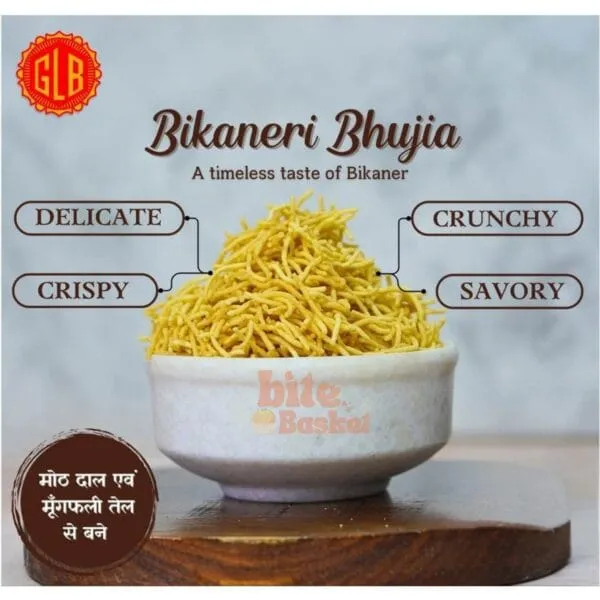
If you pack nothing else, pack this. Girdharilal's Bikaneri bhujia is my go-to, the makers have been at it since 1978, and the strands are thin, even and properly spiced, not the dusty yellow stuff you get in generic packets. The first time I opened a fresh pack on a train, the smell of hing and moth dal filled the whole bay, and the uncle across from me asked where I'd bought it.
Bhujia does something no biscuit does. It feels like food. A handful with chai at a station halt is a small meal. Two handfuls and you're fine till dinner.
2. Cornflakes mixture, the crowd-pleaser
Mixture is the snack that disappears fastest in a group, because everyone eats it. Cornflakes mixture has that sweet-salty thing going on, cornflakes, peanuts, sev, a little sugar, and kids will finish a pouch before you notice it's open. I pack it in small pouches rather than one big bag, because once a big bag is open on a train, it's gone in twenty minutes and there's no resealing it properly.
3. Roasted moong dal papad, the midnight snack
Papad is underrated as travel food, and moong dal papad is the best of the lot for trains: thin, quick to roast at home, and it keeps its snap for a day or more if you pack it right. Girdharilal's moong dal papad roasts in seconds over a flame, no oil, no frying pan, nothing to wash. On a train it's the 11 pm snack, the one you reach for when dinner was five hours ago and the pantry car is dark.
4. Mathri, the chai companion
Mathri is the slowest snack on this list, and I mean that as praise. It's dense, flaky, faintly sweet from the ajwain, and it was made for station chai. A box of mathri survives a two-day journey without complaint, and it doesn't crumble into dust the way biscuits do. My rule: one mathri per chai.
5. Chana jor garam, the filling one
Somewhere between lunch and dinner, bhujia stops being enough and you want something with weight. That's chana jor garam. Flattened, roasted chana with masala, crunchy, salty, and properly filling in a way sev never is. We wrote a whole guide to it, because chana jor garam is Bikaner's protein crunch and it earns the title. On a train, a fistful per person per halt keeps everyone quiet and happy.
6. Mini kachori, eat it first
Mini kachoris are the luxury item on this list, and the only one with a deadline. They're flaky and spiced and wonderful on day one, but they soften by day two. So eat them first. First evening, first meal on the train, while they're still crisp. Think of them as your welcome dinner, not your reserve stock.
How much should you pack?
People overpack food for trains and underpack snacks. They bring three tiffins and no namkeen. Here's the balance that works for us: one 400 g pack of bhujia per berth per day, one mixture pouch per person per day, and a box of mathri for the whole trip. On our last family trip, four of us, Jaipur to Mumbai, about 18 hours, one 400 g bhujia pack and a 500 g mixture pack lasted the full journey, with mathri left over for the return leg. Pack for the journey plus one extra halt. Delays happen.
What NOT to pack on a train
Short list, learned the hard way:
- Anything with gravy. It will spill. Physics guarantees it.
- Strong-smelling food. Your compartment is small. Be kind.
- Chocolate in summer. It melts into your bag and everything in it.
- Fresh fruit that bruises. Bananas become a science experiment by hour six.
- Food that needs a plate and two hands. You'll be eating sideways. Plan for it.
And keep the pickles in a sealed, double-bagged container. Or better, leave them home. One leaking pickle jar taught me that lesson permanently — my bag smelled of mango pickle for a month.
Packing it right
The snacks are only half the job. The other half is how they travel. Keep each snack in its own pouch or box, mixed namkeen goes stale faster and everything tastes of everything else. Squeeze the air out of bhujia packets and clip them shut; a loose clip means soft bhujia by morning. Papad goes flat, in a rigid box, never under a book. And keep the day's snacks on top of your bag, not buried under clothes. You'll reach for them at every halt, so make them reachable.
Why Bikaneri namkeen, specifically?
You could pack any namkeen, obviously. But Bikaneri namkeen has two advantages on a train that most others don't. First, the moth-dal base and groundnut-oil frying mean it stays crisp far longer than besan-heavy snacks, which go soft and stale faster. Second, the spice level is balanced — hot enough to be interesting, mild enough that kids and grandparents eat the same pack. On a train, one pack for the whole berth beats three separate packs.
There's a reason Bikaner built its reputation on food that travels. The town's halwais were feeding travellers long before trains had pantry cars. The GI tag in 2010 just made it official. And if you're curious about the tag itself, Wikipedia's Bikaneri bhujia page explains what it covers and why it matters.
Next time you book a ticket, check the journey time first, then pack the namkeen. A 6-hour trip needs one pack. A 30-hour trip needs a plan. Either way, the train will feed you poorly and the namkeen won't. That's the whole argument, and it's never let me down.
Frequently asked questions
What are the best snacks to carry on a train journey in India?
Dry, crisp snacks that need no fridge or heating: Bikaneri bhujia, mixture, roasted moong dal papad, mathri and chana jor garam. They stay fresh for days, don't smell up the compartment, and share easily across a berth.
Can I carry homemade food on Indian trains?
Yes. Indian Railways allows passengers to carry their own food, and there's no restriction on dry snacks. Pack them in sealed containers; avoid anything leaky or strong-smelling out of courtesy to fellow passengers. You can check routes and timings on indianrailways.gov.in before you travel.
How long does Bikaneri bhujia stay fresh on a journey?
An unopened pack stays crisp for weeks. Once opened, keep it in an airtight container or a tightly clipped pouch and it stays crunchy for 3–4 days, more than enough for even the longest Indian train journey.
Is Bikaneri bhujia safe for kids on trains?
The classic moth-dal bhujia is mildly spiced and generally fine for kids, but check the pack, some varieties are extra-spicy. For younger children, plain or mild bhujia and cornflakes mixture are the safer picks.
Comments
Add a comment ↓No comments yet. Be the first to share your thoughts.
Leave a comment
Your email address will not be published. Comments appear after our team has read them.