
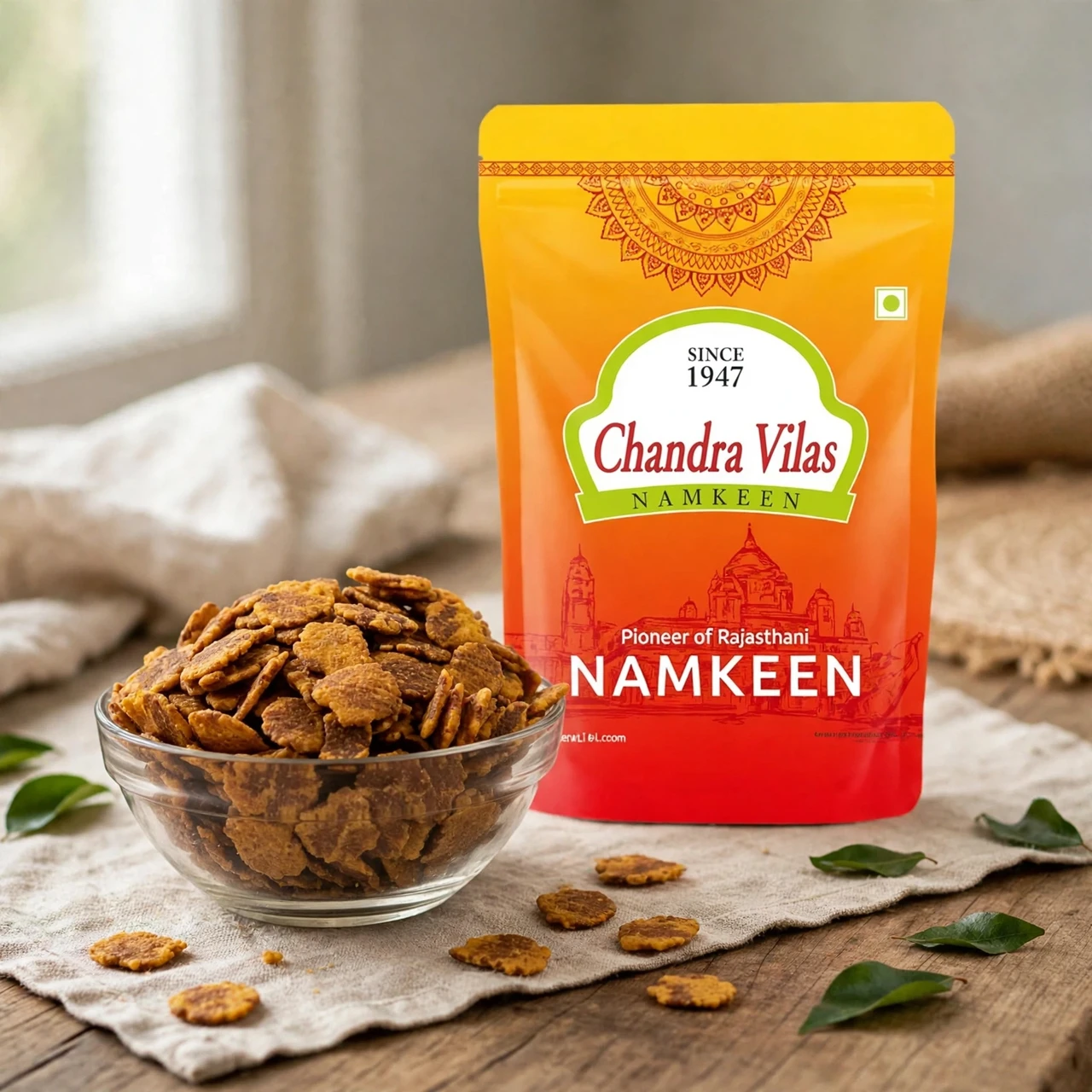
Chana Jor Garam & Masala Chana: Bikaner's Protein Crunch, Explained
By Bite Basket · • 31 views
Short answer: Chana jor garam is flattened, roasted chickpea, pressed thin, fried crisp, and tossed in masala. It's the protein-heavy cousin of bhujia. Crunchy, salty-spicy, and far more filling than most namkeen. You can order it online from heritage makers in Bikaner and Jodhpur, and a good pack stays crisp for weeks if you store it right.
What is chana jor garam, actually?
Start with the chana. Kala chana, Bengal gram, the same chickpea that goes into curries and chaat. For chana jor garam, the soaked chana is pressed flat, almost like a coin, then roasted or fried until it snaps. That flattening is the whole trick. A whole roasted chana is hard and round. A pressed one is thin, light, and covered edge to edge in masala.
The name trips people up. Chana masala is the curry your grandmother makes on Sundays. Chana jor garam is the snack in the packet. Same family, totally different job. One goes with rice. The other goes with chai at four in the afternoon.
And yes, it's different from regular roasted chana too. Roasted chana is the plain, whole, salted handful you buy at a railway station. Chana jor garam is flatter, crisper, and spicier. More surface, more masala, more crunch per bite.
Masala, hing, roasted: which chana jor garam should you buy?
Walk into any good namkeen shelf and you'll find three or four versions that look nearly identical. They're not. Here's how they actually differ once you taste them side by side.
| Variant | What it is | Heat | Best for |
| Masala chana jor garam | Flattened chana in red chilli, amchur and garam masala | Medium-hot | Evening chai, guests, anyone who likes a slow burn |
| Hing chana | Whole chana with asafoetida and mild spices | Mild | Hing lovers, after-meal munching |
| Roasted chana jor | Pressed chana, lightly salted, barely any masala | Almost none | Everyday handful, kids' tiffin, desk snacking |
| Chana dal namkeen | Fried split chana dal, not whole chana | Medium | Crushing over chaat, mixing into bhel |
If you're buying for the first time, get the masala one in the small pack. That's the flavour most people mean when they say "chana jor garam". The 250g pack of Chandra Vilas masala chana jor garam is where I'd start. Chandra Vilas has been making namkeen in Jodhpur since 1947, and their masala version is the one that tastes like the packets I grew up stealing handfuls from.
One honest trade-off. The masala version is the one I'd serve guests. But the packet I reach for at home, on a regular Tuesday, is the roasted one. No orange fingers, no chilli dust on the keyboard, and you can eat a whole small bowl without thinking about it. If you want heat, go masala. If you want a daily habit, go roasted.
Is chana jor garam actually healthy?
Short version: it's one of the better namkeens you can eat. Not a health food. Just a smarter snack.
Chickpeas bring protein and fibre to the table, which is why a small bowl of chana jor garam keeps you full in a way bhujia never does. Bhujia is mostly besan and oil. Chana jor garam is mostly chana. That difference shows up an hour later, when you're not hungry again.
But let's not pretend. The fried versions carry oil, and every version carries salt. A 250g pack is not one sitting, no matter what your hand tells you at 6 pm. Treat it like what it is: a salty, fried, protein-rich snack. Better than chips, better than most namkeen, but still a snack. Portion it into a small bowl. Keep the packet in the kitchen, not next to your chair.
One more thing worth saying plainly. The roasted version, with minimal oil and just salt, is the lightest of the lot. If you're buying chana jor garam because you want the protein without the fry, that's your pick. Roasted chana jor does exactly what it says on the packet, nothing more.
How we tasted it at BiteBasket
I opened the masala pack at about four in the afternoon, which is when these things always get opened. First thing you notice is the smell. Roasted chana, then chilli, then that faint sour edge of amchur. The discs are thin enough to see light through, almost. They snap clean between your teeth, they don't bend, and the masala coats your fingers within three handfuls.
The heat builds slowly. First bite is salty and tangy. Then the chilli catches up somewhere around the fifth or sixth disc, and that's when you reach for the chai. Which is the point, really. This is a snack built for tea, not for eating alone in a quiet room.
The hing chana surprised me more than I expected. It's whole chana, not flattened, and the hing gives it this warm, almost oniony note that sits at the back of your mouth. My colleague called it an old-person snack. She then finished half the pack. Hing chana is the quiet one of the family, and it grows on you.
What to check before you order chana jor garam online
Ordering namkeen online is easy. Ordering good namkeen online takes about two minutes of attention. Here's what actually matters.
Buy from a named maker, not a generic packet. Chana jor garam lives or dies on the roast and the masala balance, and that comes from a maker who does it every day. A heritage name on the label is the simplest quality signal you have. Browse the full Bikaneri namkeen range and compare makers before you pick one.
Start with 250g. Every maker's masala blend is slightly different. Some go heavy on chilli, some on amchur, some on salt. A small pack tells you everything you need to know, and the 500g pack is there when you've found your favourite.
Check the pack date, not just the price. Namkeen goes stale quietly. It won't smell off. It'll just taste flat and chew soft instead of snapping. Fresh stock matters more than a ten-rupee discount. If a listing hides the manufacturing date, skip it.
Read the ingredients, not the claims. The label tells you the oil used and the salt level. That's worth more than any "healthy" badge on the front of the pack.
Store it like it matters. Once open, move it to an airtight steel dabba. A folded-over packet in a humid kitchen goes soft in three days. A sealed dabba keeps the snap for two to three weeks. This is the single easiest way to waste good chana jor garam, and everyone does it once.
Five ways to eat it beyond the handful
The packet is fine on its own. But chana jor garam earns its shelf space when you start using it like an ingredient.
Crush a handful over dahi chaat or papdi chaat. It does the job of sev, with more protein and a better crunch. Toss it into a trail mix with peanuts and raisins for a train journey. Sprinkle it over a simple kachumber salad when the salad needs texture. Pack the roasted version in a tiffin; it survives a school bag better than any biscuit. And if you make bhel at home, swap half the sev for fried chana dal. Same crunch, more staying power.
Chickpeas, the base of all of this, are one of the oldest cultivated legumes in the world, and Wikipedia's chickpea page is a good place to check the nutrition basics if you're curious. The snack itself sits in the same Bikaner-Jodhpur namkeen tradition as Bikaneri bhujia, which carries a GI tag since 2010, though chana jor garam never needed a tag to be famous. It just needed a train, a tea stall, and a packet that fit in a pocket.
Frequently asked questions
Is chana jor garam the same as chana masala?
No. Chana masala is a chickpea curry, usually served with rice or bhature. Chana jor garam is a dry, crunchy snack made from flattened roasted chickpea. The names share "chana" and nothing else. If a recipe tells you to soak and pressure-cook it, that's the curry. If it tells you to open a packet, that's the snack.
Is chana jor garam good for weight loss?
It's a better choice than most namkeen because the protein and fibre keep you full, so you eat less of it. But it's still fried and salted, and portions matter. A small bowl with chai is a sensible snack. The whole 250g pack in one evening is not a diet plan, no matter how much protein is in it.
How long does chana jor garam stay fresh?
Unopened, go by the date on the pack. Once opened, keep it in an airtight container and it'll stay crisp for two to three weeks. The enemy is moisture, not time. If it bends instead of snapping, it's gone soft. A minute in a warm oven can rescue a slightly soft batch, but a sealed dabba from day one is the real fix.
Which chana jor garam should I buy first?
Masala chana jor garam in 250g, if you like heat and tang. Roasted chana jor in 250g if you want an everyday, low-spice handful. Try both small packs once, then commit to the 500g of whichever one disappears faster in your house. In ours, it's the masala. Barely.
Can kids eat chana jor garam?
Older kids, yes. The roasted version is the safer pick for a tiffin: mild, crunchy, and it doesn't stain. The masala version can be too hot for younger kids, so taste it yourself first. And as with any hard, small snack, keep it away from very young children.
So here's my honest summary. Chana jor garam is the snack for people who love namkeen but want something that actually fills them up. Start with a 250g masala pack, eat it with chai, store what's left in a steel dabba. If it disappears in two days, you'll know which 500g pack to order next.
Comments
Add a comment ↓No comments yet. Be the first to share your thoughts.
Leave a comment
Your email address will not be published. Comments appear after our team has read them.