
Sev vs Bhujia vs Ganthiya: What's the Difference?
By Bite Basket · • 6 views
Here's the truth I wish someone had told me before I bought three packs that all looked the same in the photo. Sev goes on chaat. Bhujia goes with chai, straight out of the pack, no ceremony. Ganthiya? That's the soft one you eat with tea when you don't want a crunch echoing around the house.
So what actually changes between the three?
Picture a bowl of each, side by side, and the differences jump out pretty fast. Sev is thin. Really thin. Fine pale-yellow threads of gram flour, a bit of turmeric, chilli, ajwain, fried till they shatter if you so much as look at them wrong. Bhujia looks similar at first glance, and then you bite it, and no, not the same at all. It's got moth bean in the dough, moth dal if you're standing in a Bikaner shop, and that gives it a deeper, earthier, saltier flavour plus a much harder crunch. Ganthiya doesn't even try to compete on crunch. Thick, soft, almost pillowy, it bends first and breaks second, if it breaks at all.
Quick cheat sheet. Sev: fine strands, light crunch, a topping first and a snack second. Bhujia: medium to thick strands, bold spice, eats like a proper snack on its own. Ganthiya: thick, soft, mild, made for chai. That's the comparison in three lines.
What is sev, and when should you buy it?
Sev is the base note of chaat, the thing underneath everything else that you barely notice until it's missing. Wikipedia calls it small pieces of crunchy deep-fried noodles made from chickpea flour paste, seasoned with turmeric, cayenne and ajwain, which is accurate, just very Wikipedia. In real life? It's the crunch on top of bhel puri and sev puri. Without it, chaat tastes flat. With it, suddenly the whole plate makes sense.
There's a half-open pack in my kitchen right now, clipped shut with a peg that's seen better days, and I reach for it maybe three times a week. Chaat's ready, I scatter a handful over the top right at the end, not before, never before, and the soft potatoes and chutneys get this crisp salty edge that makes the whole thing taste finished. Leave sev sitting in the bowl for ten minutes and it goes soft on you. Lesson learned the hard way, more than once.
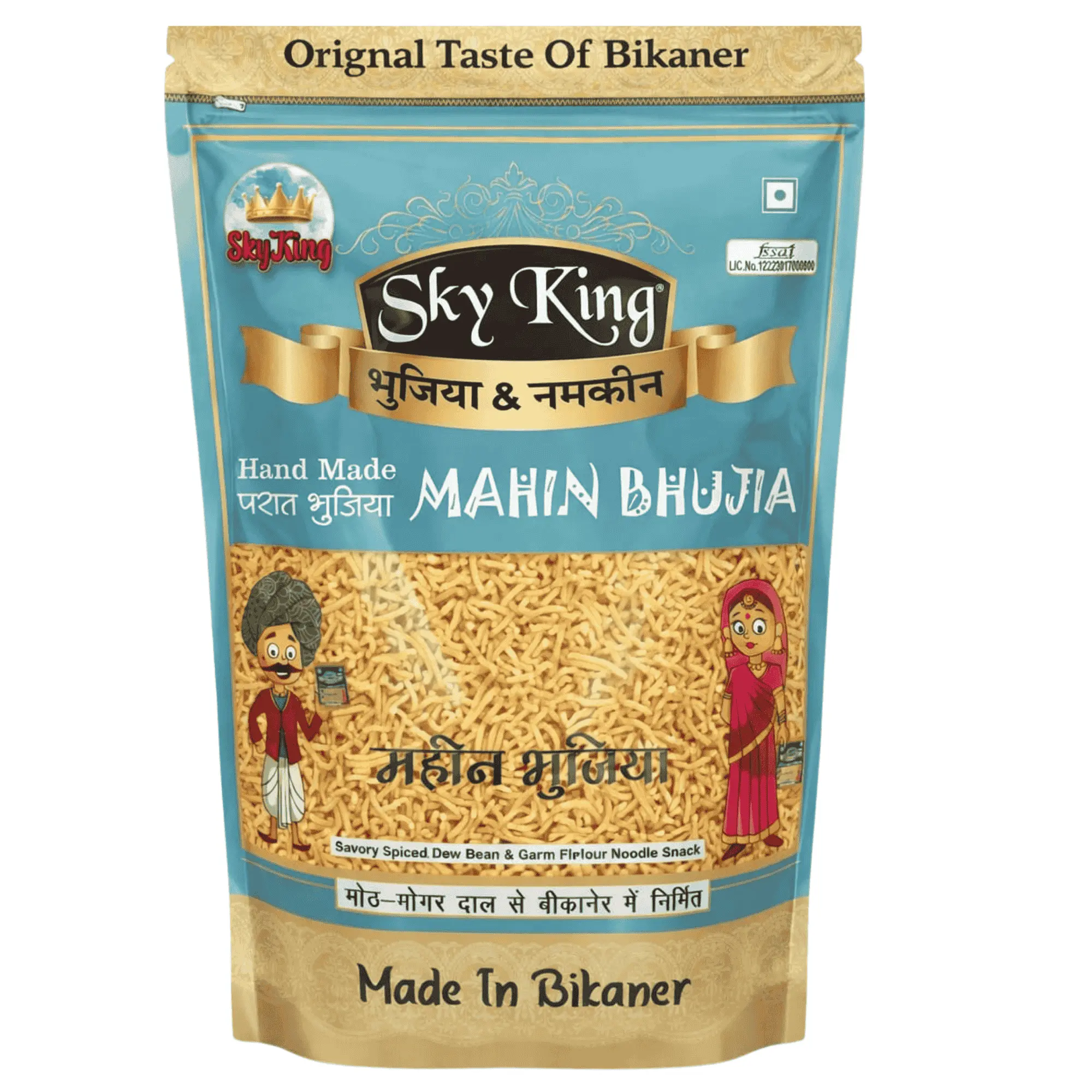
Now, what do you actually buy on BiteBasket if you want sev? The honest answer is that the closest pack here is Hadman Ji Sky King Mahin Bhujia, and mahin literally means fine, so the name does half the work for you. Handmade, fried in peanut oil, moth mogar dal and besan, no onion, no garlic, which matters a lot in Jain homes. 500 g runs you Rs. 160, the kilo is Rs. 315, and buyers have rated it 4.7 from 10 reviews. To me it tastes like the sev from a good chaat stall, light, salty, warm spice hum, no real burn. Get it if you make chaat or bhel at home, or as a light evening snack.
What makes bhujia different?
One ingredient, mainly. Moth bean. Bhujia dough adds it, sev dough mostly doesn't, and that single change does a lot of heavy lifting. Flavour gets deeper. Salt steps forward. Strands hold their crunch in a bowl instead of giving up after two minutes. Wikipedia says Bikaneri bhujia is light yellow, looks a lot like sev, but is crunchier and more strongly flavoured, and honestly that's the fairest one-line summary I've found anywhere. The first batch came out of Bikaner in 1877, and it picked up Geographical Indication protection in October 2008, which is why the real stuff still comes from Bikaner makers.
Last week I did the side-by-side thing, plain sev in one bowl, classic Girdharilal Bikaneri Bhujia in the other, and there was no contest on flavour. The bhujia was richer, toastier, with this gentle warmth hanging around at the back of my throat that plain sev just never gives you. Groundnut oil, no palm oil, and Girdharilal Bhujiawale have been making it since 1978, so they've had a while to get it right. Half a kilo is Rs. 159, a full kilo Rs. 319, and it's rated 4.8 from 10 reviews, the highest score in this guide. First time buying bhujia? Start here. It's the safest middle ground I've found, and I say that as someone who has bought the wrong pack more than once.
Then there's mota bhujia, and thickness changes the snack more than you'd think. Chunky strands. Louder crunch. More roasted gram-flour flavour in every single bite, because there's simply more of it to bite into. Girdharilal Mota Bhujia uses longi mirch, Bikaner's famous red chilli, so yes, it has a proper kick, don't say I didn't warn you. Rs. 189 gets you 500 g, Rs. 349 the kilo, rated 4.7 from 9 reviews. Buy mota if you love heat and you want a party bowl that still crunches an hour later. Skip it if your spice tolerance is, shall we say, aspirational. If you want the full fine-versus-thick comparison, our Mahin vs Mota bhujia guide puts the two side by side.
And if heat is the problem, not the flavour? Girdhari Bina Mirch Bhujia. Same moth dal bhujia, same crispness, zero chilli, and in my experience kids finish this pack first every single time. Rs. 169 for 500 g, marked down from Rs. 199, and it holds a 5.0 rating, though fair warning, that's from just one review so far. Still. For a family with small children, or anyone who likes bhujia flavour without the fire, this is the easy pick.
And ganthiya?
Ganthiya is the Gujarati one, not Bikaneri, although Bikaner makers sell their own version and Girdharilal's is the one I tried. Besan, chilli powder, turmeric, ajwain, salt, all pressed through a thick sev plate, and Wikipedia points out it's sometimes soft and not always crunchy like most other Indian snacks. Exactly. That softness is the whole point, not a flaw. Where bhujia snaps, ganthiya gives. Mild, a little salty, and it sits quietly next to a cup of chai in a way bhujia never will, because bhujia announces itself and ganthiya doesn't.
I had it last Tuesday with masala chai, and the pairing just clicked. Soft enough to bite without the crunch echoing round the room, and the chai did the loud part instead. Girdharilal Ganthiya comes in a 300 g pack for Rs. 171, rated 4.6 from 9 reviews, groundnut oil, no palm oil. Buy it for tea time, buy it for elders who find bhujia too hard, buy it when you're bored of crunch. Just don't buy it as a chaat topping. Too thick, too soft, it'll vanish straight into the chutney and you'll wonder where it went.
Which one should you buy?
Start from the occasion, not the name on the pack. That's where most people go wrong, myself included.
- Making chaat, bhel or sev puri tonight? Sev. Hadman Ji Sky King Mahin Bhujia, Rs. 160 for 500 g, and it doubles as a light evening snack when there's no chaat on the menu.
- Evening chai, straight from the pack, no cooking, no fuss? Classic bhujia. Girdharilal Bikaneri Bhujia at Rs. 159 for 500 g is honestly the best value in this whole guide, and the kilo at Rs. 319 makes sense if your household eats bhujia most days.
- Like it properly hot? Mota bhujia. Girdharilal Mota Bhujia, Rs. 189 for 500 g, longi mirch heat, loudest crunch here by a mile.
- Kids at the table, or someone who just can't take chilli? Girdhari Bina Mirch Bhujia at Rs. 169 for 500 g, or the ganthiya at Rs. 171 for 300 g. Both mild, both kind to small hands and older teeth, and neither will have anyone reaching for water mid-bite.
- Filling a party bowl or a Diwali hamper? Go big. A kilo of classic bhujia is Rs. 319, a kilo of Mahin is Rs. 315, basically the same money, and both of them stay crunchy in an open bowl way longer than sev ever will.
- Still can't decide? Buy the classic bhujia and a small pack of ganthiya. Crunch for chai, softness for tea, and you'll know your own preference within a week, I promise.
One housekeeping note: every price in this post was checked on BiteBasket on 8 November 2026. Delivery is free above Rs. 600, and smaller orders pay a Rs. 60 delivery charge.
How do you keep them crisp?
Damp air is the enemy, all three of them, no exceptions. Seal the pack tight after you open it, or tip the snack into an airtight container, and keep it somewhere cool and dry. Sev gives up fastest because the strands are so thin, so only add it to chaat right at the end. Bhujia holds up best, which is exactly why it works in a party bowl. Ganthiya wants the same sealed storage, and it's best eaten soon after opening, while it's still fresh.
Frequently asked questions
Is bhujia the same as sev?
No, but they're related, and that's where the confusion comes from. Sev is the broad name for thin gram-flour noodles. Bhujia is a Bikaneri style of sev made with moth bean and gram flour, stronger flavour, harder crunch. Sev is the family name, Bikaneri bhujia is the famous member of the family.
Which is spicier, sev or bhujia?
Bhujia, most of the time. Classic bhujia is spicier than plain sev, and mota bhujia with longi mirch is the hottest thing in this whole post. Sev is milder. Ganthiya is mildest of the lot.
Can I use bhujia instead of sev on chaat?
Yes, as long as you pick a fine one. Mahin bhujia works nicely as a sev stand-in on bhel and sev puri. Thick mota bhujia adds body to bhel but it's too chunky for a fine topping, and ganthiya is too soft. It'll just melt into the chutney.
Which one is best with tea?
Depends what you want from the tea break. Ganthiya, soft and mild, if you want something quiet with your chai. Classic bhujia if you want crunch. Sev, honestly, is better saved for chaat than for tea on its own.
If you buy one pack this week, make it the classic Girdharilal Bikaneri Bhujia. Cheapest way to taste the difference, and once you've got that flavour in your head, you'll know exactly which of the other two you want next.
Comments
Add a comment ↓No comments yet. Be the first to share your thoughts.
Leave a comment
Your email address will not be published. Comments appear after our team has read them.