
Hadman Ji Bhujia (Sky King): Mahin vs Mota vs 3 Number — Which One Should You Buy?
By Bite Basket · • 22 views
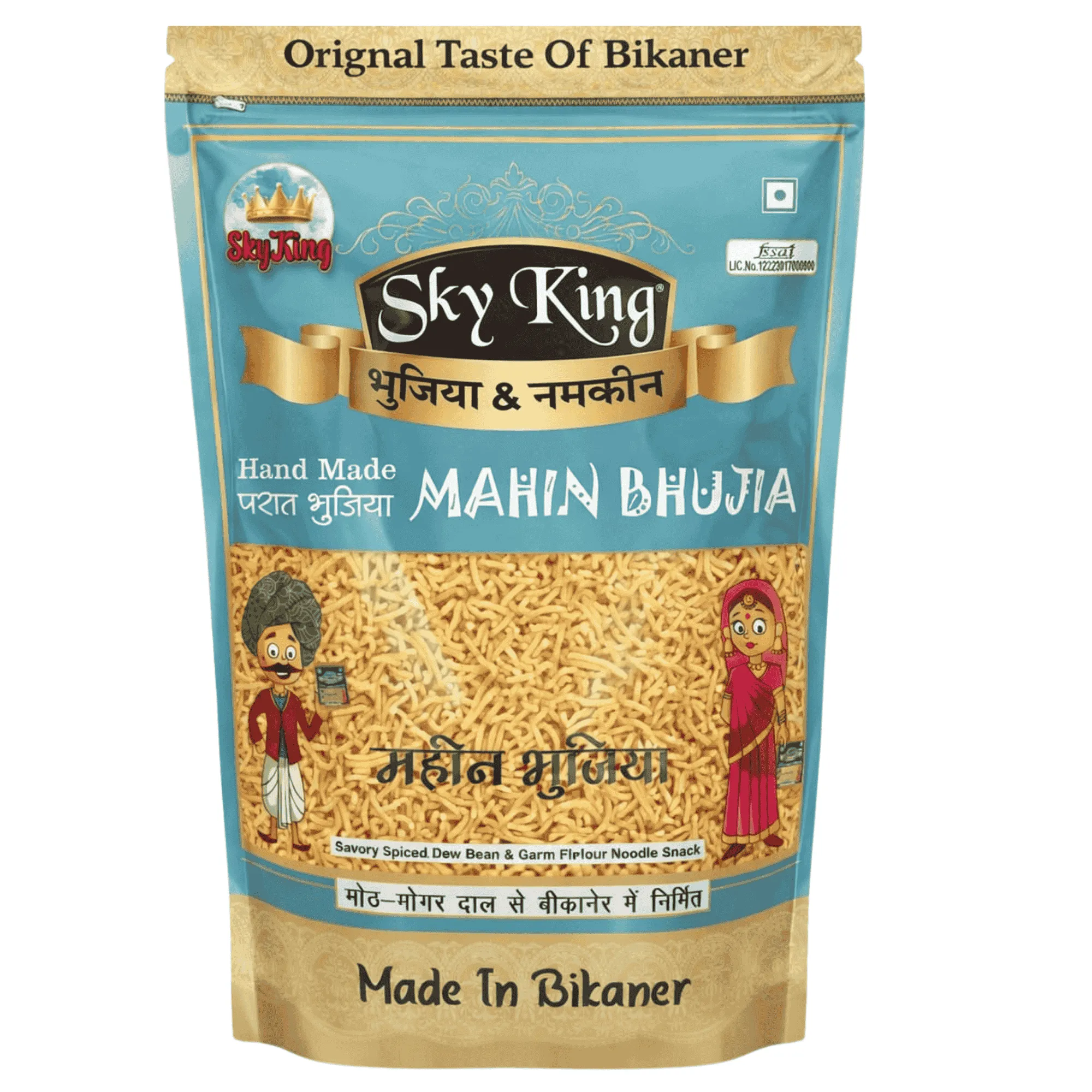
Hadman Ji Bhujia, sold under the Sky King label, is a handmade Bikaneri bhujia from a shop on Dauji Road in Bikaner, frying bhujia the same slow way for over 50 years. Three types: Mahin, extra thin and crisp; Mota, thick and full-flavoured; and 3 Number, soft and mild. Mahin is the one most people start with.
Which Hadman Ji bhujia should you buy?
Look, it depends on how you eat. Chai person? Mahin. You want something that can sit on top of curd or poha without going limp? Mota. Buying for kids or grandparents, or you just don't do heat? 3 Number. That's the whole decision, really. I've had all three on our tasting bench over the last few weeks, and the packet I keep reaching for at home is Mahin. But the one I'd put out for guests is Mota. It looks generous on a plate, and guests notice that sort of thing.
Here's the quick comparison, then the detail on each one.
| Bhujia | Strand | Crunch | Heat | Best for | Price (1 kg)* | Rating |
|---|---|---|---|---|---|---|
| Mahin Bhujia | Extra thin | Sharp, loud | Medium | Tea-time, snacking straight from the pack | ₹315 | 4.7 (10 reviews) |
| Mota Bhujia | Thick | Hearty, firm | Medium | With curd, poha, chaat, or as a side | ₹315 | 4.6 (10 reviews) |
| 3 Number Bhujia | Medium, soft | Gentle | Mild | Kids, elders, anyone who skips spice | ₹318 | 4.5 (10 reviews) |
*Prices as listed on BiteBasket on 8 November 2026. They can change, so check the product page before you order.
Mahin bhujia: the thin, loud one
Mahin is the classic. The strands are hair-thin, which is why they fry up so crisp. Open a fresh pack and you hear it before you taste it. That first handful crackles. Then the smell hits you, warm peanut oil and toasted moth dal, nothing chemical about it. The flavour is clean, with a slow heat that builds instead of punching you at once. And your fingers stay dry afterwards. No oily film. That tells you the oil was fresh and the strands were drained properly.
What I like most about Mahin is how it behaves with chai. Dip a pinch in. It softens just enough. Doesn't turn to mush. My only complaint? The pack empties too fast. A kilo sounds like a lot until a family of four gets through it in a week. If that's your house, order the 1.5 kg pack and save yourself a reorder.
There's also a Bina Mirch Mahin. Same thin strand, no chilli at all. If someone in your house finds even medium spice too much, that's the pack. Same crunch. No heat. Simple.
Mota bhujia: thick strands, bigger flavour
Mota is the one people underestimate. I did, at first. Thicker strands mean more bhujia in every bite, and the flavour sits deeper. It tastes nuttier to me. Probably because the thicker strand holds more of the moth dal character and less of the fry. It also holds its shape, which matters more than you'd think. Sprinkle it over dahi or poha and it stays crunchy. Mahin would soften in minutes.
Small test I ran at home. Two bowls out during evening chai, Mahin in one, Mota in the other, and I said nothing. The Mota bowl emptied first. Not because it's better in some absolute sense. Because guests treat it like food, not a nibble. It feels substantial. That counts.
If you only buy one pack, and you cook with bhujia as much as you snack on it, Mota is your pick. Chaat, upma, crushed into a sandwich filling, or just as it is. The 1 kg pack is ₹315, same as Mahin. No price penalty for going thick.
3 Number bhujia: the soft one
3 Number is the quietest of the three. And that's the point. The strands are softer, the spice is mild, and there's nothing in it that will make a child reach for water. My mother-in-law, who gave up spicy food years ago, eats this one straight from the pack while watching the news. She calls it "the polite bhujia". I can't argue with that.
Don't mistake mild for bland. The moth dal flavour is still there, and the peanut oil gives it a round, warm finish. It just doesn't shout. For a house with small kids, this is the pack that disappears from the kitchen shelf first. At ₹318 a kilo, it costs about the same as the other two. So the choice is about taste, not money.
And then there's Chabini Mix
If the three bhujias feel too plain for you, Chabini Mix is Hadman Ji's answer. A mix built on the same moth-mogar base, sev and crunchier bits folded in. Rated 4.8, the highest of the range, and it shows. I keep a pack for train journeys. It's the sort of mix you eat by the handful without thinking. Which is both a recommendation and a warning.
What goes into it (and what doesn't)
Here's what hasn't changed in five decades. The bhujia is still made by the parat method. Pressed by hand through a perforated plate, not extruded by machine. You can tell by looking. The strands are slightly uneven, and that's a good sign. Machine bhujia looks too perfect. Too neat. Real parat bhujia has character, little kinks and thick spots where the hand hesitated for half a second.
Then there's the oil. 100% peanut oil. No palm oil, no blended mystery oil. Peanut oil has a higher smoke point and a cleaner taste. It doesn't leave that heavy coating on the tongue that cheap oil does. You know the feeling. You eat a handful of factory bhujia and your mouth feels coated for an hour. None of that here.
And the base is moth-mogar dal. Moth is the hardy desert lentil Bikaner built its bhujia reputation on. It gives the snack its protein and its slightly earthy flavour. The packs are FSSAI certified, no preservatives, and the whole range is Jain-friendly. No onion, no garlic.
For context, Bikaneri bhujia carries a Geographical Indication tag, granted in 2010. That legally ties the name to Bikaner and its traditional method. The Wikipedia page on Bikaneri bhujia explains the GI tag, and the Geographical Indications Registry is the official source behind it. Bikaner itself has been a trading hub in the Thar desert for centuries. A dry, long-lasting snack like bhujia took root there for a reason. You can read more about the city on Wikipedia's Bikaner page.
What buyers actually say
Ratings across the range sit between 4.5 and 4.8, Chabini Mix on top at 4.8. But let's be straight about the sample size. Each bhujia has around ten reviews. That's a small crowd, not a verdict. What the numbers do suggest is a steady, satisfied base. An average above 4.5 across every variant is a decent sign for a small Bikaner shop selling online, where one bad batch would show up fast. If you've tried one of these, leave a review on the product page. The next buyer will thank you.
Why the name confuses everyone
Quick version. Sky King is the brand name printed on the packs. Hadman Ji is what Bikaner locals call it. Hanuman Ji is the other spelling you'll see, from the Hindi name on the shop's signboard. Same shop, same bhujia, three names. Search for any of them and you'll land on the same Dauji Road counter. We told the full story of the shop and its name in our earlier post on Sky King Hadman Ji bhujia, so I won't repeat it all here. Short version? The name on the signboard is Hadman Ji. That's the one to ask for if you ever visit Bikaner.
How to buy Hadman Ji bhujia online
You don't need to travel to Bikaner. BiteBasket ships the full range from the original shop. Start at the Sky King Hadman Ji maker page. All nine products sit in one place, pickles included. And that's the part people miss. The same shop also makes Kair Sangri pickle, green chilli pickle, red chilli pickle, and a mixed pickle. They sit beautifully next to the bhujia on a thali.
Three things to check before you order. First, the pack size. Mahin and Mota come in 500 g, 1 kg, and 1.5 kg packs. Pick the size that matches how fast your house eats. Second, the price per kilo across sellers. If a listing is far cheaper than ₹315 a kilo, ask why. Third, delivery. Orders go out within 24 hours, delivery is free above ₹600, and packs reach most Indian cities in 3 to 9 working days. Order a little ahead of a festival or a family gathering. Not the day before. You'll thank yourself.
One more thing. Store it properly when it arrives. Keep the pack sealed, away from moisture, and move what you're eating into an airtight dabba. Good bhujia stays crisp for weeks if you keep the air out. Goes soft in days if you don't. That's not a quality problem, that's just how fried snacks work.
How we eat it at home
Honestly? Mostly straight from the pack. Standing in the kitchen. Before dinner is ready. But here are the uses that actually earn their keep. Mahin over poha with a squeeze of lemon. Mota crushed over dahi with a pinch of roasted jeera. 3 Number as a school-tiffin filler, because it doesn't stain fingers or set off a spice complaint. And Chabini Mix in a paper cone on a train, which is a tradition at this point.
If you're sending bhujia to someone outside Rajasthan, add a pack of the pickles to the order. Bhujia alone says "I remembered you". Bhujia plus Kair Sangri pickle says "I know what I'm doing". Big difference. Small money.
Frequently asked questions
Is Hadman Ji Bhujia the same as Sky King Bhujia?
Yes. Sky King is the brand name on the packs, and Hadman Ji is the name of the shop and the name locals use. Hanuman Ji is another spelling of the same name. All three refer to the same bhujia from the Dauji Road shop in Bikaner.
Which Hadman Ji bhujia is best for kids?
3 Number is the best pick for kids. It's soft, mild, and low on spice. Bina Mirch Mahin is another good option if your child likes the thin, crispy style but can't handle chilli.
Is Hadman Ji Bhujia Jain-friendly?
Yes. The bhujia is made without onion or garlic, and the maker lists the whole range as Jain-friendly. It's also fried in 100% peanut oil with no preservatives.
Where is the Hadman Ji Bhujia shop in Bikaner?
The shop is on Dauji Road, near BK School, in Bikaner, Rajasthan. You can also order the full range online from BiteBasket, with delivery across India.
Still deciding? Start with a 1 kg pack of Mahin. It's the one that tells you what this shop is about in a single handful. Then work your way through Mota and 3 Number, and you'll know exactly which packet your house finishes first.
Comments
Add a comment ↓No comments yet. Be the first to share your thoughts.
Leave a comment
Your email address will not be published. Comments appear after our team has read them.