
Navratri 2026: 9 Days of Festive Snacking, From Vrat to Dandiya Nights
Published on • 9 views
Navratri is here. This year it runs from October 11 to October 19, with Dussehra falling on October 20 — nine nights of garba, fasting, family dinners, and that particular festive chaos where the house is somehow both spotless and full of crumbs at the same time.
I have always felt Navratri divides Indian households into two camps. In one, someone is fasting — maybe the whole family, maybe just your mother, who has been doing it for thirty years and will not hear a word about "taking it easy this time." In the other camp, nobody is fasting, but the evenings still fill up: dandiya nights, neighbours dropping in, extra chai being made at odd hours. Either way, the kitchen works overtime. This guide is for both camps.
If You Are Fasting: Build a Falahari Shelf First
The mistake most fasting households make is improvising day by day. By Day 4, the vrat-friendly options run out and someone ends up staring into the fridge at 9 pm. Stock up before the nine days begin — it makes the whole festival calmer.
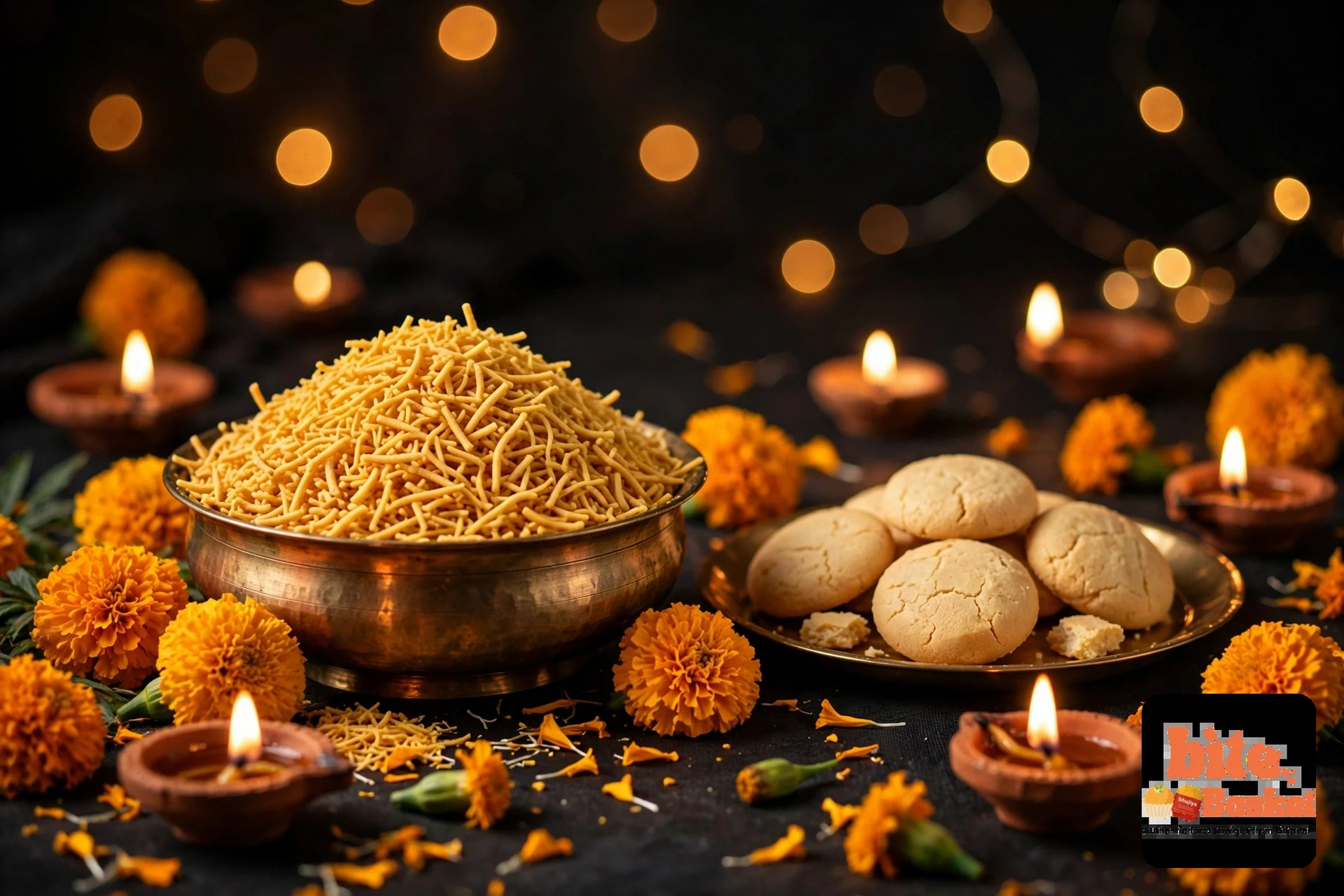
A proper falahari shelf is simple: dry fruits, roasted makhana, and falahari biscuits. BiteBasket's Biki Bakes Namkeen Falahari Biscuits were made for exactly this — a savoury, fasting-friendly biscuit for the days when you want something with crunch that still respects the vrat. There is also a classic falahari biscuit variant if you prefer it plain. Keep a pack at work, one at home, one in the bag you carry to garba — future you will be grateful.
One honest note: vrat rules differ from family to family and region to region. What counts as acceptable fasting food in Gujarat may not pass muster in UP. If your fast is strict, glance at the ingredients on any packaged falahari product before buying — a good maker lists everything openly. Ours do.
If You Are Feasting: The Dandiya-Night Spread
Now the other camp. Navratri evenings have a rhythm of their own — people come home from work, change, head out for garba or aarti, and return hungry at hours when no proper meal is happening. This is namkeen o'clock.
The move is to keep a guest-ready namkeen tray through all nine days: a bowl of real Bikaneri bhujia, some roasted kaju, maybe a mixture. Nothing that needs cooking, nothing that goes stale in a day. When the neighbours land up after dandiya — and they will — you are ready in thirty seconds. Bhujia with hot chai at 11 pm after three hours of garba is one of life's underrated pleasures.
If you are hosting a Navratri get-together, do not overthink the menu. A big batch of poha or sabudana khichdi for the fasting guests, a namkeen spread for everyone else, and something sweet to finish. Done.
Sweets for the Season
Navratri may not be a "mithai festival" the way Diwali is, but sweets still move through these nine days — offered, shared, carried to relatives. Desi ghee soan papdi from a century-old halwai house is the kind of thing that disappears from a plate without anyone admitting to taking the last piece. For something richer, pede and kalakand hold up beautifully — they travel well, keep well, and suit the festive table.
My practical advice: buy sweets in the first two days of Navratri, not the last two. Prices creep up and freshness matters — a soan papdi bought on Day 2 tastes noticeably better on Day 8 than one bought on Day 7.
A Quick Word on What's in the Packet
Festive seasons are when India eats the most packaged snacks of the entire year — which makes it the right time to read labels. Most mass-market namkeen is fried in palmolein oil: cheap for the manufacturer, heavy in saturated fat for you. Every product on BiteBasket is palm-oil-free, full stop. When you are eating festive snacks for nine straight days, the oil they are fried in stops being a footnote and starts being the main story.
Order Timing: Don't Leave It Late
This is the unglamorous but important part. BiteBasket dispatches within 24 hours, but delivery takes 3 to 9 working days depending on where you live — 3 days in Bikaner, 4 in Rajasthan, 5 to 7 for metros, up to 9 for the Northeast and island territories. If you want falahari biscuits for the fasting days or a namkeen stockpile before the dandiya nights peak, order in the first half of Navratri. Orders above ₹600 get free delivery, and there is a WELCOME10 code for 10% off your first order.
Looking Past Navratri: Dussehra to Diwali
Here is the thing nobody tells you in early October: Navratri is the warm-up. Dussehra lands on October 20, and Diwali follows close behind. The smart households use Navratri to figure out which snacks the family actually finishes — then order the Diwali gifting stock with confidence instead of guessing.
If gifting is on your mind, read our Diwali gifts 2026 guide and the Bhai Dooj hamper ideas — namkeen hampers have quietly joined the mithai box as India's most practical festive gift. Order those in the week after Dussehra and you will beat both the price surge and the delivery rush.
Nine nights, two kinds of households, one well-stocked kitchen. However your family does Navratri — fasting, feasting, or a bit of both — eat well. That is, after all, the whole point of a festival.
Frequently Asked Questions
When is Navratri in 2026?
Shardiya Navratri 2026 runs from October 11 to October 19, with Dussehra (Vijayadashami) on October 20.
Is bhujia okay to eat during Navratri fasting?
Regular bhujia is not vrat food — it is made with besan and regular spices. If you are fasting, stick to falahari options like falahari biscuits and dry fruits. Vrat rules vary by family, so check ingredients if your fast is strict.
What snacks should I keep for guests during Navratri?
A ready namkeen tray works best: Bikaneri bhujia, roasted kaju, and a mixture — nothing that needs cooking. Add falahari biscuits if some guests are fasting.
How early should I order snacks for Navratri?
Order in the first half of the festival. Delivery takes 3–9 working days across India, and festive demand peaks in the final days.
Are BiteBasket products palm-oil-free?
Yes — every product on BiteBasket, from bhujia to falahari biscuits, is made with no palm oil.