
Mirchi Bada Recipe (Bikaneri Style): Stuffed, Crisp & Properly Hot
By Bite Basket · • 6 views
Mirchi bada is Rajasthan's stuffed chilli fritter: a big, mild green chilli filled with spiced mashed potato, dipped in gram flour batter and fried until golden. It takes about 45 minutes at home, and the Bikaneri way keeps the chilli mild, the filling tangy and the batter crisp enough to hear.
That's the short version. The longer one is worth your time, because mirchi bada is one of those snacks that looks simple and punishes you quietly if you rush it. Wrong chillies and it's inedibly hot. Thin batter and it slides off in the oil. Crowd the kadai and everything goes soggy. Get those three things right, though, and you've got the best thing to come out of a Rajasthani breakfast plate.
What exactly is a mirchi bada?
A mirchi bada (also written mirchi vada) is a large green chilli, slit open, deseeded, stuffed with a spiced potato filling, coated in besan batter and deep-fried. It's street food first and foremost. Jodhpur gets most of the fame for it, and fair enough — the Jodhpuri version is a local institution. But Bikaner has its own claim on it. Here it shows up on breakfast carts next to kachori, eaten standing up with a cup of chai before the day gets hot.
I've eaten it both ways now, cart-side and homemade, and honestly the homemade one wins when you control the chilli. The cart version is a gamble. Sometimes the chilli is mild and everything sings. Sometimes you bite into one that was clearly mislabelled by nature and your morning is over. At home, you pick the chillies yourself. That's the whole advantage.
The name causes a bit of confusion, by the way. Down south you'll meet the mirchi bajji, which is similar but usually unstuffed or stuffed differently, and often made with smaller chillies. The Rajasthani mirchi bada is the big, fat, potato-stuffed one. Same family, different personality.
Which chillies should you use?
This is the decision that makes or breaks the recipe, so don't wing it. You want Bhavnagri chillies, the big pale-green ones sold as bajji or pakoda chillies. They're thick-skinned, mild and roomy enough to stuff. If your sabziwala doesn't know the name, ask for the fat, light-green chillies used for pakodas. He'll know.
What you don't want: the thin, dark-green chillies you use for tadka. Those are hot, thin-skinned and they collapse in the oil. I learned that one the hard way years ago, and one bite was enough to retire that experiment forever.
Pick 8 chillies that are roughly the same size, firm, with unbroken skin. Rinse them, pat them completely dry, then slit each one down one side. Leave about a centimetre joined at the bottom so the filling stays put. Scoop the seeds and white pith out with a small spoon. That pith is where most of the heat lives, so don't be shy about removing it.
Mirchi bada recipe (Bikaneri style)
Serves 4. Prep about 30 minutes, frying about 15. Nothing here is exotic. If your kitchen has besan and potatoes, you're most of the way there.
Ingredients
For the potato stuffing:
- 250 g potatoes (about 4 medium), boiled and mashed
- 1 green chilli, finely chopped
- 2 tablespoons coriander leaves, chopped
- 1 teaspoon coriander seeds, crushed
- 1/2 teaspoon fennel seeds (saunf), crushed
- 1/2 teaspoon ginger paste
- 1/2 teaspoon amchur (dry mango powder)
- 1/2 teaspoon chaat masala
- 1/2 teaspoon Kashmiri red chilli powder
- 1/4 teaspoon ajwain (carom seeds)
- A pinch of hing (asafoetida)
- Salt to taste
For the batter:
- 1 cup besan (gram flour)
- 2 tablespoons rice flour (this is the crispness trick)
- 1/4 teaspoon turmeric
- 1/2 teaspoon Kashmiri red chilli powder
- 1/4 teaspoon baking soda
- A pinch of hing
- Salt to taste
- About 1/2 cup water
Other:
- 8 Bhavnagri chillies
- Oil for deep frying
Method
1. Make the stuffing. Mash the boiled potatoes while they're still warm, they go smoother that way. Mix in everything listed for the stuffing. Taste it. It should be tangy and well-salted on its own, because the chilli and the batter will both mute it. If it tastes flat now, it'll taste flat later. A little extra amchur is usually the fix.
2. Stuff the chillies. Open each slit chilli gently and press the filling in with a spoon. Don't overfill; a chilli that can't close will leak potato into your oil. Fill them evenly and set them aside. This is the fiddly bit. Take your time with it.
3. Make the batter. Whisk the besan, rice flour, spices and salt, then add water a little at a time. You want a medium-thick batter that coats a spoon and falls off in a slow ribbon. Too thin and it won't cling. Too thick and you get a doughy shell. Let it rest 10 minutes while the oil heats. The besan hydrates and the batter behaves better.
4. Fry. Heat oil in a kadai over medium heat. Test it with a drop of batter: it should rise to the surface at once and sizzle, not sink and sit there. Dip a stuffed chilli in the batter, coat it fully, let the excess drip off, and lower it in gently. Fry two or three at a time, never more. Turn once, and take them out when they're deep golden all over. Drain on kitchen paper.
And that's it. Serve them hot. Mirchi bada waits for nobody — five minutes on the plate and the crisp starts to soften.
How do I keep mirchi bada crisp?
Three things, and they're all about the frying, not the recipe.
First, the rice flour in the batter. It's a small amount and it does a disproportionate amount of work: it dries the crust out as it fries. Skip it and the coating turns soft faster. Second, oil temperature. Medium-hot, not smoking. Oil that's too cool soaks into the batter instead of sealing it. Oil that's too hot browns the outside while the potato inside stays lukewarm. Third, don't crowd the kadai. Every chilli you drop lowers the oil temperature, and a crowded kadai is how you get pale, greasy fritters.
One more: don't cover the plate after frying. Steam is the enemy of crisp. Leave them open on kitchen paper and eat them while they're still too hot to hold comfortably. That's the correct serving temperature, as far as I'm concerned.
What do you serve mirchi bada with?
Green chutney is the classic, and tamarind chutney runs a close second. I like both on the plate, the green one for freshness and the tamarind one for the sweet-sour hit against the potato filling. Tomato ketchup works too, and nobody in Bikaner will judge you for it, though a chutney is better.
In Bikaner it belongs on a breakfast plate, next to kachori and a hot chai. If you want the full picture of how that breakfast works, our guide to Bikaner's breakfast culture: kachori, mirchi bada and morning namkeen lays out the whole spread. And if the chai-and-fried-snack combination is your thing generally, the Indian tea-time snacks guide has the rest of the plate covered.
For a lighter evening, skip the frying altogether some other day and make the aloo bhujia recipe instead. Same potato-and-spice comfort, different crunch. The two recipes share a pantry, so once you've bought the besan and the amchur, you're set for both.
Can I make it without deep frying?
You can, and I won't pretend the air fryer doesn't exist. Brush the battered chillies with oil and air-fry at 200°C for 12–15 minutes, turning once. It works. The crust is lighter and a bit drier, and you lose some of that shattering fried edge. For a weekday version, that's a fair trade. For guests, fry them properly.
One thing the air fryer can't fix: the batter. If it's too thin, it drips off in the basket just like it slides off in oil. So the batter test matters either way.
No time to fry? Bikaner has a shortcut
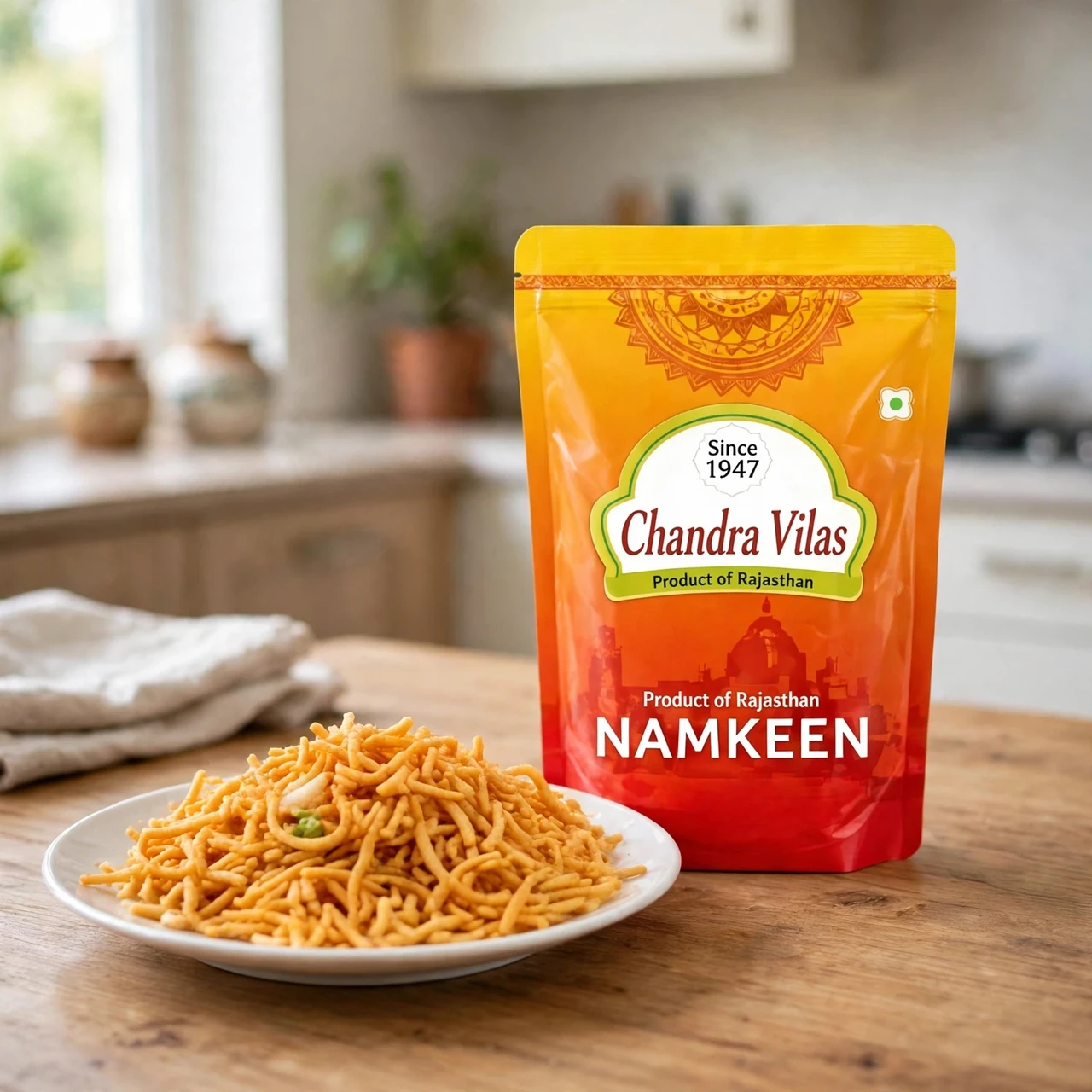
Here's the honest bit. Mirchi bada is a fresh, fried snack. It doesn't travel in a packet. But the flavour it chases, that hot, tangy chilli hit, does. Chandra Vilas Mirchi Kuta is Bikaner's dry answer to the same craving: crushed green chillies, spices, that same slow burn, in a pack that keeps for weeks. When I want the heat without heating a kadai of oil, that's the packet I reach for.
And if you're building a whole namkeen shelf rather than a single snack, our homemade namkeen recipes (moong dal, masala chana and besan sev) are the natural next stop. Same pantry, same evening, three more things to fry.
FAQ
Is mirchi bada very spicy?
Not if you use the right chillies. Bhavnagri chillies are mild, and deseeding removes most of the remaining heat. What you get is warmth and flavour, not a burn. The potato filling and besan coating soften it further. If you're sensitive to heat, skip the chopped green chilli in the stuffing.
What's the difference between mirchi bada and mirchi bajji?
They're cousins. Mirchi bada is the Rajasthani version: a large Bhavnagri chilli stuffed with spiced potato and fried in besan batter. Mirchi bajji, from the south, is usually a smaller chilli, often unstuffed, dipped in batter and fried. The bada is a meal in itself; the bajji is a lighter snack.
Can I prepare mirchi bada ahead of time?
Partly. You can stuff the chillies and make the batter a few hours ahead. Keep them covered in the fridge separately, and only combine them right before frying. Fried mirchi bada doesn't hold: it softens within minutes, and reheating never quite brings the crust back. Fry fresh, eat hot.
Why did my batter slide off in the oil?
Usually one of three things: the batter was too thin, the chillies were wet when you dipped them, or the oil wasn't hot enough. Pat the chillies dry after stuffing, thicken the batter until it coats a spoon in a slow ribbon, and test the oil with a drop of batter before the first chilli goes in.
Mirchi bada is a small recipe with a big payoff, and it's one of the few Rajasthani snacks where the home version can genuinely beat the cart, because you pick the chillies. Fry a batch this weekend. Eat them standing in the kitchen, too hot, with chutney on your fingers. That's how they're meant to be eaten.
Sources: Mirchi Bada (Wikipedia); Bikaneri bhujia (Wikipedia) (GI tag, 2010).
Comments
Add a comment ↓No comments yet. Be the first to share your thoughts.
Leave a comment
Your email address will not be published. Comments appear after our team has read them.