
Aloo Bhujia Recipe (Bikaneri Style): Crispy Potato Sev at Home
By Bite Basket · • 15 views
This aloo bhujia recipe makes crisp potato sev from a dough of besan, boiled potato, rice flour and spices, pressed through a sev maker and fried till golden. The Bikaneri-style twist is a spoon of moth dal flour, the same dal that gives real Bikaneri bhujia its nutty bite. One batch takes about 25 minutes and makes roughly 4 cups.
I'll be honest with you. The first time I tried making aloo bhujia at home, I got it wrong in the most ordinary way possible. The dough was too wet, the strands came out fat as noodles, and by evening the whole batch had gone soft in the dabba. It tasted fine. It just wasn't bhujia. It was... fried dough that had given up.
The second batch taught me the two things that actually matter. The potato has to be grated fine, not mashed in lumps, and the oil has to be medium-hot, not roaring. Get those two right and the rest is just pressing and patience. This is the recipe I use now, with one Bikaneri twist that I think earns its place.
What is aloo bhujia, and how is it different from Bikaneri bhujia?
Aloo bhujia is potato sev. The dough is mostly besan with boiled potato worked into it, which is why the strands fry up lighter and melt a little faster on the tongue than plain bhujia. The potato brings a soft, starchy sweetness under the chilli and chaat masala.
Plain Bikaneri bhujia is a different animal. Its base is moth dal flour and besan, no potato at all, and it carries black pepper and a sharper spice hit. The first batch of bhujia was made in Bikaner in 1877, during the reign of Maharaja Dungar Singh, and the snack was granted Geographical Indication protection in October 2008. That's the one our guide to how Bikaneri bhujia is made walks through, press and all.
So where does this recipe sit? It's aloo bhujia, the way most Indian homes make it, with a couple of tablespoons of moth dal flour folded in. That small addition is the Bikaneri touch. It deepens the flavour and gives the strands a firmer snap. Skip it if you don't have moth dal flour handy and the recipe still works. But if you do have it, try it once. You'll hear the difference before you taste it.
If you want the full backstory on the dal itself, our note on moth dal, the lentil behind real Bikaneri bhujia, covers why this small, dry-land dal matters so much to Bikaner's halwais.
The recipe at a glance
| Prep time | Cook time | Total | Makes |
|---|---|---|---|
| 10 minutes | 15 minutes | 25 minutes | About 4 cups |
Ingredients
Everything below makes about 4 cups. Halve it all if you only want a small batch, and don't eyeball the salt. Fried snacks forgive a lot of things. Salt isn't one of them.
- 1 medium potato, boiled, peeled and grated fine (about 3/4 cup)
- 1 1/2 cups besan (gram flour)
- 2 tablespoons moth dal flour (the Bikaneri twist, optional but recommended)
- 1/4 cup rice flour, fine (this is what keeps it crisp)
- 1 teaspoon Kashmiri red chilli powder
- 1/4 teaspoon turmeric powder
- 1/2 teaspoon cumin powder
- 1/2 teaspoon garam masala
- 1 teaspoon chaat masala
- 1/2 teaspoon amchur (dried mango powder)
- 3/4 teaspoon salt
- 2 teaspoons hot oil (for the dough)
- Oil, for deep frying
- Extra chaat masala and a pinch of black salt, for sprinkling
A word on the potato. Boil it the night before if you can, or at least let it cool fully. A warm potato turns the dough sticky, and sticky dough is how you end up with thick, chewy strands. Grate it on the fine side of the grater. Lumps are the enemy here. I learned that the hard way, standing over a kadhai full of lumpy sev and pretending it was a new style.
How to make aloo bhujia, step by step
1. Mix the dough
Put the grated potato in a wide bowl. Add the besan, moth dal flour, rice flour and all the spices. Pour in the 2 teaspoons of hot oil and rub it through the flour with your fingertips till it feels like coarse crumbs. Then add water a spoonful at a time and knead into a soft, smooth dough. Not stiff, not sticky. Press it with a finger and it should give in gently.
2. Rest it for 10 minutes
Cover the dough and leave it alone. Ten minutes is enough for the flours to settle and the dough to firm up slightly. Skip this and the first batch presses out unevenly. I know, waiting is the dullest step. It still matters.
3. Heat the oil
Pour oil into a deep kadhai and heat it on medium. Test it with a tiny strand of dough. It should sink a little, then rise steadily, fizzing, without browning in two seconds. If it browns instantly, the oil is too hot and the outside will burn while the inside stays raw. If it sinks and sits there, wait longer. This test takes five seconds and saves the whole batch.
4. Press and fry
Grease the sev press lightly, fit the fine-hole disc, and fill it with a portion of dough. Hold the press over the kadhai and squeeze in slow circles, letting the strands fall straight into the oil. Don't crowd the pan. Fry on medium heat, turning once, till the strands turn light golden and the fizzing quiets down. That quiet is your signal. Lift them out with a slotted spoon and drain on absorbent paper.
My first pressful always looks a bit rough. The second one comes out like the shop's. Don't judge the batch by the first round.
5. Season while warm
Sprinkle chaat masala and a pinch of black salt over the bhujia while it's still warm, not hot. Toss gently. The warmth helps the seasoning cling. Wait till it's fully cool before you pack it, or the trapped steam will soften everything you just crisped.
6. Repeat and store
Work through the rest of the dough the same way, letting the oil come back to temperature between batches. Once completely cool, break the long strands lightly with your fingers and store in an airtight dabba. It stays crisp for about two weeks. Ours never lasts that long.
Why is my aloo bhujia soft? 5 mistakes to avoid
The dough was too wet. Wet dough makes thick strands that soak up oil and turn limp. Add water a spoonful at a time. You can always add more. You can't take it out.
The oil was too hot. The strands brown fast on the outside and stay pale and chewy inside. Medium heat, and the strand test before every batch.
You used the thick disc. Aloo bhujia wants the fine-hole disc. The thick one gives you something closer to ganthiya, which is a fine snack, just not this one.
You packed it warm. Even a little steam in a closed dabba is enough to kill the crunch overnight. Cool it fully on a wide plate first.
The potato was lumpy. Grate it fine. Mash it smooth. Any lump becomes a weak spot that fries unevenly and breaks the strand.
No sev press? Try this
A sev press (sev maker) is the right tool and costs very little at any utensil shop. If you don't have one, a chakli press with the fine sev disc does the same job. A piping bag with a small star nozzle works in a pinch, though your hand will ache by the third round and the strands come out a little thicker. What doesn't work is rolling it by hand. Trust me on that one. The dough is too soft and the strands come out like worms.
How to serve aloo bhujia
With evening chai, obviously. That's its natural home. Crumble a handful over dahi chaat for crunch, or scatter it on poha instead of plain sev. And for tiffin, a small fistful in a separate dabba travels well and doesn't go soggy, as long as you pack it dry and keep it away from anything wet. Our kids' tiffin guide has more packable Bikaneri picks in the same spirit.
One honest note. This is a fried snack. A small portion in a tiffin or beside chai is a treat, and treats are fine. Just don't kid yourself it's health food because there's a potato in it.
No time to fry? Buy the original
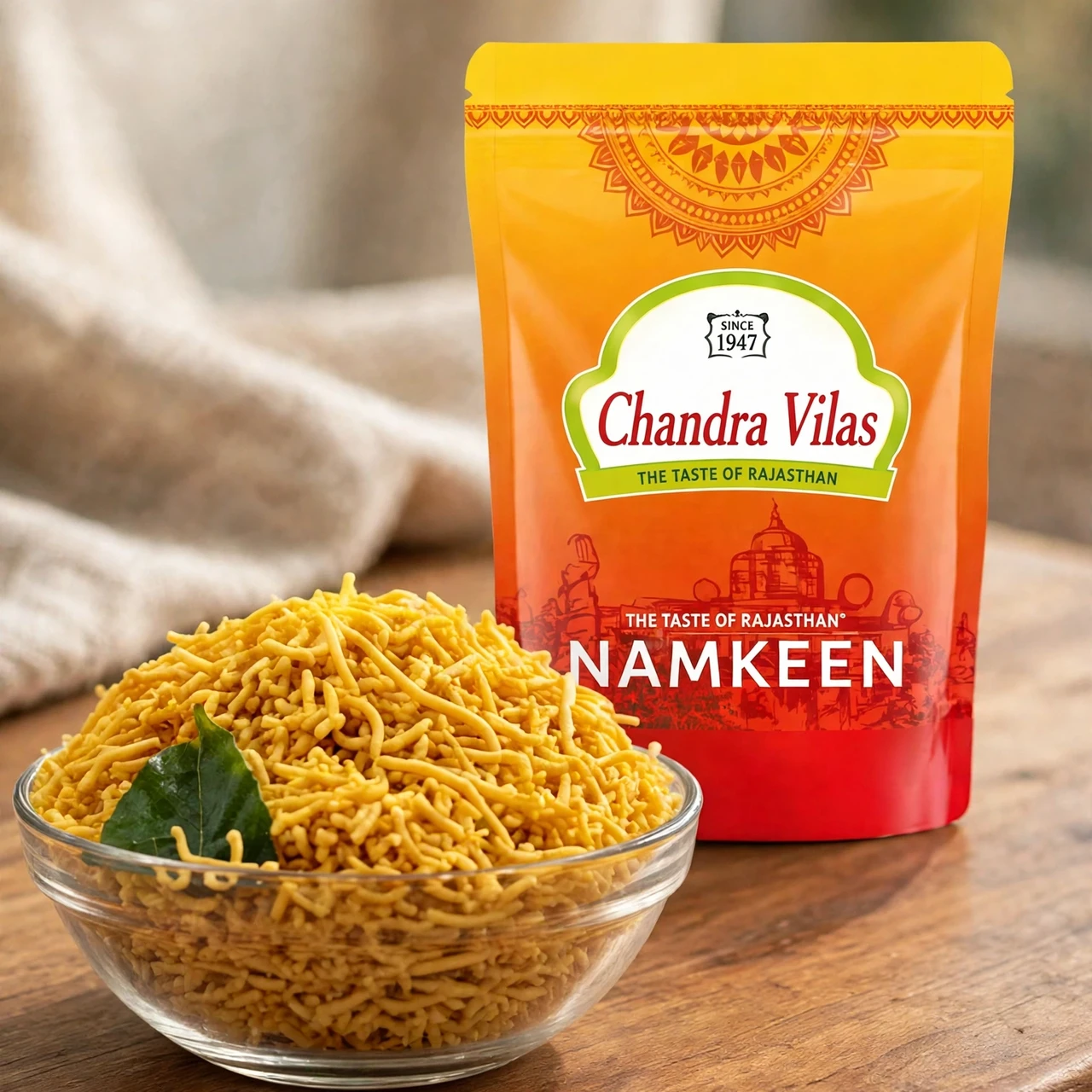
Some weekends are for pressing sev over a hot kadhai. Others are for opening a packet. If yours is the second kind, buy the version made by people who do this every day. The Lalji Aloo Bhujia (400g, ₹148) is the straightforward, properly spiced one we reach for at home. Order The Lalji Aloo Bhujia here. And if you want a bigger pack for the whole family, the Chandra Vilas Aloo Bhujia (500g, ₹230) is the same crisp potato sev in a family size. Order Chandra Vilas Aloo Bhujia here. Both ship from Bikaner with the rest of our namkeen range.
Frequently asked questions
Is aloo bhujia the same as Bikaneri bhujia?
No. Aloo bhujia is potato sev made with besan and boiled potato. Bikaneri bhujia is made from moth dal flour and besan with black pepper, and it carries a GI tag since October 2008. They look similar in the packet. They don't taste the same.
Can I make aloo bhujia without a sev press?
You can use a chakli press with a fine disc, or a piping bag with a small star nozzle. The strands come out thicker and your hand tires faster, but it works. A sev press is cheap and worth buying if you plan to make this more than once.
Why did my aloo bhujia turn soft after a day?
Usually one of three things: the dough was too wet, the oil was too hot so the inside stayed undercooked, or you packed it before it cooled fully. Store it in an airtight container only once completely cool, and it stays crisp for about two weeks.
Is aloo bhujia gluten-free?
The dough itself uses besan, rice flour and moth dal flour, which are naturally gluten-free. But check your spice powders and your press for cross-contamination, and note that some packaged versions add wheat flour. If gluten matters to you, read the label before buying.
How long does homemade aloo bhujia last?
About two weeks in an airtight container at room temperature, kept away from moisture and sunlight. If it ever smells stale or loses its snap, it's past its best. Don't try to revive it in the microwave. It doesn't work.
Comments
Add a comment ↓No comments yet. Be the first to share your thoughts.
Leave a comment
Your email address will not be published. Comments appear after our team has read them.