
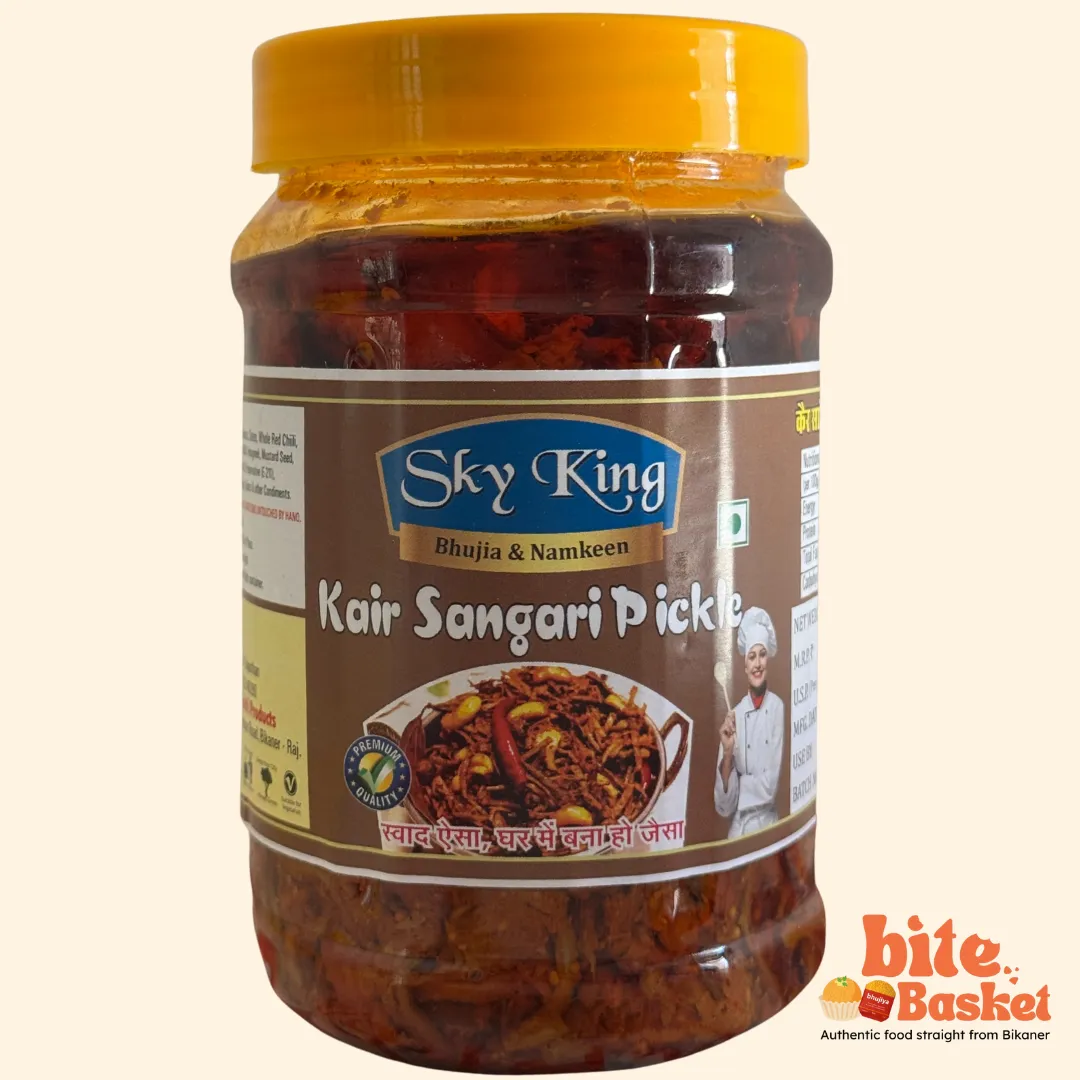
Ker Sangri Pickle: How Bikaner's Desert Pickle Is Made & Where to Buy It
By Bite Basket · • 9 views
Ker Sangri Pickle: How Bikaner's Desert Pickle Is Made & Where to Buy It
Ker sangri pickle is Bikaner's desert pickle, made from sun-dried ker berries and sangri beans soaked in mustard oil with Rajasthani spices. It is sharp, tangy and a little bitter, nothing like a mango pickle. One spoonful with bajra roti or dal-rice is plenty, and the real thing still comes from Bikaner makers who dry the ker in the desert sun.
If you've ever opened a jar of it at a Rajasthani home, you know the smell hits first. Mustard oil, sharp and nose-tingling, then something earthy underneath. That's the desert in a jar. And once you've tasted the real thing, the pale, oily imitations on supermarket shelves just taste flat. Wrong, almost. This is the pickle Bikaner grew up on, and here's how it's made, how to eat it, and how to buy a jar that tastes like the place it came from.
What's actually inside the jar?
Two ingredients do all the talking. Ker, small, round, olive-green berries from the kair shrub (Capparis decidua) that grows wild across the Thar, and sangri, the long, slender beans of the khejri tree. Both grow where almost nothing else will. That's the whole point. When the desert gives you so little, you learn to make a feast of it.
| Ker berries | Sun-dried till they shrivel and darken; sour, slightly bitter, the backbone of the pickle |
| Sangri beans | Dried khejri pods; chewy, earthy, they hold their bite even after weeks in oil |
| Mustard oil | The preservative and the flavour, pungent, warming, unmistakably Rajasthani |
| Spices | Red chilli, turmeric, fennel, mustard seed, asafoetida, ground fresh, never from a stale packet |
| Salt | Draws out moisture, keeps the jar safe for months |
That's it. No vinegar shortcuts, no colour, no mystery "pickle masala" from a factory sachet in the honest jars. If you want the longer story of what ker and sangri are, the trees, the desert, the dish they also become, we wrote that separately: What Is Ker Sangri? Rajasthan's Desert Pickle, Explained. This post is about the pickle itself.
How is ker sangri pickle actually made?
There's no single recipe. Every Bikaner household swears theirs is the right one, and honestly, they're all a little bit right. But the bones of the method don't change.
First, the drying. Fresh ker berries are bitter enough to make your face pull. Nobody eats them raw. So they're spread out in the sun for days, sometimes more than a week, until they've shrunk into dark, wrinkled beads. The desert sun does the work here. It concentrates the sourness and tames the bitterness into something interesting. Sangri gets the same treatment, dried till the pods turn leathery.
Then comes the soaking. The dried ker and sangri go into salted water, sometimes overnight, to soften just enough. Too soft and the pickle turns mushy in a month. Too hard and you're chewing pebbles. The makers who've done this for decades judge it by feel. I can't give you a stopwatch for that, and anyone who does is guessing.
Next, the spices. Mustard oil is heated till it just starts to smoke, then cooled a little before the ground spices go in: red chilli for heat, turmeric for colour, fennel for that sweet-aniseed note, a pinch of asafoetida. The smell at this stage is the smell of a Bikaner kitchen in winter. It gets into your clothes. Nobody minds.
Finally, everything goes into the jar together and the oil is poured over till it covers the top by a finger's width. That oil layer matters. It's the seal that keeps air out and the pickle safe. Then the jar sits. A week at least, though most makers will tell you it only starts tasting like itself after two or three.
What does it taste like?
Not sweet. Don't expect sweet. The first thing you get is the mustard oil's punch, then sourness from the ker, then a slow, warm heat that builds instead of hitting you at once. The sangri adds chew, a firm, almost meaty bite that makes a spoonful feel like food, not a condiment.
We keep a jar on our tasting bench and, I'll be honest, it divides the room. People who grew up on it go straight back for a second spoonful. First-timers pause. Then they take another bite to figure out what just happened. That second bite is the tell. If a pickle only works on the first taste, it's a novelty. Ker sangri works on the third, fourth, fifth spoonful, because the bitterness stops being strange and starts being the point.
My own favourite way to judge a jar: eat a single ker berry on its own. If it's just salty, it's a factory jar. If it's sour, then bitter, then warm, with the oil coating your tongue after, that's the real thing.
How do you eat ker sangri pickle?
Small. That's the first rule. A tablespoon next to your main dish, not a bowlful. It's a flavour bomb, not a side dish.
The classic pairing is bajra roti with a smear of ghee, the pickle on the side, and a glass of chaas. That's the meal desert families ate for generations, millet, buttermilk, pickle, and it still works on a Tuesday night in any city. It also sits happily next to dal-rice, khichdi, or a plain curd-rice when you want something to wake the plate up.
Two pairings we love at BiteBasket. One: roasted papad, torn into shards, with a spoon of ker sangri pickle as the dip. Crunchy, sour, salty, gone in minutes. If you want papad ideas beyond the plain roasted one, our 5 Bikaneri dishes you can make with papad has you covered. Two: a small mound of Bikaneri bhujia next to the pickle on a tea-time plate. The bhujia's crunch against the pickle's chew is one of those combinations that sounds odd until you try it.
And a word on quantity: because it's oil-based and salty, a little goes a long way. A 200g jar lasts a small family weeks if you're using it the way it's meant to be used, a spoon at a time.
How to pick a good jar (before you buy)
Not every jar labelled "ker sangri" deserves your money. Here's what we check on our own shelves.
- Read the ingredients. Ker, sangri, mustard oil, spices, salt. If the list runs long with preservatives and acidity regulators, it's a factory shortcut.
- Look at the oil. It should cover the pickle completely and look clear, not cloudy or stale. Oil below the pickle line means air is getting in.
- Check the ker. Whole berries, visible in the jar, dark and wrinkled. If everything looks like uniform mush, the maker used pulp, not berries.
- Buy from a Bikaner maker. Ker sangri is a desert food. The people who dry it in that sun, who've made it for decades, simply get it right more often. A generic pickle brand in another city is guessing.
- Smell it when you open it. Mustard oil first, spices second. If it smells flat or only of vinegar, it won't taste any better a week later.
One more thing worth saying plainly: ker sangri pickle is salty and spicy by nature. If you're watching salt, enjoy a small portion rather than skipping it entirely. The flavour is the reward, and you don't need much of it.
Where to buy ker sangri pickle online
If you don't have a Bikaner grandmother to post you a jar, and most of us don't, the next best thing is ordering from a Bikaner maker. That's exactly what we do at BiteBasket: the pickle on our shelves comes from the same heritage halwais whose bhujia and papad we already ship across India.
The jar I'd reach for first is the Sky King Bikaneri Kair Sangri Pickle, whole ker berries and sangri in mustard oil, the way Bikaner has always made it. If you want a bigger jar for the family, the Chandra Vilas Ker Sangri 500g is the same desert pickle in a larger pack. Both are the real, oil-cured pickle, not a sweetened or vinegar-based version.
Order it with your bhujia. Honestly, that's my advice. A jar of ker sangri pickle next to a pack of Bikaneri bhujia is the most Bikaner thing you can put on a table without boarding a train.
Frequently asked questions
Is ker sangri pickle the same as ker sangri sabzi?
No. They start from the same two ingredients, ker berries and sangri beans, but the sabzi is a cooked dish, usually made fresh with curd or tomatoes and eaten the same day. The pickle is dried, cured in mustard oil and spices, and keeps for months. Same desert, different destination.
How long does ker sangri pickle last?
A well-made jar, kept in a cool, dry place with the oil covering the pickle, lasts for months. Always use a dry spoon, since water is the one thing that spoils a pickle faster than anything else. And keep it out of the fridge; mustard oil thickens in the cold.
Is ker sangri pickle very spicy?
It's spicy, yes, but the heat builds slowly rather than burning at once. The bigger flavour is sour and bitter from the ker itself. If you're sensitive to chilli, take a smaller portion and pair it with curd or chaas. The coolness balances the heat nicely.
Where can I buy real ker sangri pickle online?
From Bikaner makers. BiteBasket ships ker sangri pickle from heritage Bikaner brands, the Sky King Kair Sangri Pickle and Chandra Vilas Ker Sangri, across India. Look for whole ker berries, mustard oil, and a short ingredient list before you buy anywhere.
Comments
Add a comment ↓No comments yet. Be the first to share your thoughts.
Leave a comment
Your email address will not be published. Comments appear after our team has read them.