
What Is Ker Sangri? Rajasthan's Desert Pickle, Explained
Published on • 2 views
If you've eaten at a Rajasthani thali restaurant, you've probably met it: a dark, tangy, chewy pickle served in a small steel katori alongside dal-baati, with a flavour that's somewhere between tamarind, olive, and good mustard oil. That's ker sangri — Rajasthan's desert pickle, made from two wild ingredients that grow in the Thar without any irrigation at all.
Ker sangri pickle is made by sun-drying kair (the berry of the ker tree) and sangri (the slender beans of the khejri tree), then pickling them in mustard oil with Rajasthani spices. It's chewy, sour, a little bitter, and completely unlike any mango or lemon pickle you've had. Here's what it is, how it's made, and where to get the real thing.
What Ker and Sangri Actually Are
Ker is the small, round, green berry of the ker tree (Capparis decidua), a thorny desert shrub that survives in the Thar on practically no water. Sangri is the long, thin bean-pod of the khejri tree (Prosopis cineraria) — the same khejri that's Rajasthan's state tree and the tree of life for desert villages.
Both are gathered in spring, when the trees fruit. Historically, this was food born of scarcity: in a desert where crops failed regularly, families relied on whatever the land gave for free. Ker and sangri were dried and stored, and they became one of Rajasthan's most distinctive flavours — not despite the harshness of the desert, but because of it.
How Ker Sangri Pickle Is Made
The traditional method hasn't changed much in generations. Fresh ker berries and sangri pods are first sun-dried for several days until they shrivel and darken. Then they're pickled in mustard oil with salt, turmeric, red chilli, fennel, and sometimes amchur or mustard seeds — a spice mix that leans savoury and pungent rather than sweet, unlike the sweet-and-sour pickles of Gujarat.
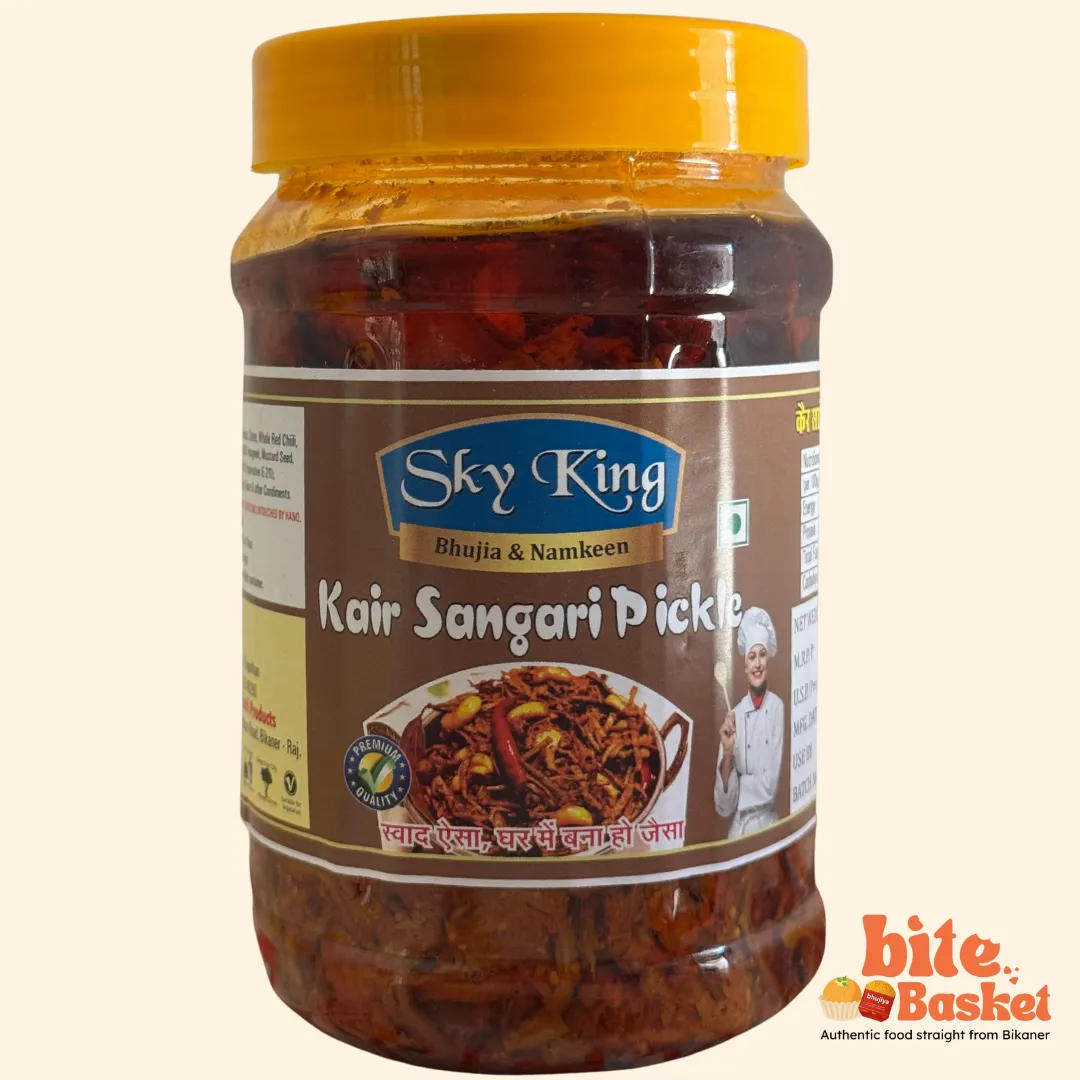
A good ker sangri pickle needs time. The dried berries and beans slowly absorb the oil and spices over weeks, turning tender-chewy while keeping a pleasant bite. BiteBasket's Bikaneri Kair Sangri Pickle — made by Sky King, rated 4.8 from customer reviews — follows this approach with no preservatives, just the old method of salt, spice, oil and patience.
What Does It Taste Like?
Ker is the sour one — small and sharp, with a citrusy tang that's closer to a raw olive than to anything you'd call a berry. Sangri is milder, slightly nutty and chewy, and balances the ker's punch. Together, pickled in mustard oil, they make a pickle that is sour, spicy, a touch bitter, and deeply savoury.
It won't taste familiar on the first bite if you've grown up on mango pickle. But it's the pickle that pairs best with plain food — a spoonful alongside dal-chawal or bajre ki roti with ghee is the classic way. Rajasthani families also cook ker sangri as a dry sabzi, but the pickle form is what travels and keeps, which is why it's the one you can order from Bikaner.
Ker Sangri vs Panchkuta: Don't Mix Them Up
You may also see the word panchkuta (or panchkutta). That means a mix of five desert ingredients: ker, sangri, kumat (another desert bean), gunda (gumberry), and dried mango. So all ker sangri is part of the panchkuta family, but a true ker sangri pickle is just the two stars — ker and sangri — without the others diluting them.
If you're buying for the first time, a pure ker sangri pickle gives you the cleanest read on the flavour. Once you like it, the panchkuta-style mixed pickles — like a good mixed Rajasthani pickle — are the natural next step.
Why It Keeps So Well
Desert pickles were designed for a world without refrigerators. Sun-drying concentrates the ingredients, mustard oil seals out air and bacteria, and salt does the rest — the result is a pickle that stays good for months at room temperature without any preservatives. That's not a modern "no preservatives" marketing claim; it's just how the recipe has always worked.
It also means ker sangri is an ideal thing to order online. Unlike fresh sweets or dairy snacks, a jar of pickle doesn't care about courier delays. Order it with your Diwali snacks and it will arrive exactly as it left Bikaner — which is more than you can say for most festive food.
Taste It for Yourself
BiteBasket stocks ker sangri pickle in a few sizes, so you don't have to commit to a family-sized jar on your first try. The Sky King Bikaneri Kair Sangri Pickle (500g, ₹260) is the full-size jar, while the Chandra Vilas Ker Sangri (200g) is the smaller taster — both are FSSAI-certified and preservative-free. Browse the full Rajasthani pickle range to see the whole shelf.
Frequently Asked Questions
What is ker sangri pickle?
Ker sangri is a Rajasthani desert pickle made from sun-dried kair berries (from the ker tree) and sangri beans (from the khejri tree), pickled in mustard oil with spices. It's sour, chewy, spicy and a little bitter — one of Rajasthan's most traditional pickles.
Is ker sangri healthy?
Ker and sangri are wild desert vegetables, naturally high in fibre and traditionally valued in Rajasthani diets. The pickle is oil-based, so a spoonful at a time is the right serving — it's a flavouring, not a main course.
How do you eat ker sangri pickle?
The classic way is a small spoonful with dal-baati-churma, bajre ki roti with ghee, or plain dal-chawal. It's strong, so a little goes a long way.
What's the difference between ker sangri and panchkuta?
Ker sangri is just the two ingredients — ker berries and sangri beans. Panchkuta adds three more (kumat beans, gunda berries, dried mango) to make a five-ingredient desert mix.
Does ker sangri pickle need refrigeration?
No. Like all traditional oil-based Rajasthani pickles, it keeps for months at room temperature in a cool, dry place — no preservatives needed.
Rajasthan's best flavours were never the rich ones — they're the stubborn ones, the ones that grew where nothing else would. Ker sangri is the desert in a jar, and it travels well.