
Jain Namkeen: Rajasthani Snacks Without Onion & Garlic
Published on • 8 views
Looking for Jain namkeen without onion and garlic? Here is the good news: most traditional Rajasthani namkeen is already Jain-friendly by default. Classic Bikaneri bhujia, moong dal, and papad are made from lentil flours, spices, and oil — onion and garlic never enter the recipe. This guide tells you exactly what to pick, what to double-check, and where to order it fresh from Bikaner.
Why so much Rajasthani namkeen is already Jain
This is not a modern "Jain variant" trend. It is how the food was always made. Rajasthan has a large Jain community, and Marwari-Jain households have been the backbone of Bikaner's food culture for generations. The halwais who created Bikaneri bhujia cooked for everyone — including their Jain neighbours — so the base recipes simply never included onion or garlic.
Think about what goes into the classics:
- Bikaneri bhujia: moth dal flour, spices like black pepper, groundnut oil. That is the whole list.
- Moong dal namkeen: split moong dal, salt, spices, oil. Nothing else needed.
- Bikaneri papad: urad or moong dal flour, black pepper, salt. Sun-dried, then roasted or fried.
- Mota bhujia: besan (gram flour), spices, oil — the thicker, crunchier cousin of regular bhujia.
No onion, no garlic, no root vegetables in any of them. The flavour comes from the dal itself and from spices — which is exactly why Jain families across India have trusted Bikaneri namkeen for decades.
The safest Jain picks on BiteBasket
If you follow a Jain diet, these are the no-brainer choices — traditional recipes with no onion or garlic, from Bikaner's best-known makers:
- Plain Bikaneri bhujia — the original. The Girdharilal Bikaneri Bhujia (since 1978) is the textbook example: moth dal, spices, groundnut oil, no palm oil.
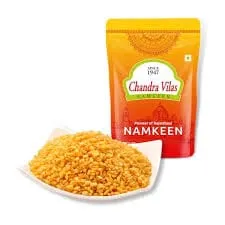
- Masala moong dal — crunchy, protein-rich, and naturally Jain. Try the Chandra Vilas Masala Moong Dal, a Jodhpur classic that sits beautifully in a Jain pantry.
- Bikaneri papad — urad-dal papads are a Jain kitchen staple. The Girdharilal Bikaneri Papad and the protein-rich Girdharilal Moong Dal Papad are both made the traditional way.
- Mota bhujia — thicker strands, bigger crunch. The Girdharilal Mota Bhujia is spiced with longi mirch and fried in groundnut oil.
All of these are vegetarian, onion-free, and garlic-free in their classic recipes — which is why they travel so well to Jain households across India.
What to watch out for
Most traditional namkeen is safe, but modern flavour experiments are where you need to pay attention:
- Garlic-flavoured variants. Some bhujia and chips now come in garlic or "garlic-chilli" versions. For example, a garlic-spiced aalu bhujia will say so in its name or description — read before you buy.
- "Masala" blends. The word "masala" usually means a spice mix, but spice mixes occasionally include dried garlic or onion powder in factory-made snacks. With halwai-made namkeen this is rare, but the label is your friend.
- Hing (asafoetida). Good news: hing is widely accepted in Jain cooking as a replacement for onion and garlic flavour. Many Jain families actually prefer hing-seasoned snacks. If your family avoids hing too, check the ingredients.
- Sweets with root-based colours or ingredients. This guide is about namkeen, but if you are ordering sweets alongside, the same label-checking habit applies.
Our rule of thumb: the plainer and more traditional the product, the safer it is. A 70-year-old bhujia recipe has nothing to hide.
A 30-second label check that never fails
Make it a habit and you will never go wrong. Flip the pack, find the ingredients line, and scan for three words: onion, garlic, and "nature-identical flavouring" (a catch-all that sometimes hides allium-derived flavour). If none of them appear, you are good. On BiteBasket, every product page carries the maker's description, and flavoured variants name their flavour up front — "garlic-chilli" will not sneak up on you. When in doubt, message us on WhatsApp before ordering; we would rather answer the question than have you guess.
Jain namkeen for Paryushan, Diwali gifting & everyday tiffin
Jain households do not just need Jain-friendly snacks — they need them at specific times of year. During Paryushan, many families keep things extra simple, and plain bhujia or roasted papad fits right in: no onion, no garlic, no fuss. It is the kind of snack an elder can eat without asking questions about the ingredients.
Diwali is the other big moment. Dry snacks travel well, keep for weeks, and suit every dietary practice in a mixed family — which makes Bikaneri namkeen one of the easiest gifts for Jain relatives. A box of plain bhujia with moong dal and papad works for the strictest eater at the table and the least fussy one. If you are putting together a gift, keep the selection classic: flavoured experiments are fun for yourself, but gifts should be the safe, traditional picks.
And then there is the everyday use nobody talks about: the office tiffin and the kids' snack box. A small dabba of moong dal or bhujia is the Jain household's answer to the 4 pm slump — crunchy, filling, and free of anything you would need to explain.
How Bikaner's halwais make Jain-friendly namkeen
There is no separate "Jain production line" in Bikaner's old shops, and there never needed to be. The everyday process is already clean: dal ground fresh, spices roasted and pounded, dough pressed by hand or machine, fried in groundnut oil in small batches. No onion or garlic enters the kitchen for these products at all.
That simplicity is also why BiteBasket's namkeen keeps so well without preservatives. Fewer ingredients, no shortcuts — the halwai way. When you order from makers like Girdharilal or Chandra Vilas through BiteBasket, you are getting the same packets that Jain families in Rajasthan have bought from these shops for generations.
Taste it for yourself
Stocking a Jain-friendly pantry with real Bikaneri flavour is easy. Start with these:
- Girdharilal Bikaneri Bhujia — the classic, since 1978
- Chandra Vilas Masala Moong Dal — crunchy, spicy, protein-rich
- Girdharilal Bikaneri Papad — thin, crispy, timeless
- Girdharilal Moong Dal Papad — the protein papad
- Girdharilal Mota Bhujia — thick, crunchy, with longi mirch
Order fresh from Bikaner on BiteBasket — packed by the halwais, shipped across India, free delivery on orders above ₹600.
Frequently asked questions
Is Bikaneri bhujia Jain?
Yes, classic Bikaneri bhujia is Jain-friendly. It is made from moth dal, spices, and groundnut oil, with no onion or garlic. Just avoid garlic-flavoured variants, which will say so on the label.
Which namkeen is safe for Jain diets?
Plain bhujia, moong dal, chana dal, papad, and mota bhujia in their traditional recipes are all safe. Stick to classic versions from traditional makers and check the label on any "masala" or flavoured variant.
Is hing allowed in Jain food?
Most Jain families accept hing (asafoetida) — it is the traditional substitute for onion-garlic flavour in Jain cooking. A small number avoid it; if that is your practice, check the ingredient list.
Does Jain namkeen taste different?
Not really — because the original recipes were already onion-and-garlic-free, "Jain" namkeen from Bikaner tastes exactly like the regular version. You are not missing anything.
Where can I buy Jain namkeen online?
BiteBasket ships traditional Bikaneri namkeen from heritage halwais across India. The classic bhujia, moong dal, and papad listed above are all naturally Jain-friendly.
So if you keep Jain and love namkeen, Bikaner has had you covered all along — no compromises, no special versions needed. Just the original recipes, made the way they always were.