
Buy Bikaneri Bhujia Online: A Complete Guide to Getting the Real Thing Delivered
By Bite Basket · • 12 views
Ordering bhujia used to mean a trip to Bikaner, or asking a relative to carry a packet back in their suitcase. Today you can buy Bikaneri bhujia online in a few clicks — but not every packet that shows up in search results is the real thing. Mass-produced sev, packed months ago in a faraway factory, often wears the same "Bikaneri" label as the hand-pressed bhujia made by the city's heritage halwais. This guide explains how to tell the difference, what to check before you order, and how to get authentic bhujia delivered fresh to your door, anywhere in India.
What "real" Bikaneri bhujia actually is
Authentic Bikaneri bhujia is not just thin, spicy sev. It is a Geographical Indication (GI) tagged product, which means the name legally belongs to bhujia made in Bikaner following the traditional method. The defining ingredient is moth dal (matki), ground and blended with besan, spices and oil, then pressed through a fine sieve and fried until crisp. That moth-dal base is what gives real Bikaneri bhujia its nutty, earthy depth — regular besan sev tastes flat by comparison. If you want the full story of the GI tag and what it protects, read our explainer on what the Bikaneri bhujia GI tag means.
When you buy online, the first thing to check is the maker. A packet from a Bikaner halwai — a family that has made bhujia in the city for decades — is a different product from a national brand's factory line, even when both say "Bikaneri" on the front. The halwai version is made in smaller batches, fried in groundnut oil, and seasoned to a recipe that has not changed in generations.
Marketplace vs buying direct from the maker
Most people start their search on Amazon, Flipkart or BigBasket. That is convenient, but it comes with three hidden costs:
- Markup on top of markup. Marketplace fees, commissions and warehousing charges get baked into the price you pay, while the maker receives less.
- Ageing stock. A packet can sit in a distant warehouse for months before it reaches you. Bhujia is at its best fresh; stale bhujia loses its snap and picks up a cardboard taste.
- Lookalike listings. Marketplaces are full of near-identical packets with similar names. Spotting the genuine Bikaner maker among them takes detective work.
Buying direct from the maker's own store flips all three problems. Your order is packed by the Bikaner shop itself and shipped straight to you, so the bhujia travels a shorter route, the maker earns a fair share, and you know exactly whose hands made your snack. That is the whole idea behind BiteBasket: we list the heritage halwais of Bikaner directly, so you order from the maker, not from a warehouse shelf.
The 7-point checklist before you buy bikaneri bhujia online
1. Check the maker, not just the brand name
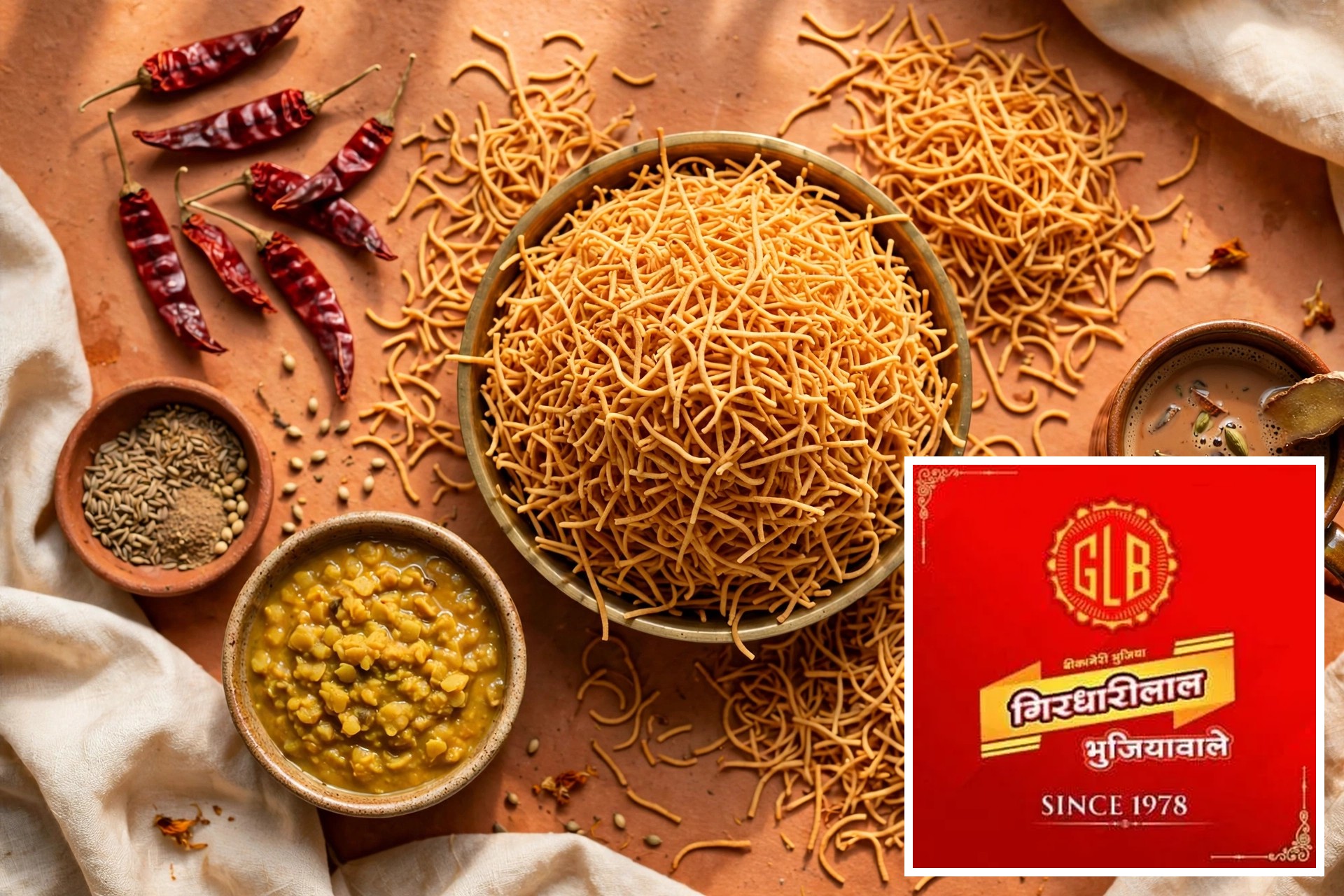
Look for the manufacturer's name on the product page. Girdharilal Bhujiawale, making bhujia in Bikaner since 1978, and Bhikharam Chandmal are two of the city's most trusted names. If a listing hides the maker behind a generic brand, treat that as a warning sign.
2. Read the ingredient list
Real Bikaneri bhujia lists moth dal flour first, along with besan, edible oil and spices. Be wary of long ingredient lists full of flavour enhancers, artificial colours and preservatives — traditional bhujia does not need them.
3. Ask which oil is used
Groundnut oil is the traditional frying medium and gives bhujia its characteristic taste. Some makers also advertise a "no palm oil" range — Girdharilal's entire range, for example, is made without palm oil, which is a genuine quality marker, not just a label trend.
4. Pick the right variety for your taste
Not all bhujia is the same. The classic fine bhujia — try Girdharilal Bikaneri Bhujia — is thin, crisp and medium-spicy, the everyday favourite. Mota bhujia is thicker and crunchier, better for people who like a hearty bite. Bhikharam Chandmal's Bikaneri bhujia is the spicier, more fiery end of the spectrum. If you are ordering for the first time, start with a classic, then explore.
5. Choose the right pack size
For a first order, a 400g pack is the sensible choice — enough to judge freshness and taste without committing to a kilo. Once you know your favourite, 800g and 1kg packs are better value and survive family snacking far longer than you expect. Browse the full namkeen range to compare sizes across makers.
6. Check freshness and packing
Good sellers pack bhujia in sealed, airtight pouches and dispatch quickly after your order. Ask about shelf life and dispatch time before ordering, and check reviews that mention freshness specifically — "crisp on arrival" is the phrase you want to see, not just "good taste".
7. Confirm delivery to your city
Reputable Bikaner stores ship pan-India. If you are ordering for Delhi, Mumbai or Bangalore, delivery is straightforward — see our delivery guide for Delhi, Mumbai and Bangalore for timelines and packing tips. For smaller towns, confirm the courier covers your PIN code before you pay.
How much should you pay?
Prices vary with the maker, the pack size and whether you are buying on a marketplace or direct. As a rule of thumb, a 400g pack of genuine halwai bhujia costs roughly what a good packet of branded namkeen costs at a supermarket — the difference is that you are paying the maker, not the middlemen. Be suspicious of prices far below the market: very cheap "Bikaneri" bhujia is usually bulk sev repacked with a borrowed name. Equally, a premium price alone proves nothing — check the maker and ingredients first, price second.
One more money tip: combo packs and multi-packs from the same maker are usually the best value, especially if you are stocking up for a festival or sending bhujia to family in different cities. A single order with two or three varieties also lets you compare makers side by side at home.
Storing bhujia after delivery
Once your packet arrives, transfer the bhujia to an airtight container as soon as you open it — the original pouch rarely reseals well enough to keep out humidity. Keep the container in a cool, dry place away from sunlight, and use a dry spoon or clean hands every time. Stored this way, bhujia stays crisp for weeks. If it ever goes soft, a few minutes in a low oven brings back much of the crunch, though nothing beats a freshly opened pack.
Why ordering from Bikaner itself matters
Bhujia is Bikaner's identity — the city has made it for over a century, and the craft lives in specific lanes, specific families and specific recipes. When you buy from a Bikaner halwai online, you are keeping that craft alive and getting the version of bhujia that earned the GI tag in the first place. A factory hundreds of kilometres away can copy the shape; it cannot copy the moth dal, the water, the climate or the hands that have pressed bhujia for generations.
So the next time you search for where to buy Bikaneri bhujia online, skip the marketplace maze. Find the maker, check the ingredients and the oil, pick your variety and pack size, and order direct from Bikaner. Your evening chai will taste the difference.
Frequently asked questions
Where is the best place to buy Bikaneri bhujia online?
Buy direct from a Bikaner halwai's own store, such as BiteBasket, rather than a marketplace. You get fresher stock, a verified maker, and no marketplace markup.
How do I know if bhujia is authentic?
Check three things: the maker is based in Bikaner, moth dal flour is the first ingredient, and the product carries the GI-tag heritage. Listings that hide the maker or use only besan are usually generic sev.
How long does delivery take?
Most pan-India orders from Bikaner arrive within 3–7 working days depending on your city, with metro deliveries usually at the faster end.
Which bhujia should I try first?
Start with a classic fine bhujia like Girdharilal Bikaneri Bhujia. If you like more heat, try Bhikharam Chandmal; for extra crunch, go for mota bhujia.
Does BiteBasket ship outside India?
BiteBasket ships pan-India. For international orders, check the shipping policy on the store or contact the team before placing your order.