
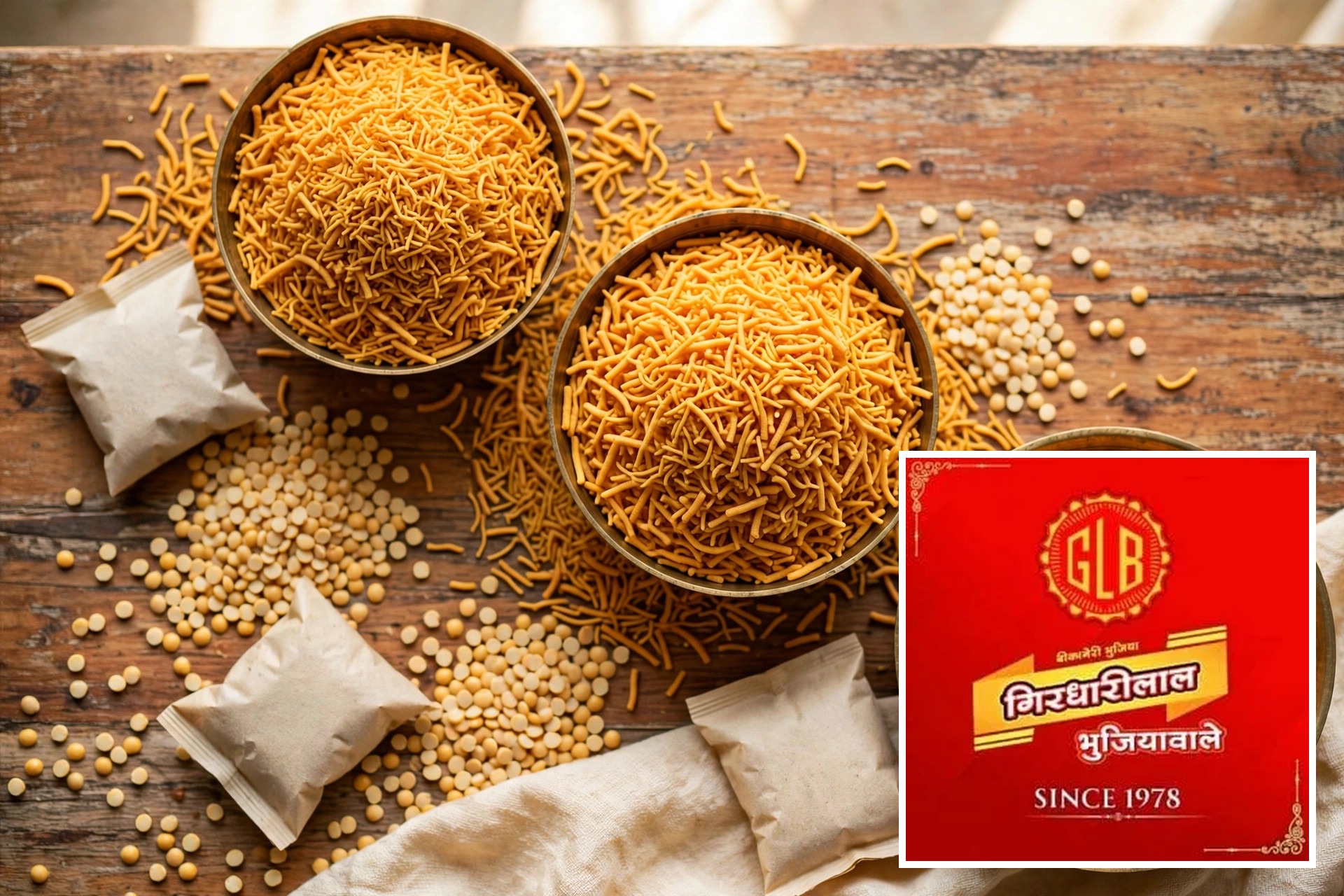
Bikaneri Bhujia Price Guide 2026: What 1 kg Should Really Cost
By Bite Basket · • 3 views
Why does Bikaneri bhujia cost so much more in one shop than another?
Search for "bikaneri bhujia price" and you will see the same snack — or what looks like the same snack — listed anywhere from under Rs 250 a kilo to over Rs 450 a kilo. That gap confuses a lot of buyers, and it is not just about one shop being greedy and another being generous. The price of Bikaneri bhujia depends on what is actually inside the pack, how it was fried, how big the pack is, and how many hands it passed through before it reached you.
This guide compares real prices seen online in early November 2026, explains what drives them, and shows how to compare packs fairly — so you pay for the bhujia you want, not for a brand name or a marketplace fee you did not notice.
Bikaneri bhujia prices in November 2026: the short version
Prices below are what major online stores were showing for 1 kg packs in early November 2026. Online prices change with offers and stock, so treat these as a snapshot, not a permanent rate card — but they show the shape of the market clearly.
- Bikaji Bikaneri Bhujia, 1 kg: around Rs 249 on BigBasket (MRP Rs 350). The same pack has been tracked at much higher prices on other marketplaces at different times, which is why a single listing can mislead you.
- Haldiram's Bhujia, 1 kg: around Rs 242 on Amazon at the time of checking, against an MRP of about Rs 299.
- Bhikharam Chandmal Bikaneri Bhujia, 1 kg: around Rs 300 on BigBasket.
- Heritage halwai bhujia from Bikaner: typically Rs 300 and above per kilo for small-batch, moth-dal bhujia made by a named halwai rather than a factory line. On BiteBasket, Girdharilal Bikaneri Bhujia — the original since 1978, fried in groundnut oil with no palm oil — is listed at Rs 319, and Bhikharam Chandmal Bikaneri Bhujia is listed at Rs 148 for its listed pack.
So the honest answer to "what does Bikaneri bhujia cost?" is: roughly Rs 240 to Rs 350 a kilo for the big national brands, and a little more for small-batch halwai bhujia. Anything far below that range deserves a second look at the ingredients; anything far above it should be able to explain what extra you are getting.
Always compare the price per 100 grams, not the pack price
This is the single most useful habit when buying bhujia online. A Rs 47 pack and a Rs 249 pack are not comparable until you know their weights. Bikaji's 200 g pouch, for example, has been listed around Rs 47 — that is about Rs 23.50 per 100 g, close to the 1 kg pouch at Rs 24.90 per 100 g. The small pack is not a bargain; it is just smaller.
Do this quick check before you buy:
- Divide the pack price by the pack weight in grams, then multiply by 100. That is your price per 100 g.
- Compare that number across brands, not the headline pack price.
- Check whether delivery is included. A "cheap" pack with a Rs 80 delivery fee is not cheap. BiteBasket, for instance, offers free delivery on orders above Rs 600, which changes the maths completely if you are stocking up.
- Watch for MRP games. A pack "marked down" from an inflated MRP is not necessarily good value — compare the selling price per 100 g, not the discount percentage.
What actually makes one bhujia cost more than another?
1. Moth dal vs plain besan
Real Bikaneri bhujia is built on moth dal, the small, hardy lentil of the Rajasthan desert, blended with besan and spices. Moth dal costs more than plain gram flour and is harder to work with, which is one reason factory sev — often just besan — can be sold cheaper. If a pack lists only besan and no moth dal, you are arguably not buying Bikaneri bhujia at all, whatever the label says.
2. The oil it is fried in
Groundnut oil costs significantly more than palm oil, and it is the traditional choice of Bikaner's halwais. Brands that fry in palm oil can undercut everyone else on price, but the taste is flatter and the bhujia goes stale differently. Girdharilal's range on BiteBasket carries a "No Palm Oil" tag precisely because this is a cost the maker refuses to cut. When you see a suspiciously cheap bhujia, the oil is usually the first place the saving was made.
3. Small batches vs factory lines
A halwai making bhujia in daily batches, pressing it fresh and packing it the same week, has higher labour costs per kilo than a factory running tonnes a day. What you get in return is freshness — bhujia that has not sat in a warehouse for months — and a recipe that has not been diluted to survive a long supply chain.
4. Pack size and where you buy it
Marketplaces add their own fees, and sellers pass them on. A pack that costs Rs 249 on one platform can cost Rs 400-plus on another for the same brand and weight, as price trackers for Bikaji's 1 kg pack have shown. Buying direct from the maker — or from a store like BiteBasket that ships direct from Bikaner's halwais — cuts out at least one layer of markup. That is also why our earlier guide to buying Bikaneri bhujia online recommends checking the seller, not just the price.
Which bhujia gives the best value at each budget?
If you want the lowest cost per kilo and you are not fussy about the maker: the big national brands at their offer prices — Bikaji or Haldiram's around Rs 240–250 per kilo — are hard to beat. They are consistent, widely available, and fine for everyday snacking, chaat toppings and party bowls.
If you want authentic Bikaneri taste and are willing to pay a little more: go for a named halwai bhujia. Girdharilal Bhujiawale is the classic thin, crisp, medium-spicy bhujia that most Bikaneris grew up on, while Bhikharam Chandmal leans spicier and is a favourite for people who like more heat. Our three-way comparison of Girdharilal vs Bishanlal vs Bhikharam Chandmal breaks down the taste differences in detail.
If you like extra crunch: try mota bhujia, the thicker strand. Girdharilal Mota Bhujia is the same heritage recipe in a crunchier cut, and it holds up particularly well in chaat, where thin bhujia can go soft.
If you are buying for a family or an office: buy the 1 kg pack, not four 200 g pouches. You will almost always pay less per 100 g, use less packaging, and — on BiteBasket — cross the Rs 600 free-delivery threshold with two packs. Check the full namkeen range and build one order instead of several small ones.
Five checks before you pay
- Weight first: confirm the pack weight in grams. "Family pack" and "value pack" mean nothing without it.
- Price per 100 g: do the division. It takes ten seconds and kills most fake bargains.
- Ingredients: look for moth dal and the oil used. Groundnut oil and no palm oil are worth paying for if taste matters to you.
- Freshness: small-batch makers pack frequently; check the manufacturing or packing date when the pack arrives, and store it airtight once opened.
- Total cost: add delivery before comparing. A Rs 20 cheaper pack with Rs 60 delivery is Rs 40 more expensive.
One more honest note: price is not the same as value. The cheapest bhujia you have ever bought is only a bargain if you actually enjoy eating it. A pack that sits half-finished in the cupboard because it tastes flat cost you more per handful than the slightly pricier pack your family finished in three days.
Frequently asked questions
What is the price of 1 kg Bikaneri bhujia in 2026?
In early November 2026, 1 kg packs of the big brands were listed around Rs 240–300 online — Bikaji around Rs 249 and Haldiram's around Rs 242 at offer prices, Bhikharam Chandmal around Rs 300 — while small-batch halwai bhujia from Bikaner typically costs a little more per kilo. Prices vary by store and offer, so always check the current listing.
Why is halwai bhujia more expensive than factory bhujia?
Three reasons: moth dal costs more than plain besan, groundnut oil costs more than palm oil, and small daily batches cost more per kilo to make than factory lines. You are paying for ingredients and freshness, not just a name.
Is it cheaper to buy bhujia online or from a shop in Bikaner?
A shop in Bikaner will usually be cheapest because there is no shipping or platform fee. Online, buying direct from the maker or a direct-from-Bikaner store is generally cheaper than a marketplace listing of the same pack, and ordering above the free-delivery threshold (Rs 600 on BiteBasket) removes the delivery cost entirely.
How much bhujia should I buy at once?
For a family that snacks daily, a 1 kg pack lasts roughly two to three weeks and is the best value per 100 g. Buy more only if you can store it airtight and finish it within a couple of months — bhujia loses its crunch long before it goes bad.
Bottom line: in 2026, expect to pay roughly Rs 240–350 per kilo for good Bikaneri bhujia, compare by price per 100 g, check the oil and the moth dal, and buy direct from Bikaner when you can. Your taste buds — and your wallet — will both notice the difference.