
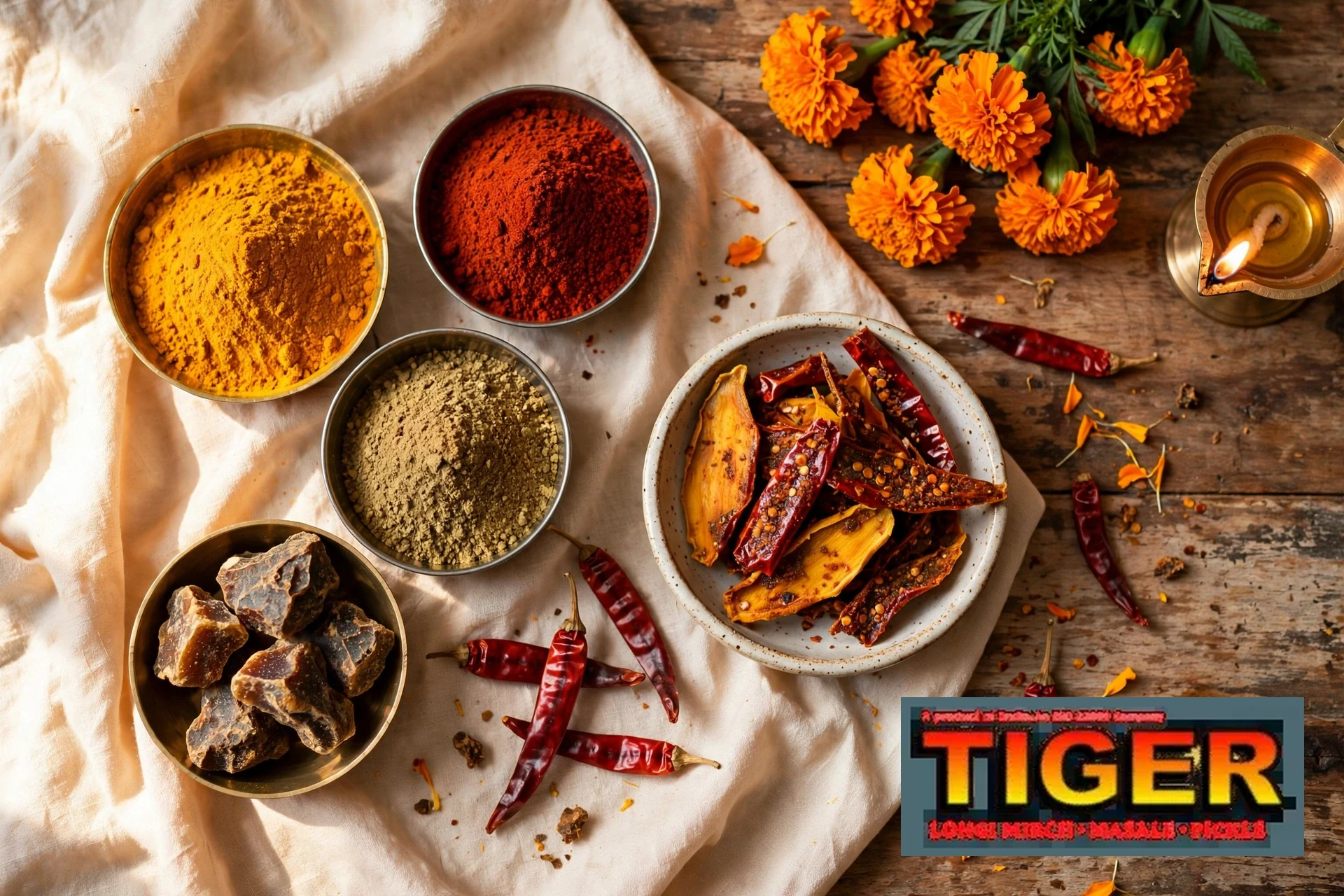
Yellow Tiger: Bikaner's Everyday Spice Brand — Dhania, Haldi, Mirch & Hing
Published on • 11 views
When people say Bikaner, the first word that comes to mind is bhujia. Fair enough — the town practically invented it. But spend a day in a Bikaneri kitchen and you'll notice something else: everything runs on spices ground the Rajasthani way. Coriander from the fields of Kota and Jhalawar, red chillies with the punch of Mathania, turmeric, hing — the quiet backbone of every tadka, dal and sabzi. That's where Yellow Tiger, a homegrown Bikaner spice brand, comes in: the everyday masalas that sit in your dabba, not on a gift shelf.
This isn't a story about a century-old shop with sepia photographs on the wall. It's the story of a working spice brand from a town that treats flavour as seriously as any festival — and why Rajasthan's spice belt makes it such a natural home.
Rajasthan: the spice belt behind the spices
India's spice map quietly runs through Rajasthan. The state contributes roughly four-fifths of India's coriander production, with the belt of Kota, Jhalawar and Baran growing the bulk of it on their black, loamy soil. The rabi crop is harvested in late winter, dried in the dry desert air, and goes straight into mandis where buyers grade it for aroma and seed plumpness.
Chilli has its own Rajasthani legend. The Mathania red chilli, grown around a village near Jodhpur, is prized across India for its deep, vivid red colour and robust heat — the reason so many curry powders from this region carry that unmistakable maroon glow. Turmeric, meanwhile, has been a staple of the Marwari kitchen for centuries: ground into haldi-doodh, stirred into ghee-laden dal, and used as generously as salt.
A spice brand born in Bikaner is, in other words, born right at the source. Yellow Tiger's six products all come from that same logic: coriander, turmeric, red chilli, longi mirch, hing, and a chilli pickle. Nothing exotic, nothing gimmicky — the six things a Rajasthani kitchen would miss first if they vanished.
Meet the range: six staples, done properly
1. Coriander (Dhania) Powder — 500g
The workhorse. Coriander powder goes into almost every Indian curry, and the difference between a freshly ground, fragrant batch and a stale, dusty one is immediately obvious on the palate. Yellow Tiger's coriander powder is ground from whole seeds sourced from Rajasthan's coriander belt, so the citrusy, slightly sweet aroma that defines good dhania actually survives the pack. The 500g pack is a sensible size for most households — big enough to be economical, small enough that you'll finish it while it's still fresh.
2. Turmeric (Haldi) Powder — 500g
Haldi in a Rajasthani kitchen is not decorative. It goes into dal, sabzi, khichdi, the morning glass of haldi-doodh, and sometimes a face pack on the weekend. Yellow Tiger's turmeric powder gives you the deep yellow colour and earthy warmth that turmeric is supposed to deliver — a sign the rhizomes were mature and properly dried before grinding, not diluted with fillers.
3. Red Chilli Powder — 500g
Red chilli powder is where regional character shows most clearly. The Yellow Tiger red chilli powder leans on the Rajasthan tradition: a strong, bright-red powder that brings both colour and honest heat. Use it where colour matters most — tadkas, achaari masalas, chana and dal — and remember that a little goes a long way when the powder is actually fresh.
4. Longi Mirch Powder — 100g
This is the one for people who find regular chilli powder too loud. Longi mirch — the long, slim red chillies of the region — gives a sharper, quicker heat and a distinctive aroma that many Marwari and Gujarati households prefer for everyday cooking. Yellow Tiger's longi mirch powder comes in a compact 100g pack, which is ideal: this is a spice you want to replace often, because its pungent oils fade faster than most.
5. Super-Strong Compounded Hing Powder — 100g
Hing (asafoetida) is the most underrated spice in the Indian dabba. A pinch in hot ghee transforms dal, kadhi, chana and vrat dishes; it also does the digestive heavy lifting in many Jain and no-onion-garlic preparations. Raw hing is a pungent resin, so most household brands — including Yellow Tiger's hing powder — sell it compounded, meaning it's blended with a carrier so it's spoonable and easy to dose. Start with a tiny pinch; the "super-strong" label is there for a reason.
6. Jara-Sa Chilli Pickle — 100g
The only non-powder in the lineup, and a telling one. A chilli-pickle brand coming from a spice maker makes sense: the same chillies, the same grinding, the same palate. Yellow Tiger's chilli pickle is the table condiment version of everything above — spoon it next to dal-baati, khichdi or plain parathas and the meal is instantly more interesting.
Why freshly ground spices taste so different
There's real chemistry behind the difference, and it's worth knowing when you shop. A spice's aroma lives in its volatile oils. The moment whole seeds are ground, those oils start escaping — which is why a pack of dhania that's sat open on a shelf for a year smells like dust while a fresh one smells like citrus and earth.
Three habits protect your spices:
- Buy sizes you'll finish in 2–3 months. The 100g hing and longi mirch packs here are exactly the right idea.
- Keep them airtight, cool and dark. The dabba next to the stove is convenient but terrible for shelf life; heat and light kill aroma fastest.
- Trust your nose over the date. If the powder smells flat when you rub it between your fingers, no recipe trick will bring it back — replace it.
Cooking with the Rajasthani palette
If you're buying these spices, here are a few ways Bikaneri kitchens put them to work:
- Haldi + dhania as a base: In most Rajasthani dals, haldi goes in first with the boiling water, and dhania follows with the tadka — the two define the dish's colour and body.
- Longi mirch for tadka: Bloomer it in hot ghee for ten seconds and pour over khichdi or dal. The aroma hits before the heat.
- Hing in dal: A pinch bloomed in ghee, added at the very end, gives dal the restaurant-style depth that tomato and turmeric alone can't.
- Chilli pickle as the side: In Marwar, the pickle isn't decoration — dal-baati without something sour and hot on the side is considered an incomplete meal.
Frequently asked questions
How long do ground spices stay fresh?
As a rule of thumb, 6–12 months after opening if stored airtight, away from heat and light. Highly aromatic powders like longi mirch and hing fade faster — that's why Yellow Tiger packs them in 100g quantities.
What's the difference between red chilli powder and longi mirch powder?
Red chilli powder is the everyday all-rounder — good colour, balanced heat. Longi mirch, ground from the region's long, slim chillies, is more pungent and aromatic, with a sharper heat that hits quicker. Many Rajasthani households keep both and use them for different dishes.
What is compounded hing?
Pure hing is a strong, sticky resin that can't be spooned or dosed easily. "Compounded" hing is blended with a carrier (usually wheat-based starch or gum) so it flows like a powder and you can measure a pinch. It keeps the signature pungent aroma in a usable form.
Where can I buy Yellow Tiger spices online?
All six products — coriander powder, turmeric powder, red chilli powder, longi mirch powder, hing powder and chilli pickle — are available on the Yellow Tiger brand page at BiteBasket, with pan-India delivery. For the story behind Bikaner's most famous export, read why Bikaneri bhujia is so famous next.