
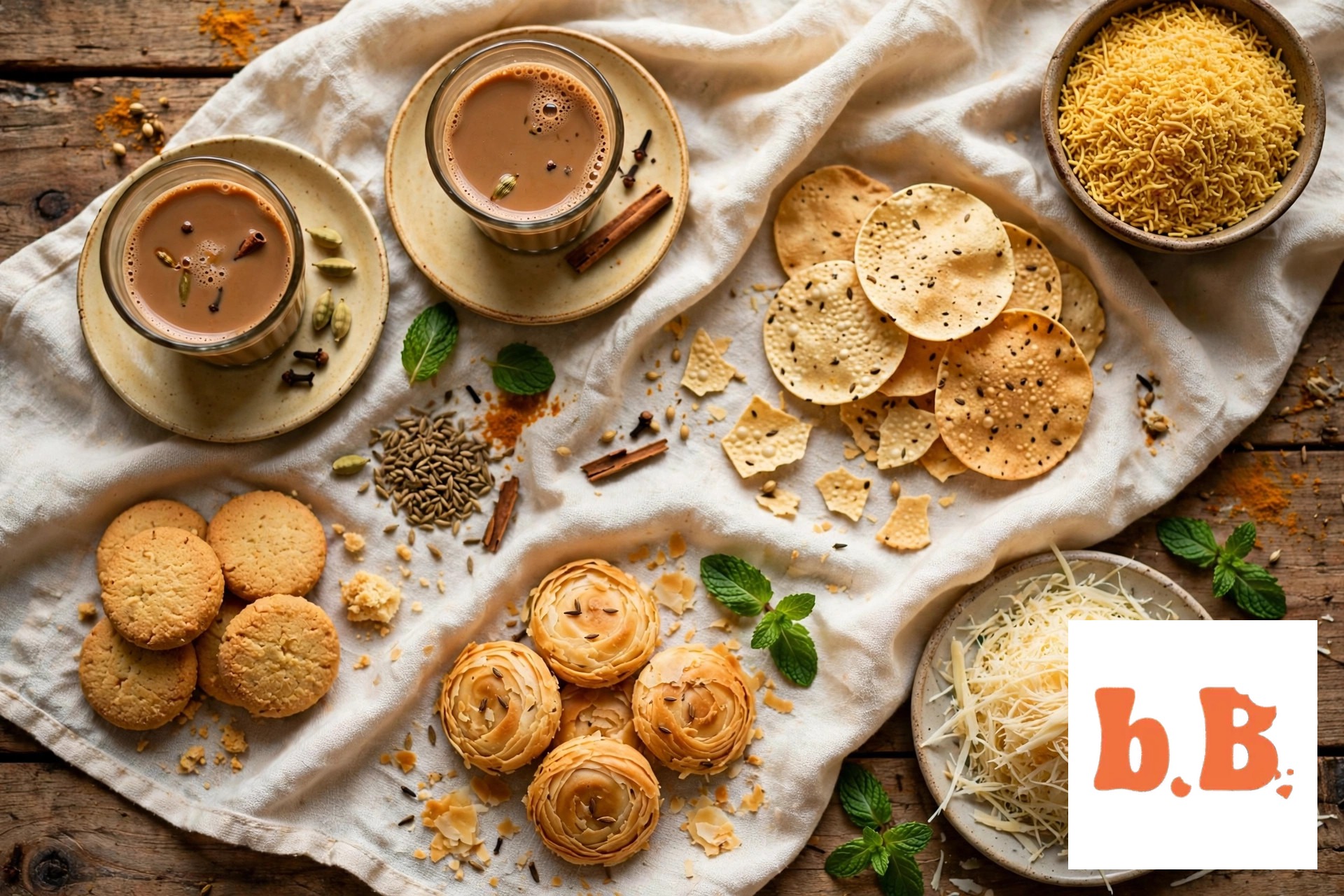
What to Eat with Chai: The Bikaneri Chai-Time Pairing Guide
Published on • 6 views
In India, chai is rarely just chai. It is a pause in the middle of a busy day, an excuse to sit down with family, and — if you get the snack right — the best ten minutes of the afternoon. The wrong pairing can flatten a good cup: something too sweet makes the chai taste bitter, something too oily leaves you reaching for water instead of a second cup. The right pairing does the opposite. It makes both taste better.
Bikaner, Rajasthan's city of bhujia, has spent over a century perfecting the snacks that sit beside a glass of chai. This guide brings that wisdom to your tea table: what to eat with chai, why each pairing works, and how to build a chai-time spread that suits morning, evening, and guests alike.
Why Chai Needs the Right Partner
A classic Indian masala chai is bold — black tea, milk, ginger, cardamom, and sugar, all competing for attention. That strength is exactly why it pairs so well with snacks that are salty, crunchy, or delicately sweet. Salt sharpens the spices in the chai. Crunch gives the soft, milky sip something to play against. And a mildly sweet bite rounds off the ginger's heat without overpowering it.
The golden rule of chai pairing is balance. If the chai is strong and gingery, reach for something mellow and buttery. If the chai is light and milky, you can afford something spicier and bolder. And whatever you serve, keep portions small — chai-time snacks are meant to be nibbled, not to replace a meal.
The Salty Classics: Bhujia, Mixture and Papad
Bikaneri bhujia is the undisputed king of chai-time snacks. Made from moth dal flour and a signature blend of spices, real Bikaneri bhujia is fine, crisp, and deeply savoury, with a warmth that echoes the ginger in your cup. A small bowl of bhujia beside a hot glass of chai is the combination Bikaneris have trusted for generations — and it travels beautifully, which is why it is the first thing most people order when they buy authentic Bikaneri bhujia online.
If you like variety in one bowl, a Rajasthani mixture is your answer. It combines sev, boondi, peanuts, and dried lentils, so every handful tastes slightly different — and every handful makes you want another sip. For a lighter, less spicy option, roasted papad is hard to beat: crisp, low on oil when roasted over a flame, and perfect for dipping into a small dish of green chutney while the chai cools to drinking temperature.
Mathri deserves a special mention here. The flaky, ajwain-scented discs are sturdy enough to dunk without falling apart, and their mild saltiness suits a sweeter, milkier chai. Keep a tin of mathri in the kitchen and you are never more than five minutes away from a proper chai break.
The Sweet Side: Fini, Soan Papdi and Biscuits
Not everyone wants salt with their chai, and Bikaner has an answer for them too. Kishanji fini, the city's famous flaky sweet, is made of whisper-thin layers that melt the moment they meet a hot sip. It is light enough not to spoil your appetite, and its gentle sweetness pairs beautifully with a strong, less-sugared chai. You can read more about the makers behind it on the Kishanji Fini Wale page.
Desi ghee soan papdi is another classic: soft, flaky, and fragrant, it dissolves on the tongue and leaves a buttery finish that makes the next sip of chai taste richer. For everyday chai, though, nothing beats a good biscuit. Badam pista biscuits baked in desi ghee — nutty, crumbly, and not too sweet — are made for dunking. Dip briefly, lift, and eat before it softens too much; that is the whole ritual.
Morning Chai vs Evening Chai: Different Snacks for Different Hours
Morning chai is usually a gentler affair. Pair it with something light: a few biscuits, a small bowl of roasted papad, or a slice of toast topped with bhujia for crunch. The idea is to wake up your palate, not overwhelm it.
Evening chai is the main event. This is when you bring out the full spread — bhujia, mixture, mathri, and one sweet — because evening chai is rarely drunk alone. It is the hour when family gathers, neighbours drop in, and conversations stretch. A generous snack plate signals that guests are welcome to stay a while.
For that evening spread, it helps to think in threes: one spicy and crunchy (bhujia or mixture), one mild and flaky (mathri or papad), and one sweet (fini, soan papdi, or biscuits). Three small bowls, one pot of chai, and the table takes care of itself.
Hosting a Chai Session: The Bikaneri Way
If guests are coming, a little planning turns ordinary chai into a small occasion:
- Serve snacks in small bowls, not packets. It looks more inviting and lets people mix and match.
- Offer one spicy and one mild option. Not everyone handles chilli the same way — a mild bhujia next to a spicier mixture keeps everyone happy.
- Keep a sweet on the table. Even guests who say they don't want sweets usually take one piece of fini with their second cup.
- Refresh, don't refill. Top up the snack bowls when they run low rather than piling everything on at once; fresh, crisp snacks taste far better than ones that have sat out for an hour.
- End with something light. A few roasted papads or a small plate of biscuits after the main snacks gives the gathering a natural, unhurried close.
And if you have leftover bhujia after the chai session, don't let it go to waste — it makes a superb chaat topping. Our guide to easy snacks with Bikaneri bhujia shows how to turn it into chaat and bhel in minutes.
What Not to Serve with Chai
A few combinations sound good but disappoint in practice. Very oily fried snacks leave a greasy film that dulls the chai's flavour. Extremely sweet mithai can make a sweetened chai taste cloying — if you serve rich sweets, brew the chai with less sugar. And anything strongly flavoured with garlic or raw onion tends to overpower the cardamom and ginger, so save those for mealtimes instead.
Freshness matters as much as choice. Bhujia that has gone soft or biscuits that have lost their snap will drag down even the best-brewed chai. Store opened packets in airtight containers, away from moisture — our tips on how to store bhujia and namkeen will keep your chai-time stash crisp for months.
Building Your Chai-Time Stash
The easiest way to never be caught without a chai snack is to keep a small, rotating stash: one packet of Bikaneri bhujia, one mixture, one sweet (fini or soan papdi), and one tin of biscuits. Order from trusted Bikaner makers — for example, the Girdharilal Bhujiawale range — and replenish the item you finish first, so the stash stays balanced. If you love papad with your chai, the papad collection covers everything from classic to chana garlic.
Chai, after all, is a daily ritual — and rituals deserve better than whatever packet happens to be open. A little thought about what sits beside the cup turns an ordinary break into the part of the day you actually look forward to.
FAQ
What is the best snack to eat with chai?
Bikaneri bhujia is the classic choice: salty, crunchy, and spiced just enough to complement masala chai without overpowering it. For a sweet option, fini or desi ghee biscuits work beautifully.
Is bhujia good with chai?
Yes — it is one of the most popular chai pairings in India. The salt and spice in bhujia balance the milk and sweetness of chai, and its crunch contrasts nicely with a hot sip.
What sweet goes best with chai?
Light, flaky sweets like fini and soan papdi pair best, because they melt gently and don't make the chai taste overly sweet. Buttery biscuits are the everyday favourite.
What should I serve guests with evening chai?
Serve three small bowls: one spicy and crunchy (bhujia or mixture), one mild and flaky (mathri or papad), and one sweet (fini, soan papdi, or biscuits). It covers every taste and looks generous without much effort.