
Moong Dal Namkeen Recipe (Bikaneri Style): Crispy, Crunchy & Ready in 20 Minutes
By Bite Basket · • 4 views
Moong dal namkeen is split yellow moong dal, soaked, dried, fried till crisp and tossed in salt and spices. You need one cup of dal, about four hours of soaking, and roughly twenty minutes of actual work. The rest is just waiting. This recipe gives you the classic fried version Bikaner shops sell, plus a roasted microwave shortcut that honestly works.
I keep a jar of this on my desk. Not a fancy jar. A steel dabba with a loose lid, because the lid never stays on for long. It goes with chai, it goes on poha, and on lazy evenings it goes straight from the jar to my mouth while dinner is still deciding what it wants to be.
What is moong dal namkeen, exactly?
It's the simplest namkeen there is. No dough, no press, no sev machine. Just dal, hot oil, and seasoning. The packets you see in every kirana shop, the ones labelled "Haldiram's style" or "Bikaneri moong dal", are all the same idea: yellow moong dal (also called mogar dal) fried until each grain turns golden and shatters between your teeth.
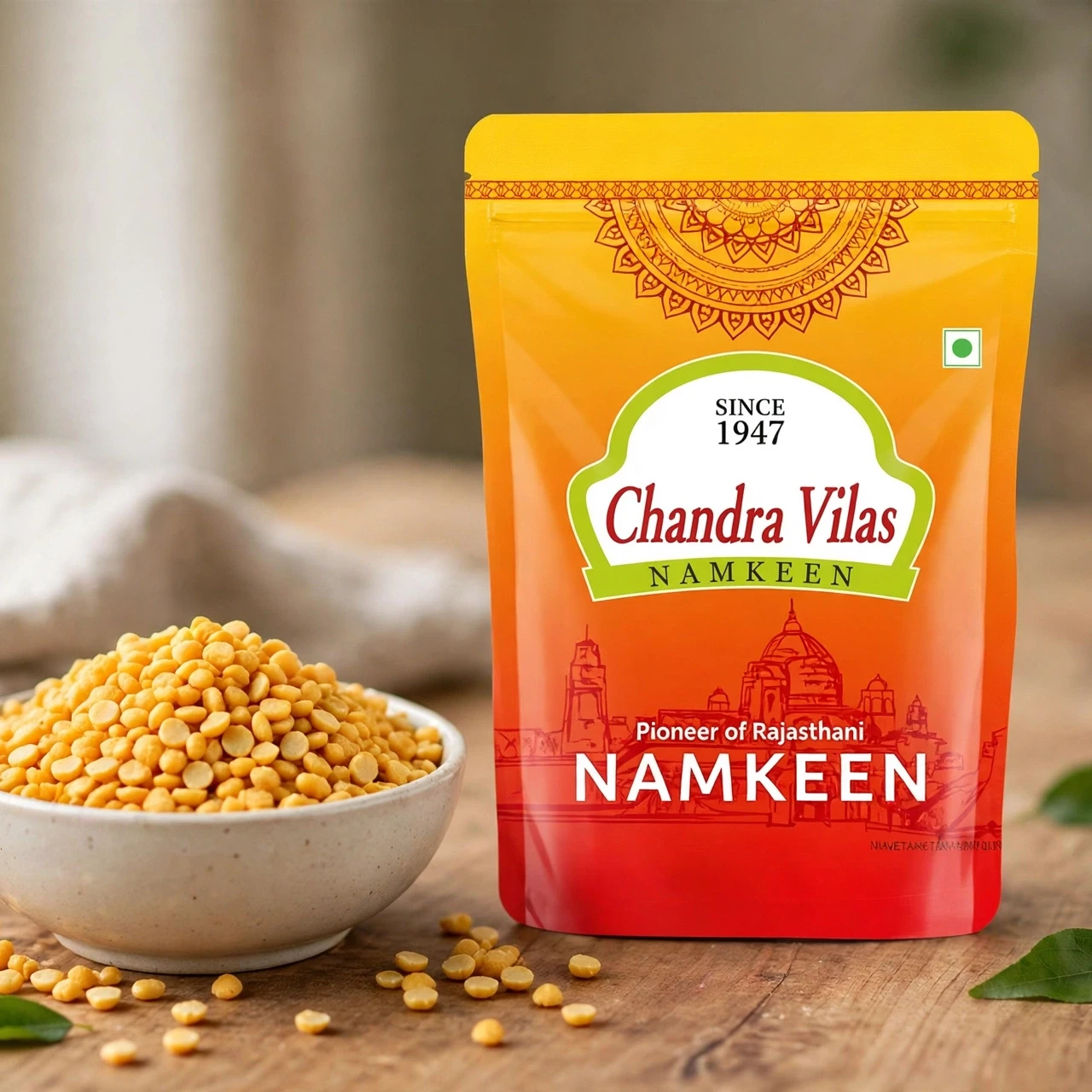
Bikaner has been making it forever. The same halwais who fry bhujia from moth dal fry moong dal on the side, and the regulars buy it by the kilo because it keeps for weeks. Chandra Vilas sells a salted mogar dal that tastes exactly like the shop version, because it is the shop version. But if you've got an afternoon free, the homemade batch is better. You control the salt. You control the oil. And yours is still warm when you taste it.
One thing worth knowing: moong dal here means the yellow split kind, not the whole green moong. The mung bean is the same plant, but the split yellow dal fries crisp while the whole green one stays chewy. Get the wrong one and you'll wonder what went wrong. It's the dal.
Which dal should you buy?
Ask for "yellow moong dal" or "mogar dal" at any kirana shop. That's the split, skinless one. It looks pale yellow and cooks fast. Don't buy moong chilka (the split one with the green skin still on) and don't buy whole green moong for this recipe. Both have their place, just not here.
Old dal fries better than fresh stock, by the way. If the packet has been sitting in your cupboard for a month, that's ideal. Very fresh dal holds more moisture and takes longer to crisp.
Moong dal namkeen recipe (the classic fried way)
This is the version I'd serve guests. It takes the longest, but only because of the soak. The hands-on time is about twenty minutes.
You'll need:
- 1 cup yellow moong dal (mogar dal)
- Groundnut oil for deep frying (mustard oil works too, but groundnut keeps the flavour clean)
- 1/2 tsp salt, or to taste
- 1/2 tsp red chilli powder
- 1/4 tsp chaat masala
- A pinch of hing (asafoetida)
- A fine mesh strainer or a steel tea strainer, big enough to hold a handful of dal
Method:
1. Soak. Rinse the dal two or three times, then soak it in plenty of water for 4 hours, or overnight if that's easier. Four hours is the floor. Less than that and the grains stay hard in the middle.
2. Dry it properly. This is the step people rush, and it's the whole recipe. Drain the dal completely. Spread it on a clean kitchen towel in a thin layer and pat it dry. Then leave it out for 20 to 30 minutes. The surface should feel dry to the touch. Any water left on the grains will spit in the hot oil, and you'll get soggy patches instead of crunch.
3. Fry in small batches. Heat oil in a kadhai on medium. Test it with two or three grains: they should sizzle and float up straight away. Scoop a small handful of dal into the mesh strainer and lower it into the oil. Fry for 2 to 3 minutes, stirring gently, till the grains turn golden and the bubbling calms down. Don't crowd the strainer. Small batches, every time. I know it's slower. It's also the difference between crisp and chewy.
4. Season while warm. Drain the fried dal on paper for a minute, then tip it into a bowl while it's still warm. Toss in the salt, chilli powder, chaat masala and hing. The warmth helps the spices stick. If you wait till it's cold, half the seasoning slides off to the bottom of the bowl.
5. Cool, then jar it. Let it cool completely before you close the lid. Warm dal in a closed jar goes soft overnight. It keeps two weeks in an airtight jar. Mine never lasts that long.
If you want the short version of this recipe, it also lives in our 3 homemade namkeen recipes post, alongside masala chana and besan sev. This post is the deep dive: the second method, the mistakes, the flavour twists.
Can you make moong dal namkeen without frying?
Yes. And this is the version I actually make most often, because weeknights don't have time for a kadhai of oil.
The roasted microwave way: soak and dry the dal exactly the same way, then spread it on a microwave-safe plate in a single layer. Sprinkle a teaspoon of oil over it and mix. Microwave on high for 4 minutes, take it out, stir, and microwave again in 2-minute bursts until it turns golden and crisp. Total time is about 8 to 10 minutes, depending on your microwave. Season the same way, while warm.
Is it as good as fried? Honestly, no. The fried one has a deeper colour and a richer bite. But the roasted one is about 90% there, it uses almost no oil, and it doesn't leave your kitchen smelling like a fry shop. For a tiffin box or a post-gym handful, it's the one I reach for.
An air fryer works on the same principle: 180°C, 10 to 12 minutes, shake the basket halfway. Same rule though. Dry the dal first. The air fryer won't save wet dal.
How do you get it properly crisp?
Three things, and they're all boring. That's why people skip them.
First, the drying. I said it above and I'll say it again: the dal must be surface-dry before it touches oil. Wet dal splutters, and spluttering oil is how you get a burn and a soggy batch in the same minute.
Second, the oil temperature. Medium heat, not high. Too hot and the outside browns while the inside stays raw. Too cool and the dal drinks oil and turns greasy. The two-grain test never lies: they should sizzle and rise immediately, not sink and sulk.
Third, small batches. A crowded strainer drops the oil temperature and steams the dal instead of frying it. Two or three strainer-loads per cup of dal is about right. Put on a podcast. It's ten minutes.
4 flavour twists worth trying
The classic salted version is the one Bikaner shops sell most. But once you've got the base right, the seasoning is a playground. Here's what actually works, in order of how often I make them.
| Flavour | Seasoning (per cup of dal) | Best with |
|---|---|---|
| Classic salted | 1/2 tsp salt, pinch of black pepper | Chai, on its own, in a tiffin box |
| Masala chaat | 1/2 tsp salt, 1/2 tsp chaat masala, 1/4 tsp amchoor | On poha, bhel, or dahi chaat |
| Black pepper | 1/2 tsp salt, 1/2 tsp coarsely crushed black pepper | Evening chai, the simplest one |
| Hing-jeera | 1/2 tsp salt, 1/4 tsp roasted jeera powder, a good pinch of hing | With curd rice or khichdi |
The hing-jeera one is my favourite, and I know that sounds like a strange pick. It's the quietest flavour on the table. But there's something about hing hitting warm dal that smells like my grandmother's kitchen, and I can't argue with that.
What usually goes wrong
| Problem | Why it happened | Fix |
|---|---|---|
| Dal splutters violently in oil | Dal wasn't dry enough | Drain, towel-dry, then air-dry 30 minutes before frying |
| Soft in the middle, crisp outside | Oil too hot, or soak too short | Soak a full 4 hours; fry on medium, not high |
| Greasy, oily finish | Oil too cool, or batches too big | Reheat oil between batches; fry smaller loads |
| Seasoning slides off | Seasoned after the dal cooled | Toss spices in while the dal is still warm |
| Goes soft in the jar | Jarred while warm, or lid left loose | Cool fully first; airtight jar; keep away from steam |
Most failures trace back to the drying step. If you remember one thing from this post, make it that. Dry dal, medium oil, small batches. Everything else is seasoning.
How long does moong dal namkeen keep?
Two weeks in an airtight jar at room temperature, easily. In Bikaner's dry winter air, I've stretched it to three. In a humid monsoon week, a week is more realistic, and a spoonful of roasted chana in the jar helps absorb moisture. Don't refrigerate it. The fridge adds moisture, and moisture is the enemy. Again.
It also travels well, which is why it lands in so many tiffin boxes. A small box of this next to a paratha is the easiest tiffin upgrade there is. If you want more ideas in that direction, our tea-time snacks guide has the full Bikaner plate, and the aloo bhujia recipe is the natural next fry if this one gets you hooked.
No time to fry? Buy the real thing
Here's the honest bit. A good shop-bought moong dal namkeen is hard to beat on a busy week, and the gap between homemade and shop-bought is smaller here than with bhujia. If you'd rather skip the soaking, Chandra Vilas mogar dal is the salted classic, fried in groundnut oil the Bikaneri way. Our namkeen buying guide has eight more picks from the same halwais if you're stocking a pantry rather than a jar.
But try the homemade batch once. Even the roasted one. The smell of hing hitting warm dal is worth the ten minutes.
Frequently asked questions
Can I make moong dal namkeen without frying?
Yes. Roast the soaked, dried dal in a microwave (8 to 10 minutes on high, stirring in between) or an air fryer (180°C, 10 to 12 minutes). It's lighter and uses almost no oil, though the fried version stays crisper and keeps longer.
Why did my moong dal splutter in the oil?
Almost always because the dal wasn't dry enough. Drain it, spread it on a towel, pat it dry, and leave it out for 20 to 30 minutes before frying. Even a little surface water will spit in hot oil.
Should I use whole green moong or split yellow moong dal?
Split yellow moong dal (mogar dal). Whole green moong stays chewy when fried and won't turn crisp. The yellow split dal is the one in every shop packet, and it's what this recipe is built around. The mung bean is the same plant either way; it's the split, skinless form that fries crisp.
Is moong dal namkeen healthy?
It's one of the better namkeens. Moong dal is naturally high in protein and fibre, and the roasted version uses very little oil. The fried version is still a fried snack, so portion matters: a small handful with chai, not the whole jar in one sitting.
How is this different from your 3-recipe namkeen post?
That post gives you a quick moong dal recipe alongside masala chana and besan sev. This one is the full deep dive on moong dal alone: the roasted method, the flavour twists, the troubleshooting table, and the storage rules. If you only want the quick version, the 3-recipe post has it.
Comments
Add a comment ↓No comments yet. Be the first to share your thoughts.
Leave a comment
Your email address will not be published. Comments appear after our team has read them.