
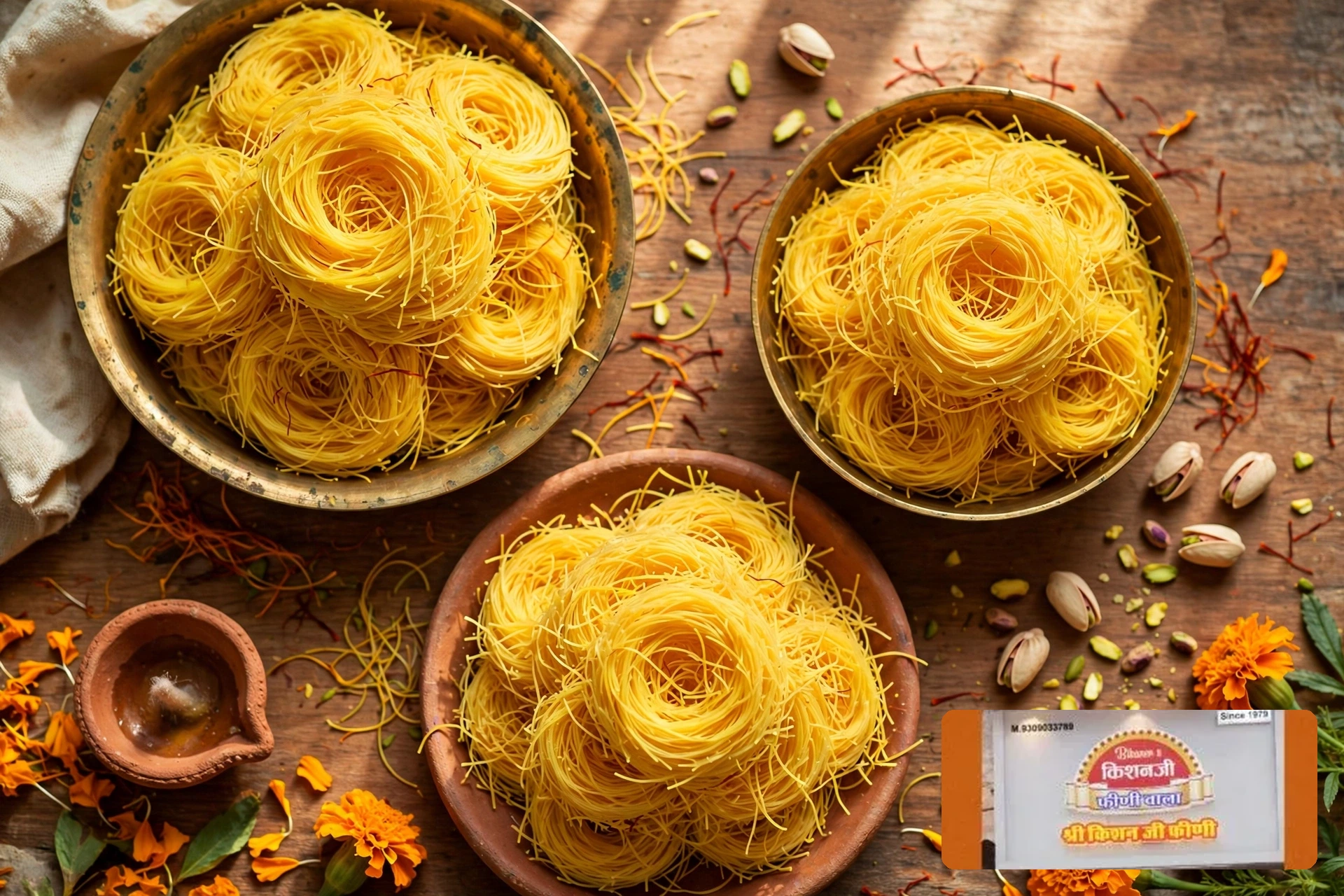
Kishanji Fini Wale: The Story Behind Bikaner's Famous Fini
Published on • 13 views
There are sweets you eat, and then there are sweets you remember. The first time I tasted a proper Bikaneri fini — a coil of thin, golden strands that shattered the moment it touched my tongue — I finally understood why Bikaner is called the city of halwais. This wasn't the soft, syrupy fini sold in generic sweet shops. It was light as a whisper, layered like a croissant, fragrant with desi ghee and saffron. When I asked where it came from, every local gave the same answer: Kishanji Fini Wale.
Since 1979, this one shop has been the undisputed address for authentic Bikaneri fini — particularly its kesar desi ghee fini. Locals swear by it, tourists carry boxes of it back on trains, and now you can order it from anywhere in India.
What Is Fini, Actually?
Before we talk about the shop, let's talk about the sweet — because outside Rajasthan, fini (also spelt pheni) is one of the most misunderstood desserts on the shelf.
Fini is made from a simple dough of refined wheat flour, worked, stretched and coiled into thin, nest-like strands, then fried in pure desi ghee until crisp and golden. Sweet fini is coated lightly with saffron sugar syrup; unsweetened fiki fini is fried plain and meant to be soaked in warm milk or dipped in syrup at home. The result is flaky and crisp — you can hear it break — with a rich ghee aroma that no vegetable-oil substitute can fake.
Here's what separates real Bikaneri fini from the generic stuff:
- The ghee. Authentic fini is fried in pure desi ghee. Many commercial versions quietly use refined oil, which is why they taste flat.
- The stretch. Handmade fini has thin, even strands forming delicate coils. Machine-made versions tend to be thick, dense and doughy.
- The saffron. Proper kesar fini gets its golden-yellow colour from real saffron, not artificial yellow colouring.
- The lightness. Good fini shatters. If it bends instead of breaking, something is wrong with the frying.
It is a sweet that looks deceptively simple — four ingredients, one technique — yet nearly impossible to get right without decades of practice. Which brings us back to Kishanji.
A Shop Since 1979: The Kishanji Fini Wale Story
The signboard over the shop says Since 1979, and in a city where sweet shops guard their legacies like family heirlooms, that date carries weight. For more than four and a half decades, Kishanji Fini Wale has done essentially one thing: make fini the traditional way, in pure desi ghee, by hand.
The shop built its name on three promises locals will recite unprompted — pure ingredients, handmade texture, and the same recipe since the beginning. No shortcuts. The fini is light, crisp and perfectly layered, fried to an even gold rather than the blotchy brown of rushed batches. You can read more on its Kishanji Fini Wale page on BiteBasket.
The Varieties: Which Fini Should You Buy?
One thing first-time buyers don't expect: fini isn't just one sweet. Kishanji makes several versions, and choosing the right one depends on how you like your dessert. Here's the honest breakdown:
Kesar Fini (Desi Ghee) — the signature
This is the one. Thin coils, golden-yellow from saffron, fried in desi ghee, lightly sweetened with a delicate syrup. Rich without being heavy — the kesar aroma hits you the moment you open the box. If you're buying fini for the first time, start here: try the Sweet Fini in desi ghee. It is the shop's most-loved variety and the closest thing to eating it fresh in Bikaner.
Laccha Fini — the purist's pick
Laccha refers to the fine, thread-like layers. This version is thinner, flakier and lighter than the standard kesar fini — the kind of sweet that practically dissolves. Connoisseurs who complain that other fini is "too sweet" usually mean they haven't tried a proper laccha fini.
Fiki Fini — the unsweetened one
Fiki (also called feeni) fini is fried without sugar, which makes it a blank canvas. In Rajasthan, people dunk it in warm kesar milk, drizzle honey over it, or make a quick syrup at home and pour it over before serving. It's also the version health-conscious buyers prefer — you control the sweetness. The Fiki Fini in desi ghee is made for exactly these homemade recipes.
Mini Fini — bite-size and gift-ready
Same taste, smaller coils — portioned for serving at parties, packing into gift hampers, or keeping at your desk. The Mini Fini is the easiest one to serve when guests arrive unannounced during festival season.
All four varieties are part of BiteBasket's traditional sweets collection, sourced directly from the shop in Bikaner and packed fresh for shipping across India.
How the Real Thing Is Made (and Why It Can't Be Rushed)
The handmade method Kishanji has followed since 1979 goes roughly like this: a firm dough of maida and a little ghee is rested, then pulled and stretched by hand into long, thin ropes. The ropes are coiled into nests — the part that takes years to learn, since uneven coils fry unevenly. The nests go into hot desi ghee at precisely the right temperature: too hot and they brown before the inside crisps; too cool and they absorb ghee and turn greasy. Sweet fini gets a quick coat of light saffron syrup while still warm, so it sets into the layers instead of pooling.
Two things struck me when I learned this. First, how little has changed — no industrial fryers, just hands, a kadhai and judgment. Second, how much comes down to the frying medium: pure desi ghee gives fini its signature aroma and melt-in-mouth quality that refined oil cannot produce. After 45 years, that consistency isn't luck — it's muscle memory.
Fini at Home: Simple Ways to Serve It
Fini arrives ready to eat, but a couple of small touches make it taste like it just came from the shop in Bikaner:
- Warm it, don't microwave-blast it. A minute or two in a low oven (around 120°C) brings back the crispness if it has sat in the box for a few days.
- Pair with warm milk. A few coils of fiki fini in a glass of warm kesar milk is the classic Rajasthani bedtime sweet.
- Crumble over ice cream. Sweet fini shards over vanilla ice cream is an unlikely-but-excellent dessert pairing — the flaky crunch against the cold cream works beautifully.
- Festival thali essential. During Diwali, fini coils on a thali with marigold and a diya look as good as they taste — and travel far better than syrupy sweets.
Why Bikaner's Fini Tastes Different
Bikaner is a city built on halwai craft — the same streets that gave us Bishanlal Babulal's legendary sweets and Chunnilal Tanwar's 86-year-old sharbat. Fini evolved here for a reason: the desert climate rewards dry, crisp sweets that keep well, and generations of halwais competed to make the lightest coils. Our guide to Bikaner's famous food covers the broader picture.
Kishanji Fini Wale's position in that landscape is specific: it is not the oldest shop in Bikaner, and it doesn't try to be everything. It picked one sweet, refused to compromise on ghee or method, and let the reputation compound over 45 years. The shops that specialise are usually the ones worth ordering from.
Buying Authentic Fini Online: What to Watch For
Because fini is fragile and ghee-based, ordering it online needs a little care. Three things I check:
- Desi ghee, stated plainly. If a listing doesn't say "desi ghee" outright, assume refined oil. Kishanji's fini is fried in pure desi ghee — that's the whole point of the shop.
- Fresh packing. Fini absorbs moisture and goes stale if packed badly. Look for clean, sealed boxes — BiteBasket ships Kishanji's fini directly from Bikaner in protective packing to keep the coils crisp.
- Real saffron colour. Kesar fini should look naturally golden, not neon. Artificial colour is the classic shortcut of imitation fini.
Order it the way Bikaner eats it: kesar fini for everyday cravings and gifting, fiki fini for homemade kesar-milk rituals, mini fini when you need something presentable in a hurry. Once you've tasted fini fried in real desi ghee, the supermarket packets will never satisfy you again.
Frequently Asked Questions
What is Bikaneri fini made of?
Refined wheat flour, pure desi ghee, sugar (for sweet fini) and saffron. The dough is hand-stretched into thin coils and fried in desi ghee until crisp and golden — Kishanji Fini Wale has made it this way since 1979.
Is fini the same as pheni?
Yes — fini and pheni (or feeni) are the same coil-shaped sweet. The unsweetened version is called fiki fini and is often soaked in warm milk before eating.
How long does fini stay fresh?
Typically several weeks in an airtight container away from moisture. If it loses crispness, a couple of minutes in a low oven (around 120°C) brings it back. Avoid refrigerating it; the cold makes it chewy.
Is Kishanji Fini Wale's fini available outside Bikaner?
Yes. BiteBasket sources fini directly from the shop and ships across India in fresh, protective packing — including the kesar desi ghee fini, laccha fini, fiki fini and mini fini varieties.
Which fini variety should I buy as a gift?
Kesar desi ghee fini is the safest and most popular gifting choice — it's the shop's signature. Laccha fini impresses sweet connoisseurs; mini fini works best for hampers and party platters.