
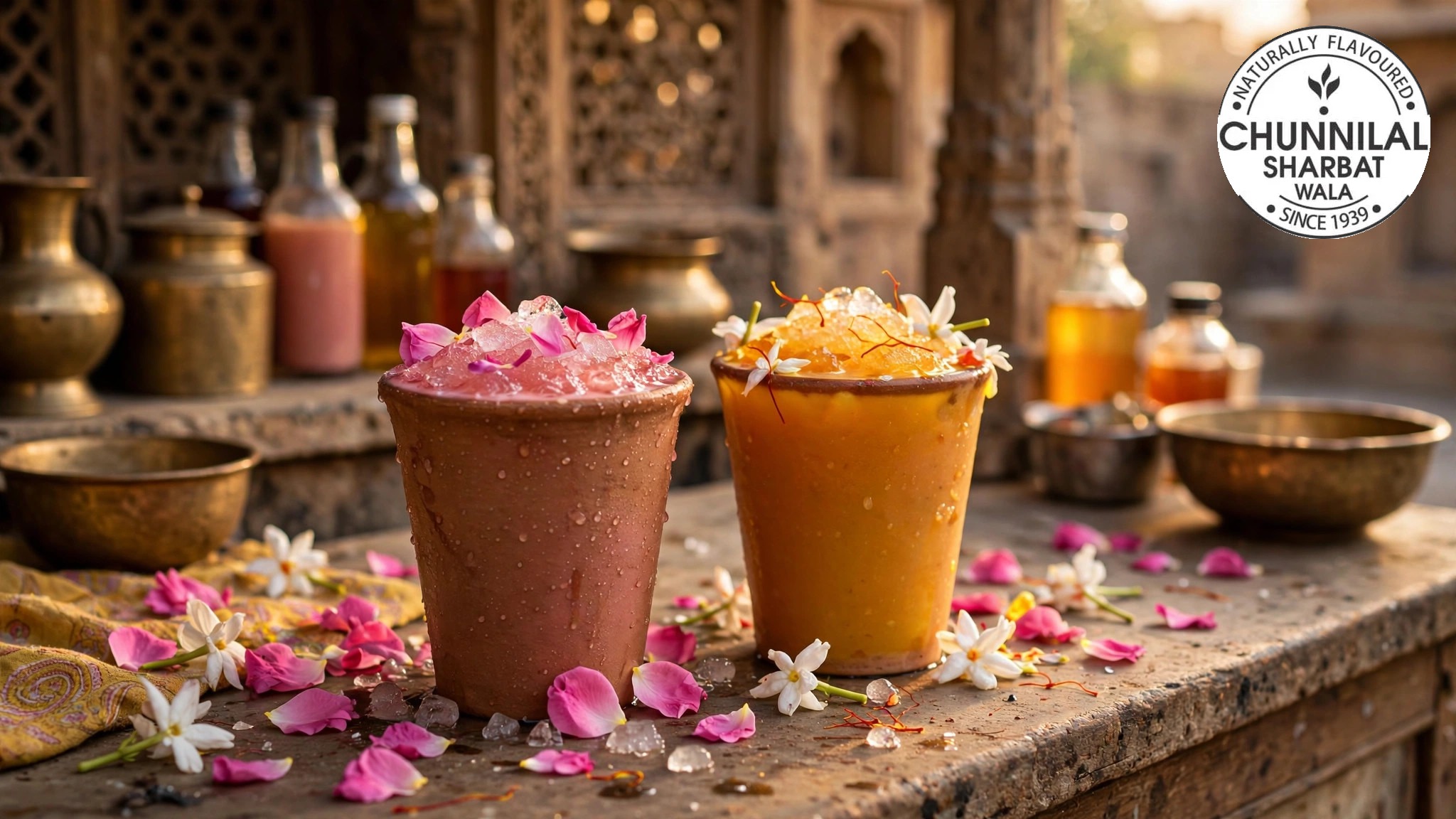
Chunnilal Tanwar Sharbat Wala: Bikaner's 86-Year-Old Sharbat Legend on Jail Road
Published on • 10 views
Bikaner in May is not a city you visit — it's a city you survive. The air shimmers at 45 degrees, the sandstone radiates heat long after sunset, and every local has the same advice: drink something cold, and drink it often. Most people reach for a cola. The wise ones head to Old Jail Road, near Kotgate, to a tiny shop with no signboard culture and no marketing department — Chunnilal Tanwar Sharbat Wala.
I first heard about this place the way everyone does — from someone who'd been there and couldn't stop talking about it. "It's not like Rooh Afza," they said. "It's nothing like Rooh Afza." They were right. One glass of the mogre wala sharbat, served in a kulhad over crushed ice, and I understood what 86 years of doing one thing properly tastes like.
A shop older than independent India
The shop was established in 1939 — some accounts say 1939-40 — by the father of Chunnilal Tanwar. Back then it sold exactly one thing: kewra sharbat. That was it. One drink, made perfectly.
Chunnilal himself took over the reins in the 1980s, and that's when the repertoire exploded. His home doubles as a laboratory where he experiments with spices, herbs and flowers — his latest creation, reportedly, is a cooling laung (clove) sharbat. Today the fourth generation of the family, led by Vidhan Singh Tanwar, runs the shop, and the menu has grown to over 20 flavours.
Think about that for a second. Four generations. Same shop. Same street. In a country where food businesses reinvent themselves every five years, the Tanwars just kept making sharbat.
What makes it different from every red syrup you've had
Here's the thing most people don't know about traditional sharbat: the flavour doesn't come from syrup and colour. It comes from ark — distilled essences of real flowers and botanicals. The Tanwar family still orders the choicest ark from Kannauj, Uttar Pradesh, India's historic perfume capital, exactly as the founder did.
The lineup reads like a Mughal garden inventory:
- Kewra (pandanus flower) — where it all began in 1939
- Gulab and safed gulab (white rose)
- Bela (jasmine) and mogra
- Chandan (sandalwood)
- Laung (clove), elaichi (cardamom), saunf (fennel)
- Paan (betel) and even panjeeri — made with coriander
- Kesar (saffron) — the one BiteBasket brings to your doorstep
And here's the part that matters: no artificial colours, no artificial flavours, no essences from a lab. Just real botanical extracts, sugar, water, and 86 years of knowing exactly how much of each. As Vidhan Singh Tanwar puts it, pure raw material and complete distance from adulteration is the family's biggest strength.
The writers, chefs and hotels that found it first
You don't survive 86 years on a back lane without the world noticing. Food writer Sangeeta Khanna wrote about her 2017 meeting with Tanwar, calling his sharbats "the artisan products of the country" and praising those "still doing it the old way." The Hindu described sipping the mogra sharbat as "a sip of heaven." Mint profiled the shop's quiet resistance to the age of packaged juices and colas.
Then there's Narendra Bhawan, Bikaner's boutique heritage hotel, where Tanwar has conducted sharbat tastings for guests — which is how many travellers first encounter the safed gulab and bela sherbets before making the pilgrimage to Jail Road themselves. In 2026, even PTI ran a video feature: "86 years and still thriving."
The Times of India travel desk sums up the experience best — the excited Vidhan Tanwar getting visitors to sample everything from chandan to paan, all served in a kulhad topped with crushed ice.
How to visit (and how to order from home)
The shop sits on Old Jail Road, near Kotgate (opposite Lady Elgin School, Chhipon Ka Mohalla), Bikaner — open roughly 10 AM to 10 PM, all days. Go in summer if you want the full effect: the contrast between the 45-degree street and that first cold sip is something you'll remember.
Here's the charmingly old-fashioned part: the family doesn't sell on any online platform. Orders come in by phone from across India, and the sharbat is shipped directly to customers. No app, no ads, no discount banners — just a phone number and 86 years of trust.
Which is exactly why we're proud to stock it. BiteBasket brings Chunnilal Tanwar's sharbat online — including the kesar sharbat — so you don't need a trip to Bikaner (or a phone call) to taste what the fuss is about. Browse the full maker collection at Chunnilal Tanwar on BiteBasket.
Bikaner is famous for bhujia — but ask a local what cools the city's soul, and they'll point you to Jail Road. Some legacies are fried. This one is poured.
Frequently asked questions
Where is Chunnilal Tanwar's sharbat shop?
On Old Jail Road (Purana Jail Road), near Kotgate, opposite Lady Elgin School in Bikaner, Rajasthan 334001. It's in the old city, about 1.7 km from the city centre.
How old is Chunnilal Tanwar Sharbat Wala?
The shop was established in 1939 (some accounts say 1939-40), making it 86+ years old. It's now run by the fourth generation of the family, led by Vidhan Singh Tanwar.
What flavours of sharbat do they make?
Over 20 varieties, including kewra, gulab, safed gulab, bela, mogra, chandan (sandalwood), laung (clove), elaichi, saunf, paan, kesar and panjeeri. Everything is made from real botanical extracts — no artificial colours or flavours.
Can I order Chunnilal Tanwar sharbat online?
The family itself doesn't sell on online platforms — they take phone orders from across India. But you can order Chunnilal Tanwar sharbat on BiteBasket, delivered to your doorstep anywhere in India.
What makes their sharbat different from Rooh Afza?
Rooh Afza is a mass-produced syrup. Chunnilal Tanwar's sharbats are made from distilled ark (essences) of real flowers and spices sourced from Kannauj, with no artificial colours or flavours — lighter, more aromatic, and far less sweet. One sip and the difference is obvious.