Eco-Friendly Diwali Gifts 2026: Sustainable Bikaneri Namkeen Hampers
Published on • 10 views
Short answer first: yes, you can give a genuinely green Diwali gift this year. A hamper of real Bikaneri bhujia, namkeen and sweets is naturally one of the lowest-waste gifts you can buy — it needs no plastic trays, no shrink-wrap layers, and no refrigeration. The trick is in how you pack it. Read on for exactly how to build one.
Every October, India drowns in gift packaging. Layered cardboard, plastic trays inside plastic boxes, shrink-wrap over shrink-wrap, glitter paper that can't be recycled — all of it thrown away by the second week of November. The dry-fruit box you spent ₹2,000 on leaves behind a small landfill of its own.
Here's what nobody tells you: food gifts don't have to look like that. Bikaneri snacks — bhujia, mixture, papad, biscuits, sweets — come from small makers who have been packing them the same simple way for decades. A sealed pack, a sturdy box, done. This Diwali, you can give something people actually eat, in packaging that doesn't embarrass you at the dustbin.
Why Bikaneri snacks are naturally the greener gift
Think about what makes most festive gifts wasteful. Chocolates need cool-chain packaging. Dry fruits come in layered plastic trays to look "premium". Fancy cookies arrive in a box, inside a box, inside a bag.
Bikaneri namkeen skips almost all of that:
- Small-batch, simple packs. Heritage makers like Bhikharam Chandmal and the small halwai houses BiteBasket works with pack in straightforward sealed pouches — the kind of packing designed to keep food fresh, not to look like a jewellery box.
- No refrigeration, no ice packs. Bhujia, papad and biscuits travel at room temperature. Nothing frozen, nothing sweating, no thermal packaging going straight to trash.
- Long shelf life without preservatives. Properly sealed namkeen stays crisp for weeks (more on that in our storage guide). The recipient doesn't have to rush-eat it or watch it go stale in three days.
- Light to ship. A kilo of bhujia ships in a compact parcel from Bikaner. Compare that to a "premium" hamper whose box weighs more than the food inside it.
How to build a low-waste Diwali hamper
The products themselves are already simple. The waste usually comes from what happens next — the "giftifying". Here's how to keep the whole thing green:
1. Start with combos, not singles
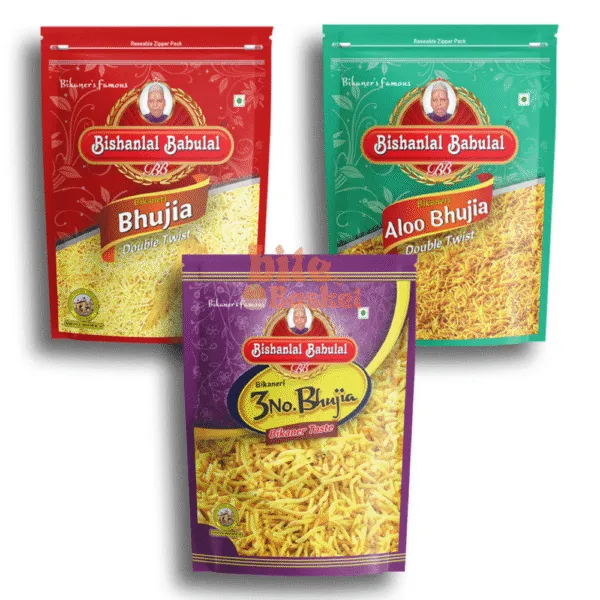
One 800g bhujia combo replaces three or four individually wrapped packs. Fewer packs means less wrapping per gram of actual food. For bigger gestures, the heritage 3 No Bhujia 800g from Bhikharam Chandmal is a single generous pack that anchors a whole box.
2. Put it in something reusable
This is the single biggest upgrade. Instead of a single-use gift box:
- A steel dabba (every Indian home will reuse it for a decade)
- A cloth potli or cotton tote bag
- A bamboo or cane basket from a local market
- Even a simple sturdy cardboard box the recipient can reuse for storage
The snacks go inside in their sealed packs — fresh and hygienic — and the container becomes part of the gift.
3. Skip the glitter
Glitter wrapping paper, plastic ribbons and cellophane can't be recycled. A plain kraft box with a handwritten note looks better anyway. Bikaneri packs are already colourful — golden bhujia, white rasgulla boxes, brown biscuit packs. Let the food be the decoration.
4. Add one sweet, one surprise
A balanced box feels generous without needing filler. Pair a bhujia anchor with handmade Badam Pista Biscuits — desi-ghee bakery, no palm oil — and one unexpected item like handmade papad or a sharbat bottle from the shop. Three items with breathing room look premium; five items crammed in look like a clearance sale.
5. Send it direct
Every extra pair of hands that repacks a gift adds a layer of plastic. Ordering online and shipping straight to the recipient's address skips the whole buy-wrap-rewrap cycle. BiteBasket ships pan-India from Bikaner, so the box goes from the packing table to their door.
3 ready-made green hamper ideas
Don't want to overthink it? Here are three boxes that work, using real Bikaner products:
The Classic (under ₹600): Bhujia Combo 800g + a pack of handmade papad from the shop, in a cloth potli with a handwritten card. Two items, zero plastic trays, and it looks like you tried — because you did.
The Heritage (under ₹1,000): 3 No Bhujia 800g from Bhikharam Chandmal + Badam Pista Biscuits, packed in a steel dabba. The dabba alone will outlive the Diwali season by about twenty years, which is rather the point.
The Full Bikaner (under ₹1,500): a bhujia combo, a sweet, and a sharbat bottle — three makers, three textures, one story. Pack it in a cane basket lined with a cotton napkin. This is the box people photograph before they open it.
An honest note about packaging
Let's be straight: namkeen still needs a sealed pack. An unsealed packet of bhujia goes soft in two days in Indian humidity — freshness comes first, and the sealed pouch is what keeps it crisp across a 2,000 km journey. What we're cutting here is the extra layer: the decorative plastic trays, the shrink-wrap over the box, the ribbon that exists only for the unboxing photo.
That's a meaningful difference. A dry-fruit "premium" box can easily contain more plastic by weight than food. A Bikaneri hamper, packed the way described above, is mostly food, a reusable container, and paper. That's about as low-waste as a courier-delivered gift gets.
Eco-friendly corporate gifting
If you're ordering for a team, this angle is also a genuine differentiator. Employees have received the same plastic-heavy dry-fruit box from three different vendors. A Bikaneri namkeen hamper in a reusable steel dabba stands out — and it photographs well for the company's Diwali post without the plastic guilt in the comments.
Bulk ordering also reduces packaging per head: one consolidated shipment of combos beats fifty individually gift-wrapped boxes. For bulk or corporate orders, write to business@bitebasket.in — and order before the end of October, because courier networks choke in the first week of November.
FAQ: Eco-Friendly Diwali Gifts
What is the most eco-friendly Diwali gift?
Food that gets eaten, in packaging that gets reused. A Bikaneri namkeen hamper — bhujia, biscuits, papad — in a steel dabba or cloth bag leaves almost no waste behind.
Are Bikaneri snacks really low-waste?
Compared to typical festive gifts, yes. They need no refrigeration, no plastic display trays, and no multi-layer boxes. The sealed pack is there for freshness; everything decorative beyond it is optional.
How do I make a gift hamper look premium without plastic?
Use a reusable container, group items by colour, leave breathing room, and add a handwritten note. The food itself — golden bhujia, white sweet boxes — does the visual work.
Can I send an eco-friendly hamper directly to someone?
Yes. Enter the recipient's address at checkout and BiteBasket ships from Bikaner to anywhere in India. Skipping the rewrap step is itself a waste reduction.
When should I order for Diwali 2026?
Diwali is on Sunday, 8 November 2026. Order by the end of October for a calm delivery; after 5 November, courier networks get risky.
Taste it for yourself
This Diwali, give something that gets finished, not thrown away. Start with a bhujia combo or the heritage 3 No Bhujia, drop it in a steel dabba or cloth potli, add a note — and you're done. The BiteBasket shop has everything above, packed fresh in Bikaner and shipped across India.
Happy Diwali — and happy guilt-free gifting.