
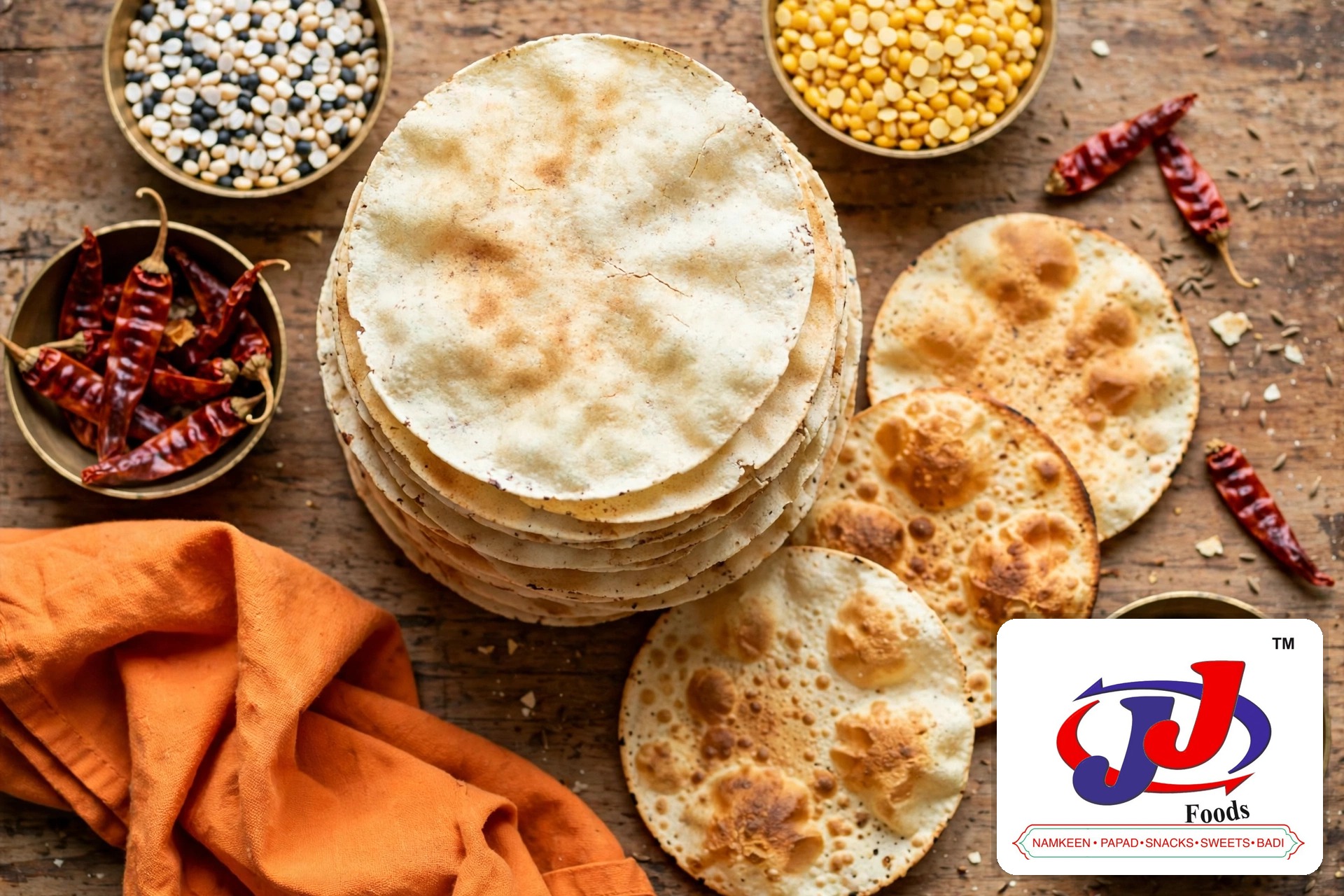
Bikaneri Papad Online: How to Buy Handmade Papad That Tastes Like Bikaner
By Bite Basket · • 14 views
There's a sound I associate with my grandmother's kitchen in Bikaner: the soft crackle of a papad puffing up over an open flame, held between tongs, turned once, and on the plate in under ten seconds. No machine-pressed papad I've bought from a supermarket since has ever sounded quite like that. It's the difference between a papad rolled by hand and sun-dried on a rooftop, and one that came off a factory line.
That difference is exactly why buying bikaneri papad online is worth doing properly. Bikaner is the papad capital of India for a reason — the dry desert air, the local dals, and generations of women rolling papads by hand in home kitchens and small workshops.
This guide is for anyone who's stared at a dozen papad listings online and wondered which one is the real thing. I'll walk through the types worth knowing, how to tell handmade from machine-made, what to check before you pay, and how to cook and store papads so they stay crisp for months.
What makes a Bikaneri papad different
Most papads sold across India are made from urad dal flour, salt, and a pinch of spices. A Bikaneri papad starts the same way, but three things set it apart. First, the dough is kneaded with very little water and rested properly, which gives the papad its snap instead of a chewy bite. Second, the papads are rolled properly thin — so thin that light passes through the edges — and dried in Bikaner's fierce sun rather than in a hot-air chamber. Third, the spice blends are the maker's own: black pepper, cumin, hing, and in some houses a touch of green chilli or garlic.
You can taste all three differences in the first bite. A good Bikaneri papad roasted over a flame puffs into a blistered disc, crisp all the way through. A mediocre one stays flat, tastes mostly of salt, and goes soft within a minute of leaving the flame.
The types of papad worth knowing before you order
Papad isn't one thing. The dal it's made from changes everything — flavour, texture, and what it pairs with. Here are the main kinds you'll find when you buy bikaneri papad online:
Urad dal papad — the classic
The default Bikaneri papad. Made from urad dal, it's mild, slightly nutty, and the most versatile. If you're buying papad for the first time, start here. The spicy version adds black pepper and red chilli and is the one most Bikaneri homes keep in the kitchen. Chandra Vilas urad dal papad is a good example of the spicy style, and it roasts beautifully over a gas flame.
Moong dal papad — lighter and thinner
Moong papads are lighter, crisper, and a little more delicate than urad. They fry up in seconds and are the ones I reach for with a bowl of dal or khichdi. If you like your papad wafer-thin, this is your type. Girdharilal moong dal papad is a solid pick — from the same house that's been making bhujia in Bikaner since 1978.
Chana papad and chana garlic papad — the bold ones
Chana papads are denser and more filling, with a deeper, almost savoury flavour. The garlic version is unapologetic: you'll smell it before you taste it, and that's the point. JJ Foods chana garlic papad is one I keep coming back to — handmade and generously spiced.
Punjabi papad and masala tikdi — the spiced end of the shelf
Punjabi-style papads are thicker, heavier on the masala, and built for frying rather than roasting. Masala tikdi papads are similar — small, thick, intensely seasoned discs that work as a snack on their own. Girdharilal masala tikdi papad and the Bishanlal Babulal tikdi papad are both worth trying if you like your papad with attitude. Still torn between the three? Our urad vs moong vs Punjabi papad comparison breaks down the differences.
Handmade vs machine-made: how to tell from a listing
This is the question that matters most, and it's also the hardest to answer from a product photo. Here's what I actually look for:
- Uneven edges and slight size variation. Hand-rolled papads are never perfectly round or identical. Slightly wavy edges and small differences between pieces are a good sign. Perfect circles in identical stacks are almost always machine-pressed.
- The maker is named. A listing that says who made the papad — a family or a workshop in Bikaner — is worth more than a generic brand. JJ Foods, for example, is a Bikaner maker whose papads are rolled by hand. Anonymous "premium papad" listings with no maker behind them are a gamble.
- Ingredients are short and readable. Real papad needs dal flour, salt, spices, and a little oil. If the ingredient list runs to a dozen items with preservatives and acidity regulators, it was built for a supermarket shelf, not a Bikaneri kitchen.
- Weight is stated per pack, honestly. Papads are sold by weight, usually 200g, 400g, or 500g. A listing that hides the weight or the piece count is hiding something else too.
- Reviews mention the roast, not just the delivery. "Puffed up nicely on the flame" is the review that counts. "Reached on time" tells you about the courier.
How to buy bikaneri papad online: a five-point checklist
Before you add anything to your cart, run through this list. It takes two minutes and saves you from a pack nobody in the house will finish.
1. Pick the dal first, the brand second. Decide whether you want urad, moong, or chana, and whether you want plain or spicy. Brand loyalty means little if you ordered the wrong dal for your taste. If you're unsure, order a small pack of two types and compare — papad is cheap enough to experiment with.
2. Check the shelf life and the packing date. Good handmade papads keep for six to nine months when stored dry, but only if they were dried properly. A seller who states the shelf life and packs in a sealed, moisture-proof bag is a seller who's thought about it.
3. Look for the maker's name and city. "Bikaneri" on a label means nothing if the papad was made in a factory hundreds of kilometres away. BiteBasket lists papads by their actual Bikaner makers — JJ Foods handmade papad, Girdharilal, Bishanlal Babulal, Chandra Vilas, and The Lalji.
4. Order enough to make shipping worthwhile. A 400g or 500g pack is the sweet spot for a first order. Papads are light, so shipping is rarely expensive, but a single 100g pack with a delivery fee on top is poor value.
5. Buy from a store that specialises in Bikaner, not a marketplace listing. Marketplaces mix genuine makers with resellers, and the same papad can arrive from a warehouse with a different packing date and a different taste. A specialist store that sources directly from the halwai keeps the chain short.
Roast or fry? How to cook your papad properly
You've got two honest options, and both are right for different papads.
Roasting is the Bikaneri default. Hold the papad with tongs over a medium gas flame, a few inches above it, and turn it every couple of seconds. It'll blister and puff in under ten seconds. This works best for urad and moong papads, keeps them light, and uses no oil at all.
Frying is for the thicker ones. Heat a little oil until it shimmers, slide the papad in, and it'll puff and crisp in two or three seconds. Lift it out immediately and drain it on paper. Punjabi papads and masala tikdis are made for this. Frying a thin moong papad is overkill — it'll go from crisp to burnt before you can blink.
Storing papad so it stays crisp for months
Papad's enemy is moisture, and Bikaner's dry air is part of why it keeps so well there. In a humid city, an open pack can go soft in a day. Keep unopened packs sealed in a cool, dry cupboard. Once opened, move the papads to an airtight container or a zip-lock bag with the air pressed out. If a papad does go slightly soft, ten seconds over a flame will usually bring it back. And don't refrigerate papad: the fridge adds moisture, which is the opposite of what you want.
Buying bikaneri papad online isn't about finding the cheapest listing. It's about finding the maker whose papad tastes like it came out of a Bikaner kitchen — because it did. Start with a classic urad or a handmade JJ Foods pack, roast one over the flame tonight, and you'll know within ten seconds whether you ordered right.
For more on the maker behind our most popular handmade papad, read the story of JJ Foods and their Bikaneri handmade papad, or browse the full range of papads on BiteBasket to find your type.
Frequently asked questions
Which papad is best for daily eating?
Urad dal papad, plain or mildly spiced. It's the most versatile — good roasted, good with dal and khichdi, and gentle enough for every day. Moong papad is the lighter alternative if you prefer something thinner and crisper.
Is it better to roast or fry papad?
Roast thin papads (urad, moong) over a gas flame for the lightest result with no oil. Fry thicker ones (Punjabi, masala tikdi) in hot oil for two to three seconds. Both are correct — the papad's thickness decides.
How long does handmade Bikaneri papad last?
Properly sun-dried handmade papad keeps for six to nine months in a sealed pack stored in a cool, dry place. Once opened, keep it in an airtight container and use it within a few weeks for the best crunch.
Can I order Bikaneri papad online outside Rajasthan?
Yes. Papads are light, dry, and travel well, so they ship safely across India. BiteBasket delivers pan-India, and because papads are packed flat and sealed, they arrive unbroken far more often than you'd expect.
What is the difference between urad and moong papad?
Urad papad is made from urad dal — slightly nutty, a little thicker, and the classic all-rounder. Moong papad is made from moong dal — lighter, thinner, and crisper. Our urad vs moong vs Punjabi papad guide compares them side by side, and the best moong dal papad brands guide lists the moong options worth ordering.
Comments
Add a comment ↓No comments yet. Be the first to share your thoughts.
Leave a comment
Your email address will not be published. Comments appear after our team has read them.