
Bikaneri Mixture Namkeen: Navratan vs Kashmiri vs Cornflakes
By Bite Basket · • 6 views
Bikaneri Mixture Namkeen: Navratan vs Kashmiri vs Cornflakes
If you want one packet that covers every craving at tea time, buy a Bikaneri mixture. It's not one snack, it's a whole handful of them tossed together: sev, peanuts, dal, boondi, and spices, all fried crisp in groundnut oil. Navratan is the rich, nutty one. Kashmiri brings the heat. Cornflakes keeps it light. Pick by mood, not by brand.
What exactly is Bikaneri mixture namkeen?
Ask a Bikaneri what "mixture" means and you'll get a look. Of course there's mixture. Every halwai in the city makes one, and every family has a favourite. The idea is simple. Take the best bits of the namkeen shelf (thin sev, fried chana dal, peanuts, boondi, sometimes cashews and raisins), fry them separately, toss them with masala, and you've got a snack that never tastes the same twice in a row. One handful is crunchy sev. The next has a peanut. That's the whole charm.
Bikaner has been doing this for generations. The city gave India Bikaneri bhujia, which carries a GI tag since 2010, and the same halwais who perfected bhujia built their mixtures on the same principles: moth dal, groundnut oil, and masala ground in-house instead of bought ready-made. The difference between a good mixture and a forgettable one comes down to that. You can taste stale oil in the first bite. You can also taste fresh. There's no hiding it.
I've tasted a lot of mixtures over the years, on the job and off it. The ones I keep coming back to are the ones where every component is fried properly on its own. Soggy boondi ruins the whole packet, no matter how good the sev is.
Navratan mixture: the rich one
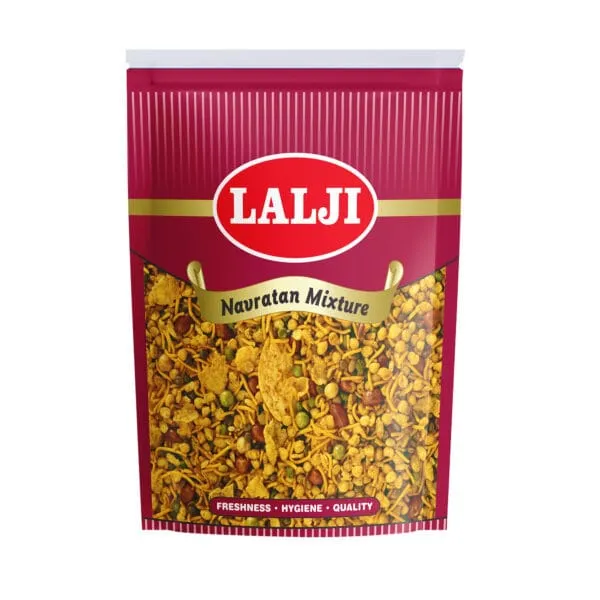
Navratan means nine gems. The name promises nine ingredients, and the better packets actually deliver something close to that: sev, peanuts, cashews, raisins, fried chana dal, boondi, and a few extras depending on the maker. It's the mixture you serve guests. It looks generous in a bowl, and it tastes generous too.
What I like about a good navratan is the sweet-salty play. A raisin lands in the middle of all that salt and spice, and for half a second the whole handful changes. The Lalji's Navratan Mixture does this well. The cashews are real cashews, not broken bits pretending to be cashews, and the masala sits in the middle of the heat scale. Kids steal the raisins. Adults steal the cashews. That's how you know a navratan is working.
Is it the healthiest pick? No. It's the richest pick. Navratan is the one I'd put out when people come over, but honestly the packet I reach for at home on a normal evening is usually something simpler. Navratan is a treat, and it should taste like one.
Kashmiri mixture: the spicy one
Kashmiri mixture doesn't hide what it is. The colour gives it away before you even open the pack. That deep red comes from Kashmiri red chilli, which brings colour and warmth more than raw burn. Don't expect it to set your mouth on fire. Expect a slow, steady heat that builds over a few handfuls.
The Lalji's Kashmiri Mixture leans on that chilli plus a sharper masala than the navratan. The sev is thinner, the peanuts are roasted darker, and there's a tang in there that keeps you reaching back in. This is the mixture for people who find plain bhujia a bit polite. It pairs brilliantly with a cold glass of chaas or, if you're like me, with a cutting chai that is already sweet enough to balance the spice.
One honest warning. If you're buying for a mixed crowd, Kashmiri is the riskiest pick of the three. Spice tolerance varies wildly, and the person who says "I love spicy food" is sometimes the first one reaching for water. Keep a milder packet around as backup.
Cornflakes mixture: the light one
Cornflakes mixture is the odd one out, and I mean that as a compliment. Instead of building everything on sev, it starts with cornflakes, the same kind you'd eat with milk, fried until they shatter. The result is lighter, airier, and less oily than the other two. You hear it more than you feel it. The crunch is louder, thinner, almost papery.
The Lalji's Cornflakes Mixture mixes those flakes with peanuts, sev, and curry leaves. That curry leaf is doing more work than you'd think. It adds a smell that hits you the moment you open the pack, a little like the tadka on a fresh poha. This is my pick for late-evening snacking, the one I eat standing in the kitchen when dinner is still half an hour away.
It's also the best of the three for people who find heavy namkeen sits badly. Not because it's a health food. It's still fried namkeen. But a handful of cornflakes mixture feels lighter than the same handful of navratan, and sometimes that matters.
Navratan vs Kashmiri vs cornflakes: side by side
| Mixture | Main character | Heat | Best for |
|---|---|---|---|
| Navratan | Nuts, raisins, mixed crunch | Mild-medium | Guests, gifting, festive bowls |
| Kashmiri | Red chilli, sharp masala | Medium-hot | Spice lovers, chai time |
| Cornflakes | Crisp flakes, curry leaves | Mild | Light snacking, everyday munching |
There's no single winner here. That's not a cop-out, it's the truth about mixture. If you forced me to pick one packet to keep in the house permanently, I'd take navratan for the weekends and cornflakes for weekdays. Kashmiri comes out when friends visit and someone says "give me something spicy." And honestly? The smartest move is buying all three in small packs and finding your own favourite. Mixture is cheap enough that experimenting costs almost nothing.
What makes a Bikaneri mixture different from any other mixture?
Two things. First, the oil. Bikaner's halwais traditionally fry in groundnut oil, not palm oil, and you can tell the difference in how the snack ages. A mixture fried in good oil stays crisp for weeks in an airtight jar. One fried in tired oil goes soft and smells off within days. We've written about this before in our guide to Bikaneri mixture vs Bombay mixture, and the oil question is the heart of that difference.
Second, the base. Real Bikaneri mixtures build on moth dal sev, the same base as Bikaneri bhujia. Moth bean is the hardy desert legume that gives bhujia its nutty depth, and it does the same work here. A mixture made with plain besan sev and nothing else tastes flat by comparison. It's the difference between a snack and a Bikaneri snack.
If you're comparing packets online, look at the ingredient list. Short lists with recognisable ingredients beat long lists with flavour enhancers. And check the maker. Heritage halwais like Chandra Vilas, whose Rajasthani Mixture is the old-school sev-heavy style, have been making the same recipes for decades. That continuity is worth something.
How to keep mixture crispy after opening
Mixture goes soft faster than plain bhujia because of the mixed ingredients. The boondi and the dal absorb moisture first. So move it out of the packet into an airtight steel or glass jar the day you open it. Don't leave it in the packet with a rubber band and hope for the best. That hope lasts about two days.
Keep the jar away from the stove. Heat and steam are the enemy. And if a batch does go slightly soft, spread it on a plate and give it two minutes in a hot oven or kadhai. It won't be perfect, but it'll be close enough to finish the pack.
Frequently asked questions
Which Bikaneri mixture is best for first-time buyers?
Start with navratan. It's the most balanced of the three, mild enough for everyone, and it shows off what a Bikaneri mixture is supposed to be. Move to Kashmiri once you know you like the style.
Is Bikaneri mixture namkeen spicy?
It depends on the type. Cornflakes and navratan mixtures are mild to medium. Kashmiri mixture is the spicy one, with a steady heat from Kashmiri red chilli. Check the pack before buying if you're sensitive to spice.
What is the difference between Bikaneri mixture and Bombay mixture?
Bikaneri mixture builds on moth dal sev and groundnut oil, with a heavier, nuttier profile. Bombay mixture is usually lighter, sweeter in places, and often made with palm oil. We've compared them in detail in our Bikaneri mixture vs Bombay mixture guide.
How long does Bikaneri mixture stay fresh?
Unopened, a sealed pack keeps well for a few months. Once opened, transfer it to an airtight jar and finish it within two to three weeks for the best crunch. Namkeen in general keeps best away from moisture and heat.
So which one wins? The one that matches your mood at 5 pm. Navratan for guests, Kashmiri for spice lovers, cornflakes for everyday crunching. Buy small packs of all three, taste them side by side, and let your own hand decide. That's how Bikaner has always settled these arguments.
Comments
Add a comment ↓No comments yet. Be the first to share your thoughts.
Leave a comment
Your email address will not be published. Comments appear after our team has read them.