
5 Ways to Use Bikaneri Sharbat Beyond a Summer Drink
Published on • 5 views
What can you do with Bikaneri sharbat besides mixing it with cold water in May? A lot, actually. This concentrated syrup — made the Bikaneri way by Chunnilal Tanwar since 1939 — works as a mocktail base, a winter milk drink, a dessert shortcut, and even a chai upgrade. One bottle, five jobs, all year round.
Ask anyone in Bikaner about Chunnilal Tanwar and they'll point you toward Jail Road, where the shop has been selling its handcrafted sharbats for over 85 years. Bela, Rose, Khas, Kewda, Chandan, Elaichi, Kesar — the range runs deep. Most people buy a bottle, stir two spoons into cold water, and call it done. But the family that makes it will tell you the syrup was never meant to be a one-trick drink. Here are five ways Bikaneri homes actually use it.
1. Festive welcome drinks: sharbat + soda mocktails
The easiest upgrade is also the most useful one right now, with Diwali around the corner. Instead of plain sharbat with water, pour it over ice and top it with chilled soda. The fizz lifts the floral flavours in a way still water never does.
Not every flavour takes to bubbles equally. Per the maker's own serving guide, Bela, Rose, Khas and Paan are the ones that work with soda (or even cola, if you're feeling adventurous). A tall glass of Khas sharbat with soda looks faintly green, tastes herbal and cool, and genuinely impresses guests — for about thirty seconds of effort.
Practical ratio: start with 1 part sharbat to 4 parts soda over a full glass of ice. Taste, then adjust. Paan sharbat with soda is the conversation-starter of the lot — that betel-leaf sweetness with fizz is something most guests won't have had before.
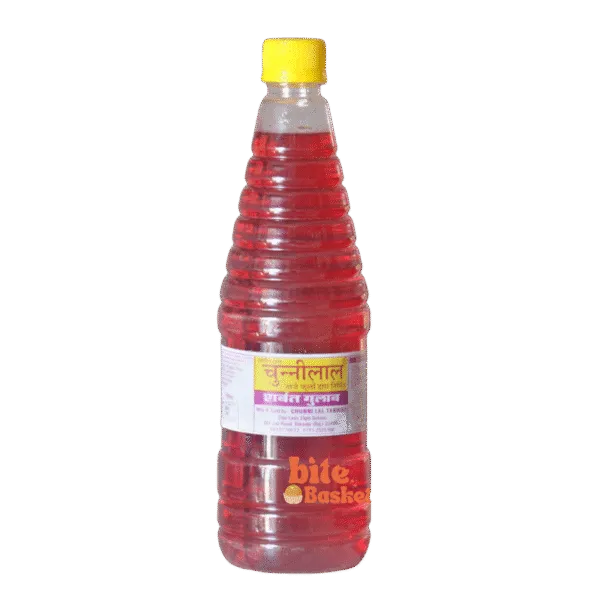
Serving idea for a Diwali evening: keep a tray of ice, chilled soda, and two bottles — Chunnilal Tanwar Gulab Sharbat (₹249) and Paan — and let guests mix their own. It takes the pressure off the host and the bar counter looks festive without a single bottle of alcohol on it.
2. The classic: Bikaneri sharbat with cold milk
If you ask old Bikaner families how they really drink sharbat, many will say: with milk, not water. Rose with cold milk is the household favourite. Kesar, Badam Kesar, Elaichi, Kewda, Khas, Saunf, Panjiri and Gulkand all work with cold milk too, according to the maker's guide — that's most of the range.
This is the drink of summer afternoons in Rajasthan, when the sun does its worst and lunch needs something cooling after it. Two to three tablespoons of syrup in a tall glass of chilled milk, stirred well. The Kesar sharbat version, with that saffron depth, is the one people describe as "shahi" without exaggeration.
A note from the maker's own instructions, worth repeating: for hot milk (more on that next), use one-fifth to one-sixth sharbat to milk. For cold milk, you can be a touch more generous — about a quarter glass of syrup to three quarters of milk is the sweet spot most people land on.
If you want to try the milk pairing first, Kesar Sharbat and Badam Kesar Sharbat are the two bottles Bikaneris reach for. The Badam Kesar is the richer one — almond and saffron together, basically dessert in a glass.
3. Winter mornings: sharbat stirred into hot milk
This is the use most people outside Rajasthan never discover. Kewda, Kesar, Elaichi and Badam Kesar sharbats are all meant to go into hot milk — and in Bikaner's cold desert winters, that's how a lot of families start the day.
The method matters. Warm the milk first, then stir in the sharbat off the heat — roughly one part sharbat to five or six parts milk, per the maker's guidance. Too much syrup and it turns cloying; the right amount gives you a gently flavoured, warming drink that tastes like someone put thought into your morning.
Elaichi sharbat in hot milk is the quiet star here. Cardamom and warm milk are an old, old pairing, and the syrup version takes about twenty seconds. If your household runs on doodh before bed in winter, swap the plain milk for a Kesar-sharbat version once and see if anyone asks to go back.
4. The dessert shortcut: sharbat in sweets and yogurt bowls
Bikaneri sharbat earns its place in the kitchen, not just the glass. A few ways people use it:
- Rose sharbat over vanilla ice cream. Two spoons of Gulab Sharbat drizzled over a scoop of plain vanilla ice cream gives you a falooda-adjacent dessert in under a minute. No cooking, no fuss.
- Kesar or Gulkand in yogurt. Stir Kesar sharbat into thick curd for a quick shrikhand-style bowl; Gulkand sharbat does the same job with a rose-petal depth. The maker's guide lists Rose, Kewda, Kesar and Gulkand as the yogurt-friendly flavours.
- Kesar sharbat in kheer. Add it at the very end, after the kheer comes off the heat, so the saffron aroma doesn't cook away. Start with two spoons per litre and adjust.
- Gulab Jal in sweets. Chunnilal Tanwar's Gulab Jal (pure rose water) is the baker's version — a few drops in rasmalai milk, phirni, or even a simple semolina halwa lifts the whole dish.
None of this needs a recipe book. Sharbat is sugar, flavour and aroma already combined — you're just deciding which base it meets.
5. The afternoon chai trick (and the underrated Panjiri)
Two flavours were made for tea: Elaichi and Kesar. Add a spoon of Elaichi sharbat to your regular chai instead of plain sugar and you get a cardamom chai without grinding a single pod. Kesar sharbat in chai is richer, almost Kashmiri-kahwa-adjacent — try it once before dismissing the idea.
And a word for the underrated bottle in the range: Panjiri sharbat. Panjiri is a wholesome, aromatic winter mix, and the sharbat version works with both water and milk. In late October and November, when the weather turns, it's the bottle that quietly gets finished first in Bikaneri homes.
A quick word on storage and shelf life
Sharbat bottles are happiest in a cool, dry cupboard. Once opened, keep the cap tight and, in hot weather, the fridge is the safer bet. Always use a dry spoon — water in the bottle is what shortens its life. Stored right, an opened bottle easily lasts months, which is good because you'll be reaching for it in more ways than you expected.
Taste it for yourself
Chunnilal Tanwar sharbats are available exclusively online on BiteBasket — the Jail Road shop's full range, shipped fresh from Bikaner to anywhere in India. If you're buying your first bottle, start here:
- Gulab Sharbat (₹249) — the all-rounder: water, milk, soda, ice cream.
- Kesar Sharbat — for milk drinks, kheer and winter mornings.
- Badam Kesar Sharbat — the richest bottle in the range.
- Bela Sharbat — fragrant and soothing, the classic cooler.
Or browse the complete Chunnilal Tanwar collection — all fifteen-plus flavours, one shop, 85+ years of practice in every bottle.
Frequently asked questions
Which Bikaneri sharbat is best with milk?
Rose, Kesar, Badam Kesar, Elaichi and Kewda are the top picks for cold milk, per the maker's own serving guide. For hot milk in winter, stick to Kewda, Kesar, Elaichi or Badam Kesar, using about one part sharbat to five or six parts milk.
Can you drink sharbat in winter?
Yes — that's one of the best-kept uses. Stir Kesar, Kewda, Elaichi or Badam Kesar sharbat into hot milk for a warming winter drink, or add Elaichi or Kesar sharbat to your regular chai.
Where is Chunnilal Tanwar sharbat made?
In Bikaner, Rajasthan. The family's shop on Jail Road has been making sharbat since 1939, and BiteBasket is the exclusive online seller of the genuine range.
How much sharbat should I mix in one glass?
For water or soda: roughly 1 part sharbat to 4 parts liquid over ice, then adjust to taste. For hot milk: the maker recommends one-fifth to one-sixth sharbat to milk. Start with less — you can always add more.
Is Bikaneri sharbat only a summer drink?
Not at all. Cold preparations (water, soda, milk) suit summer; hot-milk drinks, chai additions and dessert uses run through winter. It's a year-round pantry bottle, not a seasonal one.
Most people buy Bikaneri sharbat for summer and then let the bottle sit for eight months. Don't. The soda mocktails, the winter milk, the ice-cream drizzle — the bottle was built for all of it. Since 1939, Bikaner has known; now you do too.