
Mini Kachori, Mini Samosa & Mathri: Bikaner's Tea-Time Trio
Published on • 6 views
Bikaner's tea-time trio is mini kachori, mini samosa, and mathri — three crunchy, shelf-stable namkeens that sit in the biscuit tin rather than on a halwai's counter. The mini kachori is a small, dry, spice-filled ball of wheat pastry; the mini samosa is a shrunken, crisp version of the familiar triangle with a drier, tangier filling; and mathri is a plain, flaky wheat cracker that comes in ajwain (carom seed) and methi (fenugreek) versions.
All three are deep-fried in small batches and made to keep. They aren't the soft, hot breakfast kachori or the chutney-drizzled samosa you eat at a shop in the morning. These are the packed-for-later, jar-at-home versions — proper bikaneri namkeen, built for chai time. BiteBasket brings them to your doorstep from heritage Bikaner makers like Chandra Vilas and The Lalji.
Mini Kachori: The Dry Kota-Style Kachori
Most people know kachori as the big, puffy breakfast thing — served hot, stuffed with dal or onion, eaten standing at a counter. The mini kachori is a different animal entirely.
It is small, round, and completely dry. The pastry is made from wheat flour, rolled thin, filled with a spicy dry masala — typically crushed coriander, saunf (fennel), cumin, and red chilli — sealed, and then slow-fried until it turns golden and crisp all the way through. No soft centre, no gravy, no chutney needed.
The "dry kachori" style, sometimes called Kota kachori, was made to travel. Rajasthan is hot and dry, and snacks had to survive long journeys before refrigeration existed. Frying the kachori twice — once low and slow, then a final crisping — drives out the moisture. That is what makes it shelf-stable and what gives it that deep, even crunch.
The filling is the whole point. Where a fresh kachori's flavour comes from its hot, juicy dal stuffing, the mini kachori's flavour comes from the roasted spice mix inside. Crack one open and you get a wave of saunf and coriander. It is the kind of spice that sits warm at the back of your throat, not the kind that burns.
How to tell a good mini kachori
A good one shatters when you bite it — no chewiness, no soft spots. The filling should be fragrant when you break it open, not dusty or stale. And it should never taste oily. Slow frying at the right temperature seals the pastry; too-hot oil browns the outside while leaving raw flour inside.
Chandra Vilas mini kachori is a classic of this style — the Kota-style dry kachori that Bikaner households have kept in their tins for generations.
Mini Samosa: The Crisp Little Triangle
Everyone knows the samosa. The mini samosa is simply its smaller, crunchier, longer-lasting cousin. Where a fresh samosa has a thick, soft pastry and a moist potato-pea filling, the mini samosa is thin-shelled, bite-sized, and filled with a dry, spiced mix.
The making is similar in shape but different in intent. Wheat-flour dough is rolled out thin, cut into small triangles or strips, filled with a dry mixture — usually spiced potato dried to a crumble, sometimes with peanuts, coconut, or raisins — sealed tight, and fried low and slow until the pastry is glassy-crisp.
The small size changes everything. A regular samosa's pastry is thick enough to stay soft inside; a mini samosa's pastry is so thin it fries through completely. Every bite is crunch. The filling, being dry, seasons rather than dominates — it is there for the masala hit, not for bulk.
Where it fits at tea time
Mini samosas are the most "snackable" of the trio. They are one-bite, or two at most, so they disappear fast around a tea table. They pair well with green chutney or tamarind chutney if you want a fresh-samosa feel — but they are perfectly complete on their own.
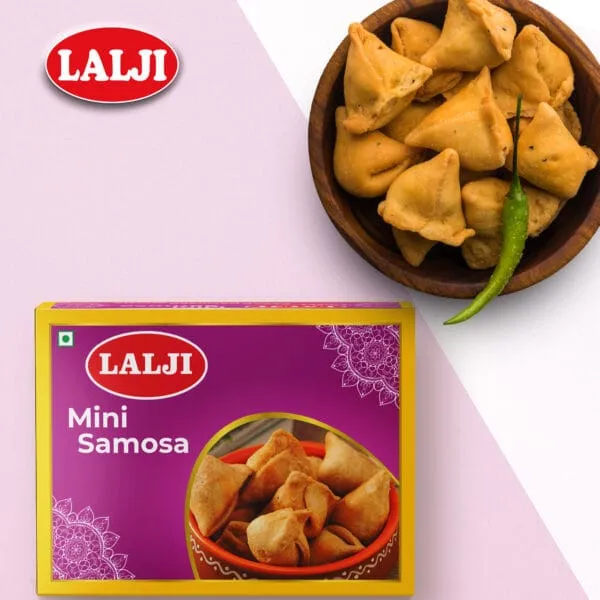
The Lalji mini samosa is the Bikaner version — small, crisp, and made the way the city's halwais have done it for decades.
Mathri: The Plain Hero (and Its Ajwain and Methi Variants)
Mathri is the quietest of the three, and maybe the most loved. It is a plain wheat-flour cracker — flour, oil (moyan, the fat rubbed into the dough), salt, water — rolled out, pricked with a fork so it doesn't puff, and fried until golden.
That's it. No filling, no masala coat. The flavour comes from the flakiness itself: layer after layer of crisp, buttery wheat. A good mathri breaks into delicate flakes rather than snapping like a biscuit. The moyan is what makes it khasta — the crumbly, melt-away texture that is the whole point.
But plain mathri is only the beginning. The two classic variants are:
- Ajwain khasta mathri: carom seeds kneaded into the dough. Ajwain gives a sharp, slightly thyme-like bite that cuts through the richness of the fried flour. It is the most common variant and the one most Bikaner households make first.
- Methi mathri: dried fenugreek leaves (kasuri methi) mixed in. It adds an earthy, slightly bitter depth that pairs beautifully with tea. The methi version is also the one people reach for in winter, when the warming, digestive reputation of methi feels right.
Mathri also comes in shapes — the classic round, the tikoni (triangle), the plain thick disc. The shape changes the texture slightly: thinner mathri is crisper, thicker mathri is flakier. None is better; they are just different moods.
Healthy mathri and ajwain khasta mathri from Chandra Vilas are the BiteBasket picks — plain, tikoni, and ajwain styles from makers who have been frying them for generations.
Dry Namkeen vs Fresh Halwai Snacks: Know the Difference
This is the distinction that trips people up, so let's be clear. The trio above — mini kachori, mini samosa, mathri — are dry bikaneri namkeen. They are:
- Made to be shelf-stable (they keep for a few weeks in an airtight container)
- Fried twice or fried low-and-slow to drive out moisture
- Eaten at room temperature, straight from the tin
- Sold packed, meant to be stored and shipped
Fresh halwai snacks — the morning kachori, the hot samosa with chutney, the jalebi — are a different category. They are made to be eaten within hours, preferably hot. They have moist fillings, soft pastry, and they go stale fast. You can't pack them for a week, and you can't ship them across the country.
Neither is "better." They are different tools for different moments. The fresh kachori is breakfast at the shop. The dry trio is the tin on the kitchen shelf that gets opened every afternoon at four. One is an experience; the other is a habit.
When you order from BiteBasket's namkeen collection, you are getting the dry kind — the shelf-stable, packable, shippable versions that Bikaner's makers have perfected over decades.
How They're Made: The Slow-Fry Secret
All three share a production logic, and it is worth understanding because it explains the texture. The enemies of a good dry namkeen are moisture and haste.
The dough: Wheat flour, salt, and oil (moyan) rubbed in by hand until the mixture looks like breadcrumbs. The moyan is the key — it coats the flour particles so gluten can't fully form, which is what makes the fried pastry flaky instead of bread-like. Water is added sparingly, just enough to bring the dough together.
The fillings (for kachori and samosa): Dry spice mixes — roasted and ground coriander, saunf, cumin, amchur (dried mango powder) for tang, red chilli for heat. For samosas, a dried spiced potato or lentil mix, sometimes with peanuts. Everything must be dry; any moisture in the filling will steam the pastry from inside and ruin the crunch.
The fry: Low and slow. The pieces go into oil that is hot but not smoking, and they stay there longer than you'd expect — sometimes in two passes. The first fry cooks them through; the second, at slightly higher heat, crisps the surface. Rushing this step is the most common mistake: high heat browns the outside while the inside stays raw and soft.
The rest: After frying, the pieces are drained and cooled completely before packing. Packing warm namkeen traps steam, and steam is the enemy of crunch. This is also why a good packet of namkeen, opened after shipping, still crackles — it was packed bone-dry.
Serving Ideas for Chai Time
The trio needs nothing — they were designed to be eaten as-is with tea. But a little thought makes the plate better.
The classic plate
A handful of each in a wide bowl or a thali, tea in kulhads. That is the baseline, and honestly it is hard to beat. The variety is the point: the flaky plainness of mathri, the spice burst of mini kachori, the tangy crunch of mini samosa.
With chutneys
Mini samosas and mini kachoris both take well to a spoonful of green coriander chutney or sweet tamarind chutney on the side. It gives a nod to the fresh-samosa experience without pretending to be one. Keep the chutney separate, though — drizzling it over the dry snacks makes them soggy within minutes.
Mixed with bhujia
This is the Bikaner move: break a few mathris into a bowl of bhujia, toss in some mini samosas, and eat the mix by the handful. The bhujia's fine, lacy crunch against the mathri's flakiness is a texture contrast that works absurdly well. Bikaneri bhujia is the city's most famous namkeen for a reason — it elevates everything it touches.
For guests
Put the trio out in small brass or steel bowls (katoris) rather than one big pile. It looks better, it stays crisper (less handling), and people instinctively mix and match. Add a small bowl of roasted peanuts or salted cashews and the table is done.
With the tea itself
Strong, milky chai is the natural partner — the tannin and milk fat cut through the fried richness. If you drink black tea, the mathri (especially methi) pairs beautifully. Avoid very sweet tea with the spiced kachori; the flavours fight.
Storage Tips: Keep the Crunch
Dry namkeen lasts, but only if you store it right. The rules are simple:
- Airtight is everything. Transfer opened packets into airtight tins or jars immediately. The steel dabbas every Indian kitchen has are perfect. Moisture from the air is what makes namkeen go soft.
- Cool, dark, dry. Keep the tin away from the stove and out of sunlight. Heat makes the oil in the namkeen go rancid faster; light does the same.
- Don't mix fresh and old. Topping up a tin with a fresh packet on top of week-old remnants means the old pieces keep the new ones company in staleness. Finish one batch before opening the next, or use separate tins.
- A few weeks, honestly. In a proper airtight tin, mini kachori, mini samosa, and mathri stay good for a few weeks. Mathri, being the driest, lasts longest. If anything smells off or tastes stale, don't push it — namkeen is cheap, and stale fried snacks aren't worth it.
- The paper-towel trick. If your tin isn't perfectly airtight, a folded paper towel at the bottom absorbs stray moisture. It won't save bad storage, but it buys you a few extra days.
Taste It for Yourself
Reading about crunch is no substitute for hearing it. BiteBasket stocks the trio from the Bikaner makers who do it best:
- Chandra Vilas Mini Kachori (250g) — the dry Kota-style kachori, spice-filled and twice-fried.
- The Lalji Mini Samosa (400g) — tiny, glassy-crisp triangles with a dry tangy filling.
- Healthy Mathri — the plain, flaky classic.
- Chandra Vilas Ajwain Khasta Mathri (250g) — carom-seed mathri in plain and tikoni shapes.
Or browse the full namkeen collection and build your own tea-time tin. Everything ships packed dry and sealed, the way Bikaner intended.
Frequently Asked Questions
What is the difference between mini kachori and regular kachori?
Regular kachori is a large, fresh, soft breakfast snack with a moist dal or onion filling, eaten hot within hours. Mini kachori is a small, dry, shelf-stable bikaneri namkeen with a dry spice filling, fried until crisp through, and kept in a tin for weeks. Same family, completely different snack.
Are mini samosas the same as cocktail samosas?
Roughly, yes — "cocktail samosa" is the party-platter name for the same idea: a shrunken samosa with a drier filling, made to be crisp and finger-food friendly. The Bikaner mini samosa is the namkeen version: thinner pastry, fried for maximum crunch, packed for shelf life rather than served hot.
How long do mathri, mini kachori, and mini samosa stay fresh?
In an airtight tin, kept cool and dry, they stay crisp for a few weeks. Mathri lasts the longest since it has no filling. Once a packet is opened, transfer it to an airtight container the same day — air exposure is what makes them go soft.
Which mathri variant should I try first — ajwain or methi?
Start with ajwain khasta if you like a bold, sharp flavour — the carom seeds give it a distinctive bite that most people recognise as "proper mathri." Try methi if you prefer something earthier and milder, especially with plain black tea. There's no wrong answer; most Bikaner households keep both.
Can I serve these to guests without any preparation?
That's exactly what they're for. Open the packet (or the tin), pour into bowls, make tea. If you want to dress it up, add chutneys on the side and mix in some bhujia — but no cooking, heating, or plating skills required.
Every Bikaner kitchen has a tin like this. The only question is what goes in yours — and now you know the three things that should. Keep the tin full, the tea strong, and the four o'clock hour sacred.