Gluten-Free Namkeen Options from Bikaner: What Is Safe and What to Skip
Published on • 6 views
Short answer: yes, a lot of Bikaneri namkeen is naturally gluten-free, because the classics are made from moth dal, besan, and moong dal — not wheat. Bhujia, moong dal namkeen, and most chana-based snacks usually contain no wheat at all. But "naturally gluten-free" is not the same as "certified gluten-free," so if you have coeliac disease, always read the label and check how the snack was made.
Gluten-free eating has gone from a medical necessity to a mainstream choice, and the snack aisle has not kept up. Most packaged snacks are built on wheat — crackers, biscuits, and noodles all start with it. That is why people searching for gluten-free namkeen often assume Indian snacks are off the table. In Bikaner's case, the opposite is true. The city's most famous snack was never made with wheat in the first place.
This guide explains which Bikaneri snacks are usually gluten-free, which ones are not, and what to check before you buy — so you can snack without guessing.
Why so much Bikaneri namkeen is naturally gluten-free
Traditional Bikaneri bhujia is made from moth dal flour, oil, and spices. That is the whole recipe at its core. Moth is a lentil, not a grain, so it contains no gluten. The same is true of besan (gram flour) and moong dal, the bases of many other Bikaneri snacks. Bikaner's halwais built their recipes around what grew nearby in the desert — pulses and spices — long before wheat-based factory snacks existed.
This is different from a modern "gluten-free" product, where wheat is removed and replaced with something else. Here, wheat was never an ingredient. The flavour you love in bhujia does not depend on gluten at all. That is good news, but it comes with one important condition, covered below.
Usually gluten-free: what to look for
These Bikaneri snacks are typically made without wheat ingredients. Always confirm on the specific product's label, because recipes vary by maker.
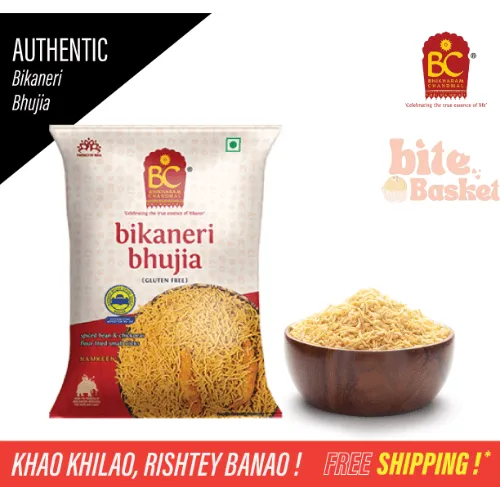
- Bikaneri bhujia: moth dal flour, oil, salt, and spices. The signature snack, and the safest starting point. Browse the Bikaneri bhujia range and check each product's ingredient list.
- Moong dal namkeen: fried moong dal with spices. Simple, crunchy, and naturally wheat-free in its classic form.
- Chana-based snacks: roasted or fried chana and chana jor garam, made from chickpeas.
- Sev made from besan: plain besan sev contains no wheat. But be careful — some flavoured sev varieties add wheat flour for texture, so read the label.
- Moong dal papad: most Bikaneri papads are made from moong or urad dal, not wheat. Check the packet, since some papads blend flours.
- Mixtures: many mixtures are wheat-free, but this is the category where you must check hardest — some include wheat-based namak para or sev. A mixture is only as gluten-free as its least safe ingredient.
Not gluten-free: what to skip
These Bikaneri favourites contain wheat, and no label-checking will change that:
- Mathri and namak para: both are made from refined wheat flour (maida). They are delicious with chai, but they are not gluten-free.
- Samosa and kachori: the pastry shell is wheat-based.
- Biscuits and bakery items: even desi ghee biscuits are wheat biscuits. Desi ghee is about the fat, not the flour.
- Anything coated in wheat batter: some coated peanuts and fried snacks use a wheat-based coating. If the ingredient list mentions wheat flour, maida, or atta, skip it.
When in doubt, the rule is simple: if the first ingredient is a dal or besan, you are probably fine; if it is wheat flour or maida, you are not.
The cross-contact catch
Here is the honest part that many gluten-free guides skip. A snack can have zero wheat ingredients and still not be safe for someone with coeliac disease, because it may be fried in shared oil or packed on shared equipment with wheat snacks. Traditional halwai shops often make everything in one kitchen.
What this means in practice:
- If you avoid gluten as a lifestyle choice, naturally gluten-free Bikaneri snacks like bhujia and moong dal are usually a comfortable pick.
- If you have coeliac disease or a serious wheat allergy, look for products that state their manufacturing conditions, and ask the seller before ordering. Do not rely on the ingredient list alone.
- When a product page does not list full ingredients, message the seller and ask. A genuine maker will answer clearly; a vague answer is itself an answer.
For more on reading labels and judging sellers before you buy, see our guide on how to check food quality when buying snacks online.
How to shop for gluten-free namkeen on BiteBasket
Start with the Bikaneri namkeen range and filter your choices by base ingredient. Bhujia first, then moong dal and chana snacks, then mixtures only after checking their ingredient lists. Skip mathri, namak para, and bakery items entirely.
A practical starter box for a gluten-free household: one packet of plain bhujia, one moong dal namkeen, and one chana snack. Three different textures, three different flavours, and all three from naturally wheat-free bases. Add a packet of moong dal papad if you want a fourth item that doubles as a side dish — roast it and serve it with dinner.
One more tip: buy smaller packs first when trying a new maker. Taste and tolerance vary, and a small pack lets you test both before committing to a large one. Once you find a maker whose bhujia suits you, that is your repeat order sorted.
Taste it for yourself
Begin with the classic: a packet of Bikaneri bhujia, made the way Bikaner has made it for generations — moth dal, oil, and spices, no wheat involved. Then explore the wider namkeen range with the label-checking habit from this guide, and you will build a snack shelf that is both safe and genuinely enjoyable.
Frequently asked questions
Is Bikaneri bhujia gluten-free?
Traditional Bikaneri bhujia is made from moth dal flour, oil, and spices, so it contains no wheat ingredients. But recipes vary by maker, and shared equipment can cause cross-contact, so always check the label — especially if you have coeliac disease.
Which Bikaneri snacks are not gluten-free?
Mathri, namak para, samosa, kachori, and biscuits all contain wheat flour and are not gluten-free. Some flavoured sev and mixtures also include wheat-based items, so check their ingredient lists.
Is naturally gluten-free the same as certified gluten-free?
No. Naturally gluten-free means wheat is not an ingredient. Certified gluten-free means the product has also been tested and made under controlled conditions to avoid cross-contact. For coeliac disease, certification matters.
Can I eat Bikaneri mixtures on a gluten-free diet?
Some, but not all. A mixture is only gluten-free if every component in it is wheat-free. Check the full ingredient list, and avoid mixtures that include namak para or wheat-based sev.
What is the safest gluten-free snack to start with?
Plain Bikaneri bhujia or moong dal namkeen. Both are made from pulses, both are widely available, and both are easy to verify from their short ingredient lists.
Gluten-free snacking does not have to mean giving up flavour or settling for bland substitutes. Bikaner's pantry was built on pulses, not wheat — which means some of India's best snacks were gluten-free before gluten-free was a trend. Shop carefully, read the label, and enjoy the crunch.